Why the Football Jersey Collar Is a Small Detail With Big Buyer Consequences
A Football Jersey collar looks like a small detail until it stretches out, twists after washing, scratches the neck, or makes the whole shirt look cheaper than expected. For clubs, academies, sportswear brands, and teamwear distributors, collar construction is not only a styling choice. It directly affects wearer comfort, product reviews, bulk order consistency, and retail value.
Imagine a club buyer approving a clean sample before the season starts. The fabric feels good, the colors match the brand, and the logo placement looks correct. Then, after several training sessions and repeated washing, the neck opening becomes loose, the V point deforms, the rib twists, and players complain about rubbing during heading drills. That problem is not dramatic like a torn sleeve, but it quietly ruins the product. Collars are tiny, but they have main-character energy.
Before confirming a new Football Jersey order, buyers should define the jersey grade, fabric type, size range, target market, wash requirements, and collar structure. If the project needs engineering support before sampling, working with a custom football jersey factory helps reduce mistakes in neckline shape, rib recovery, sewing tension, and after-wash durability.
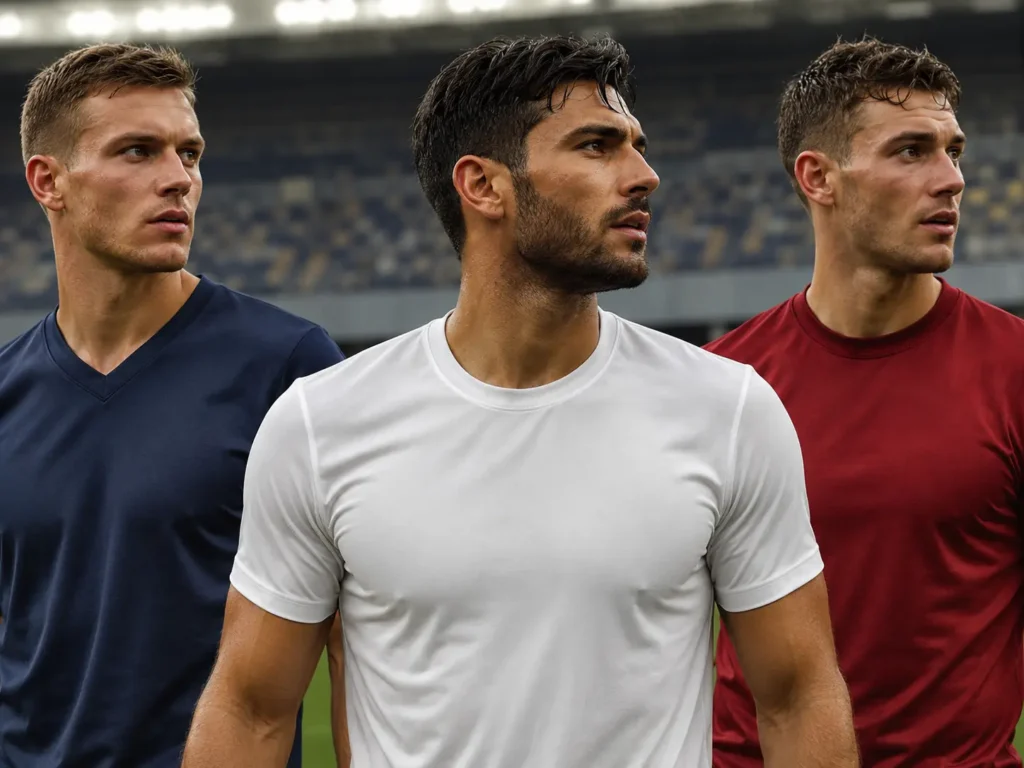
Quick Comparison: V-Neck, Crew Neck, Ribbed, and Self-Fabric Collars
Football Jersey collars usually fall into four practical construction directions: V-neck, crew neck, elastic ribbing, and self-fabric collar construction. Each one serves a different buyer goal. V-neck collars feel more athletic and open. Crew neck collars are familiar, reliable, and bulk-friendly. Ribbed collars improve stretch recovery and shape retention. Self-fabric collars create a lightweight, smooth, and minimal look.
A reliable Football Jersey manufacturer should not recommend collar construction only by appearance. The correct decision should consider the player’s movement, fabric elasticity, body size grading, colorfastness, sewing method, and washing performance. A collar that looks perfect on one sample size may behave differently in 3XL, youth sizes, or long-term teamwear use.
| Collar Type | Best For | Comfort Level | Main Durability Risk | Visual Style | Cost Level |
|---|---|---|---|---|---|
| V-Neck Collar | Match jerseys, breathable teamwear, athletic designs | Open and less restrictive | V point distortion if stitching is weak | Dynamic and sporty | Medium |
| Crew Neck Collar | Training jerseys, youth kits, fan-grade Football Jerseys | Secure and familiar | Neck opening may stretch over time | Clean and classic | Low–Medium |
| Ribbed Collar | Player-issue shirts and premium jerseys | Elastic and stable when rib quality is good | Poor rib recovery can cause loose shape | Professional and structured | Medium |
| Self-Fabric Collar | Lightweight replica jerseys and modern fan shirts | Smooth and low-bulk | Curling or deformation if fabric is unstable | Minimal and integrated | Low–Medium |
V-Neck Football Jersey Design: Open Fit and Athletic Identity
Why V-Neck Collars Are Popular in Football Jerseys
A V-neck football jersey design creates a more open neckline and a stronger athletic impression. It reduces tightness around the front neck and gives players a less restrictive feel during sprinting, turning, jumping, and heading. For slim-cut match shirts and warm-weather teamwear, this can improve perceived comfort.
V-neck collars also support strong visual design. A contrast rib or binding around the neckline can make the shirt look faster, sharper, and more professional. Many buyers choose V-neck collars for academy kits, club uniforms, and performance-oriented teamwear because the neckline adds movement to the overall silhouette.
For buyers building a complete team kit rather than a single shirt, collar design should be coordinated with shorts, socks, fabric finish, color blocking, and logo placement. A complete soccer uniforms supplier approach helps make the whole kit look consistent instead of treating the Football Jersey as an isolated product.
Risks of Poor V-Neck Construction
The V point is the most sensitive part of this collar. If sewing tension is poor, the V point may pucker, twist, pull to one side, or lose symmetry after washing. If the fabric is too elastic and the neckline is not stabilized, the V can become distorted. If the seam is bulky, players may feel rubbing at the front neck.
For serious orders, buyers should request close-up sample photos of the V point, seam flatness, neckline symmetry, and after-wash shape. The V-neck design is attractive, but it is not the place for lazy sewing. A messy V point looks like the jersey had a bad morning and never recovered.
Crew Neck Football Jersey: Clean, Familiar, and Bulk-Friendly
Why Crew Neck Collars Remain Popular
Crew neck collars are popular because they are familiar, easy to wear, simple to grade across sizes, and suitable for mass production. They work well for training jerseys, youth kits, fan-grade shirts, school teams, club stores, and wholesale Football Jerseys. When properly made, a crew neck collar gives a clean round shape and stable appearance.
Crew neck construction is also easier to control in bulk production compared with more complex collar panels. That does not mean buyers can ignore quality. A low-quality crew neck may stretch out, ripple, twist, or lose its circular shape after repeated washing. The collar is one of the first areas buyers touch and see, so weak recovery can make the entire jersey look cheap.
When Crew Neck Is the Safer Choice
If the buyer needs a classic style, broad customer acceptance, easy sizing, and predictable production, crew neck is often the safest option. It is especially practical for fan-grade Football Jerseys, training shirts, youth uniforms, and bulk teamwear.
If the jersey targets elite performance, crew neck can still work well when paired with soft rib, smooth seam finishing, and a low-profile structure. If the project targets lifestyle or retro football fashion, crew neck can also support a clean vintage appearance.
Comparing Durability: Elastic Ribbing Knits vs. Self-Fabric Collars
What Is an Elastic Ribbing Knit Collar?
An elastic ribbing knit collar uses ribbed textile construction that stretches and recovers around the neckline. Depending on the project, ribbing may use polyester, nylon, spandex, or blended yarns. The key value is not the material name alone, but recovery behavior. A good rib should stretch comfortably and return close to its original shape after wear and washing.
Elastic ribbing is useful for player-issue jerseys, premium fan shirts, and performance teamwear because it gives the neckline more structure. It can also support contrast color design, retro styling, and professional sportswear aesthetics.
What Is a Self-Fabric Collar?
A self-fabric collar uses the same or similar fabric as the jersey body. It creates a smoother, lighter, and more integrated neckline. It works well for modern replica shirts and minimal designs where buyers want a clean appearance with lower bulk.
The risk is shape stability. If the body fabric has weak recovery or poor dimensional stability, the self-fabric collar may curl, wave, or deform after repeated washing. This is why self-fabric construction should be tested on the actual Football Jersey fabric, not only reviewed on a digital mockup.
| Feature | Elastic Ribbing Knit Collar | Self-Fabric Collar | Buyer Decision Logic |
|---|---|---|---|
| Stretch Recovery | Usually stronger when rib quality is good | Depends heavily on body fabric | If recovery matters most, choose ribbing |
| Shape Retention | Better for repeated wearing and washing | Medium risk of curling or distortion | If the jersey will be heavily used, test after-wash shape |
| Appearance | Structured and athletic | Smooth and minimal | If the design is modern and lightweight, self-fabric may work |
| Comfort | Soft if rib density is balanced | Lightweight and flat | If skin comfort matters, inspect seam finishing |
| Production Control | Requires rib quality matching | Requires fabric stability | If the factory cannot control shrinkage, avoid risky construction |
Ergonomic Movement: Preventing Neck Chafing During Heading and High-Intensity Play
Why Neck Comfort Matters in Football
Football is not a standing-still sport. Players sprint, jump, turn, pull, slide, collide, and head the ball. During high-intensity play, the collar repeatedly moves against the neck. A rough seam, stiff rib, tight opening, or bulky back-neck tape can cause irritation, especially in hot conditions or long tournaments.
For performance teamwear, collar comfort should be treated like fabric breathability or fit. It may not be obvious in a product photo, but players feel it during use. The problem becomes more serious for youth teams, summer training, and player-issue Football Jerseys where comfort affects repeat wear.
Main Causes of Collar Chafing
| Chafing Cause | Where It Happens | Buyer Risk | Prevention |
|---|---|---|---|
| Rough seam allowance | Back neck and shoulder area | Skin irritation during long wear | Use smooth seam finishing or soft neck tape |
| Overly stiff rib material | Full neck opening | Restrictive feel and rubbing | Select softer elastic ribbing with stable recovery |
| Tight collar measurement | Front and side neck | Discomfort during heading and sprinting | Check size grading across youth and adult sizes |
| Heavy back-neck tape | Back neck | Heat buildup and rubbing | Use lightweight soft tape or heat transfer label |
| Poor topstitching | Around neckline | Scratchy feel and seam waviness | Inspect stitch density, tension, and seam flatness |
How to Design a More Ergonomic Collar
A more ergonomic Football Jersey collar starts with soft materials, balanced stretch, smooth finishing, and correct sizing. The collar should not be too high, too stiff, too tight, or too bulky. For player-issue jerseys, a soft ribbed V-neck or low-profile ribbed crew neck usually performs well. For youth jerseys, softness and safe finishing should matter more than dramatic design.
Buyers should also check label placement. A scratchy woven label at the back neck can ruin an otherwise comfortable shirt. Heat transfer labels or soft printed labels are often better for performance Football Jerseys.
Collar Stitching Methods to Prevent Distortion After 100+ Commercial Wash Cycles
Why Stitching Method Affects Collar Life
The collar is repeatedly stretched when the jersey is worn, pulled over the head, washed, dried, folded, packed, and worn again. Poor stitching can cause deformation, seam twisting, puckering, loose threads, or neckline stretching. For clubs, academies, and commercial teamwear programs, this problem may appear across hundreds of shirts at once.
Collar construction should also be considered together with patches, crest placement, and decoration methods. For example, a heavy crest and poor neckline balance can change how the upper chest area sits on the body. Buyers comparing crest construction can review TPU, silicone, and woven patches on football jerseys when planning the full front-body design system.
Common Collar Stitching Methods
Different stitching methods create different results. Overlock seams are efficient and common. Coverstitch offers a more stretch-friendly finish. Flatlock seams reduce bulk and can improve comfort. Double needle topstitching helps stabilize collar position. Neck tape improves appearance and durability, but it must not be too stiff.
| Stitching Method | Best Use | Strength | Risk If Poorly Made |
|---|---|---|---|
| Overlock seam | Basic collar joining | Fast and efficient for bulk production | Seam bulk, loose threads, scratchy feel |
| Coverstitch | Performance jerseys | Stretch-friendly and professional | Wavy seam if tension is poor |
| Flatlock seam | Anti-chafing construction | Low-bulk comfort | Requires higher production control |
| Double needle topstitch | Collar stabilization | Better shape control | Uneven stitch lines if sewing is careless |
| Neck tape finishing | Back-neck reinforcement | Cleaner appearance and better durability | Irritation if tape is stiff or thick |
100+ Commercial Wash Cycle Logic
Not every Football Jersey must pass 100 commercial wash cycles, and suppliers should not claim it unless properly tested. However, 100+ wash cycles can be used as a high-durability benchmark for academies, training programs, rental teamwear, and commercial-use kits. It helps buyers evaluate whether the collar can survive heavy use without severe distortion.
| Test Stage | Inspection Target | Practical Buyer Expectation |
|---|---|---|
| Initial sample | Collar symmetry, seam flatness, neckline measurement | No twisting, no puckering, clean sewing |
| After 10 washes | Early durability check | Only minor change in shape or measurement |
| After 30 washes | Fan-grade durability reference | Neck opening remains wearable and stable |
| After 50 washes | Teamwear durability reference | Collar retains structure and comfort |
| After 100 washes | Commercial-use stress benchmark | No major seam failure, severe distortion, or unusable neckline |
Material Parameters Buyers Should Check Before Ordering
Rib Composition and Elastic Recovery
Rib collars may include polyester, nylon, spandex, or blended yarns. But composition alone does not guarantee performance. Buyers should check whether the rib stretches and returns, whether it feels too stiff, whether it matches the body fabric color, and whether it shrinks differently from the jersey body.
If the rib shrinks more than the body fabric, the neckline may pucker. If it stretches out too easily, the jersey may look old after limited use. For wholesale Football Jerseys, this becomes a repeat-quality problem because one weak rib batch can affect the entire order.
Collar Width, Height, and Neck Opening
Collar height affects both appearance and comfort. A narrow collar looks lighter and modern. A medium collar offers balance. A higher collar can create stronger visual identity but may feel restrictive during high-intensity play.
If the jersey is for performance use, avoid collars that are too high, too stiff, or too tight. If the jersey is for retro fan retail, a more structured rib or polo-inspired collar may be acceptable. For youth jerseys, comfort should win over dramatic styling. Tiny players are small, but their complaints are full-size.
Seam Allowance and Stitch Density
Seam allowance affects comfort and durability. Stitch density affects strength, elasticity, and appearance. Overly dense stitching can reduce stretch and create stiffness. Too-loose stitching may cause seam failure. Unbalanced tension can create waves, twisting, or puckering around the neckline.
Buyers should inspect sample collars under normal wear, after stretching, and after washing. A collar that lies flat only on a table may not perform well on a moving body.
Colorfastness and Dye Migration
Contrast collars are popular because they add identity and visual energy to Football Jerseys. However, dark rib collars on light jersey fabric may create dye migration or color bleeding if dye quality is poor. This risk is higher in sweat, washing, and heat exposure.
Before approving contrast collars, buyers should test washing, rubbing, and sweat exposure. A navy collar bleeding into a white jersey is not “vintage effect.” It is a quality failure wearing a costume.
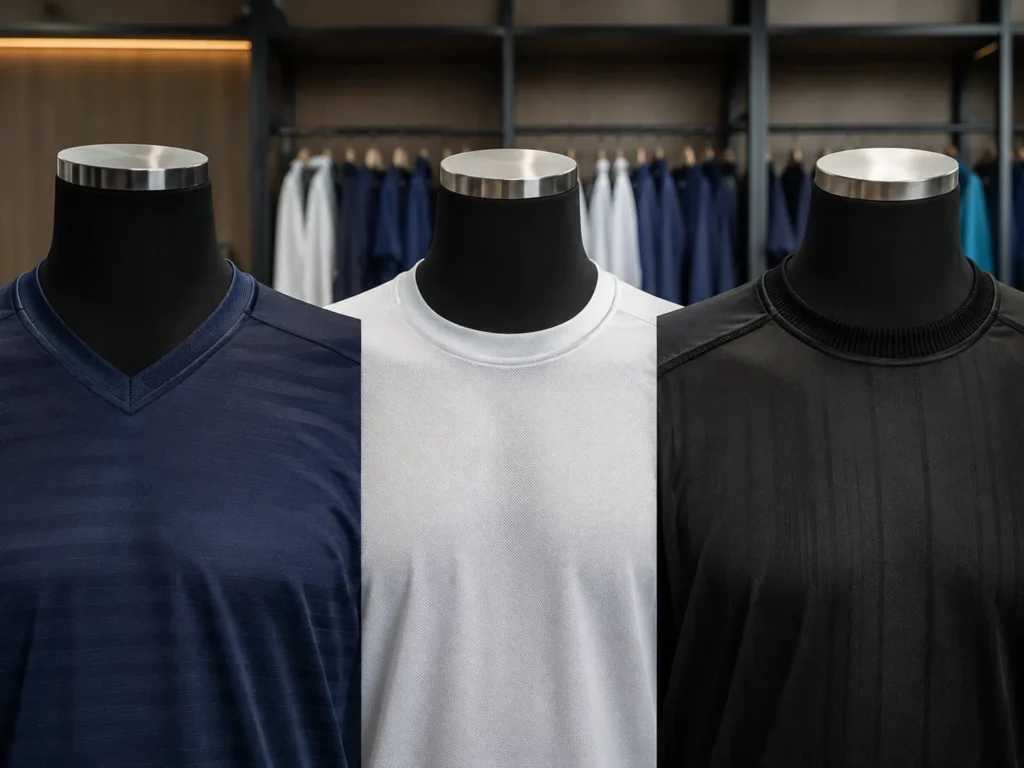
Football Jersey Collar Selection by Product Type
Elite Player-Issue Jerseys
Elite player-issue Football Jerseys should prioritize low weight, soft seam finishing, stretch recovery, moisture management, stable collar shape, and reduced neck chafing. A soft ribbed V-neck or low-profile ribbed crew neck is usually a strong choice.
If the player shirt uses a self-fabric collar, buyers should test curling and recovery carefully. If the shirt uses a ribbed collar, rib softness and stretch recovery must be balanced. A performance Football Jersey should never feel restrictive at the neck during sprinting, heading, or turning.
Fan-Grade Football Jerseys
Fan-grade jerseys need appearance, comfort, retail value, wash durability, easy sizing, and cost control. Crew neck rib collars are safe and familiar. V-neck designs create a more athletic fan look. Self-fabric collars can work well for lightweight replica shirts. Structured rib collars can make the jersey feel more premium.
For fan products, the collar also affects perceived value in product photos and unboxing. If the collar looks twisted or loose, customers may assume the whole garment is low quality. That assumption may be unfair, but buyers do not negotiate with first impressions.
Youth and Academy Football Jerseys
Youth and academy jerseys should prioritize softness, safety, comfort, easy washing, and stable sizing. A soft crew neck rib is usually a practical choice. The neck opening should not feel tight, the back-neck finish should not scratch, and the label should not irritate the skin.
For youth orders, avoid overly stiff neck tape, bulky seam stacking, and high collars that may feel uncomfortable. The best youth collar is not the fanciest one. It is the one players forget they are wearing.
Wholesale Teamwear and Club Orders
Wholesale teamwear requires repeatable production, cost control, consistent sizing, fast delivery, and low defect rates. Simple crew neck rib collars usually perform well in this scenario. V-neck collars can also work if the buyer wants a more athletic style, but the V point must be tested carefully.
When evaluating cost, buyers should not only compare the unit price of fabric and sewing. The total project result includes sample revisions, defect rates, return risk, customer satisfaction, and repeat orders. This Football Jersey sourcing ROI guide is useful for buyers who want to balance collar construction, fabric quality, durability, and total project value instead of chasing the lowest quote.
Industry Trends in Football Jersey Collar Design
Lower-Profile Performance Collars
Modern player shirts are moving toward lighter and cleaner collar construction. Lower-profile collars reduce bulk, support better movement, and match the sleek look of professional performance kits. This trend supports soft ribbing, narrow self-fabric collars, and smooth seam finishing.
Hybrid Collar Construction
Some Football Jerseys combine rib inserts, self-fabric panels, contrast binding, hidden reinforcement, and smooth back-neck tape. Hybrid construction allows buyers to balance appearance and durability, but it requires stronger production control. More design parts mean more places for sewing mistakes to hide. Sneaky little gremlins, basically.
Retro-Inspired Rib and Polo Collars
Fan-grade and lifestyle football shirts are bringing back retro collar styles. Ribbed crew necks, polo-inspired collars, contrast neckline details, and heritage designs can create strong retail appeal. However, retro style still needs modern comfort and wash durability. Nostalgia is good; scratchy necklines are not.
More Demand for Soft-Touch Neck Finishing
Buyers increasingly ask for smooth seams, soft back-neck tape, heat transfer labels, and anti-chafing construction. This is especially important for youth jerseys, summer training kits, and performance matchwear.
Regulations and Compliance Considerations
Football Equipment Rules
Football shirts used in official matches may be affected by competition equipment rules, including numbers, names, team crests, sponsor placement, sleeve badges, slogans, and permitted markings. Collar design should not interfere with required markings or league approval.
For professional clubs and tournaments, confirm the final jersey design with the relevant competition rules before production. A collar may seem unrelated to compliance, but it affects the upper body area where logos, crests, sponsors, and player identification often appear.
Textile Safety and Skin Contact
Because collars directly touch the neck, skin-contact safety matters. Buyers should request relevant chemical safety documentation, especially for youth jerseys, export orders, and brand-controlled retail channels. This may include harmful-substance testing, dye safety, restricted-substance declarations, and material traceability.
For Football Jersey production, the body fabric, rib collar, sewing thread, neck tape, label, print, and patch system may all affect compliance. Do not ask for documentation after shipment. That is how sourcing teams accidentally create emergency meetings.
Care Label and Wash Instruction Alignment
Collar performance depends on washing and drying. Care labels should reflect the approved garment construction, not generic assumptions. If the jersey uses ribbing, contrast collars, prints, or patches, the wash instruction should match the full garment system.
Common Buyer Mistakes When Choosing Football Jersey Collars
Mistake 1: Choosing Only by Style
A collar can look good in a flat mockup but fail during movement or washing. If buyers choose only by style, they may miss chafing risk, stretch recovery problems, seam distortion, or colorfastness issues.
Recommendation: choose based on style, movement, wash durability, fabric compatibility, and size grading.
Mistake 2: Ignoring Rib Recovery
A rib collar that stretches out quickly makes the Football Jersey look old. Poor recovery can create loose neck openings, weak product photos, and poor customer reviews.
Recommendation: test stretch recovery and after-wash collar appearance before confirming bulk orders.
Mistake 3: Using One Collar for Every Jersey Grade
Player-issue, fan-grade, youth, and wholesale jerseys have different priorities. One collar construction may not serve every buyer group well.
Recommendation: match collar construction to product level. Use comfort-first structures for players, safe familiar structures for fan-grade shirts, and repeatable construction for wholesale teamwear.
Mistake 4: Not Testing Contrast Collar Colorfastness
Dark contrast collars can look excellent, but they may create dye migration if not tested properly. This is especially risky when dark ribbing is used with white or light-colored jersey fabric.
Recommendation: test washing, sweat, and rubbing before approving contrast collars.
Mistake 5: Approving Bulk Production Without After-Wash Samples
The collar may look fine before washing and fail after repeated laundering. This is one of the most common avoidable problems in custom Football Jersey production.
Recommendation: request washed samples or after-wash photos before bulk approval, especially for club, academy, and wholesale orders.
Buyer Selection Framework: Which Collar Should You Choose?
| If Your Project Needs | Choose This Collar Direction | Why It Works |
|---|---|---|
| Open athletic neckline | V-neck collar | Better ventilation feel and dynamic sports appearance |
| Classic fit and broad acceptance | Crew neck collar | Familiar, bulk-friendly, and easy to grade |
| Strong shape retention | Elastic ribbing knit collar | Better stretch recovery and neckline stability |
| Lightweight minimal design | Self-fabric collar | Smooth, low-bulk, and modern appearance |
| High-intensity match use | Soft ribbed V-neck or low-profile ribbed crew | Balances comfort, movement, and durability |
| Wholesale teamwear | Simple ribbed crew neck | Stable cost, repeatable sewing, and lower defect risk |
Final Recommendation: A Better Collar Starts With Better Sampling
The best Football Jersey collar is not always the most stylish one. It is the collar that matches the jersey grade, fabric stretch, wearer movement, wash requirement, cost target, and brand positioning. V-neck collars work well for athletic and breathable designs. Crew neck collars are safe for training shirts, youth kits, and fan-grade jerseys. Ribbed collars are stronger when shape retention matters. Self-fabric collars are useful for lightweight modern designs, but they need careful testing.
Before confirming production, prepare the jersey fabric, size range, collar style, rib requirement, logo placement, patch construction, wash target, and compliance expectations. Then approve the collar with real samples, not only digital mockups. In Football Jersey manufacturing, the neck opening may be small, but the quality signal is huge.
Frequently Asked Questions About Football Jersey Collars
1. Which collar is best for a Football Jersey?
The best collar for a Football Jersey depends on the jersey grade, fabric type, wearer expectation, and production goal. A V-neck collar works well for athletic designs because it feels more open and less restrictive. A crew neck collar is a safe choice for fan-grade jerseys, training shirts, youth kits, and wholesale teamwear because it is familiar and easier to control in bulk production. A ribbed collar is usually better when stretch recovery and shape retention matter, while a self-fabric collar is useful for lightweight modern jerseys when the fabric is stable enough.
2. Are ribbed collars more durable than self-fabric collars?
Ribbed collars are often more durable than self-fabric collars when the rib quality, yarn composition, and sewing tension are controlled correctly. A good ribbed collar can stretch and recover better, helping the neckline keep its shape after repeated wearing and washing. However, poor rib material can still stretch out, twist, or feel too stiff. Self-fabric collars can work well for lightweight Football Jerseys, but they should be tested carefully because unstable fabric may curl, wave, or deform after washing.
3. How do you prevent Football Jersey collars from stretching out?
To prevent Football Jersey collars from stretching out, buyers should choose suitable rib material, confirm neck opening measurements, control seam tension, use proper stitching methods, and test stretch recovery before bulk production. The collar fabric and body fabric should also have compatible shrinkage behavior. If the rib shrinks more than the jersey body, the neckline may pucker. If the rib has weak recovery, the neck opening may become loose. Washed samples are much safer than approving production from an unwashed sample photo.
4. What collar is best for player-issue football shirts?
For player-issue football shirts, the best collar is usually a soft ribbed V-neck or a low-profile ribbed crew neck. These collar structures can support movement, reduce neck restriction, and improve comfort during sprinting, heading, turning, and high-intensity play. The collar should be lightweight, smooth, flexible, and free from scratchy labels or bulky seam stacking. Self-fabric collars can also work for modern lightweight designs, but they must be tested for curling, stretching, and after-wash shape stability.
5. What should buyers check before ordering custom Football Jerseys?
Before ordering custom Football Jerseys, buyers should check collar style, collar material, rib recovery, neckline measurement, seam finishing, stitch density, colorfastness, size grading, wash durability, back-neck comfort, label placement, and compliance documentation. Samples should be made with the actual production fabric and tested after washing and stretching. Buyers should also confirm whether the collar construction matches the jersey grade, such as player-issue, fan-grade, youth, academy, training, or wholesale teamwear.
References
- Laws of the Game: Law 4, The Players’ Equipment, The International Football Association Board, Official Laws of the Game.
- Equipment Regulations, Fédération Internationale de Football Association, FIFA Legal and Compliance Resources.
- OEKO-TEX STANDARD 100: Tested for Harmful Substances, OEKO-TEX Association, Textile Safety Standard.
- ISO 6330:2021 Textiles — Domestic Washing and Drying Procedures for Textile Testing, International Organization for Standardization.
- AATCC Standard Test Methods and Procedures, American Association of Textile Chemists and Colorists, Textile Testing Standards.
- AATCC TM135: Dimensional Changes of Fabrics after Home Laundering, American Association of Textile Chemists and Colorists.
- Textiles: Tests for Colour Fastness, International Organization for Standardization, ISO Textile Testing Standards.
- The State of Fashion 2025, McKinsey & Company and The Business of Fashion, Global Apparel Industry Report.