The Moment People Realize Shorts Actually Matter
“I only need something light for the gym.”
“Maybe one pair for running too.”
“And if they still look good enough for summer errands, even better.”
That sounds simple, but it is exactly where most buyers get it wrong. A pair of shorts that feels acceptable during a quick try-on can become annoying after twenty minutes of training, frustrating after a humid run, or too stiff and bulky once real movement starts. The truth is that Mesh Shorts are not just a casual sportswear basic anymore. For gym sessions, running, basketball, and hot-weather use, they sit right at the intersection of comfort, breathability, range of motion, and practical durability.
That is one reason a supplier like YSTAR Wear matters in this category. On its public-facing company pages, YSTAR describes itself as a China-based underwear and sportswear manufacturer with more than 10 years of design and manufacturing experience, and it highlights certifications including OCS, GRS, OEKO-TEX, Sedex, WRAP, and BSCI. Its mesh-shorts category and related educational posts also show a product strategy built around performance, customization, and buyer-facing use cases rather than just generic style naming.
The bigger point is that the “best” Mesh Shorts depend on what the body is doing inside them. A pair meant for squats and lunges should not be judged the same way as one meant for summer marathon training, pickup basketball, or hot-weather everyday wear. If a buyer wants to move from guesswork to real product selection, the fastest step is usually to contact YSTAR with the actual use case in mind instead of treating all sports shorts as interchangeable.
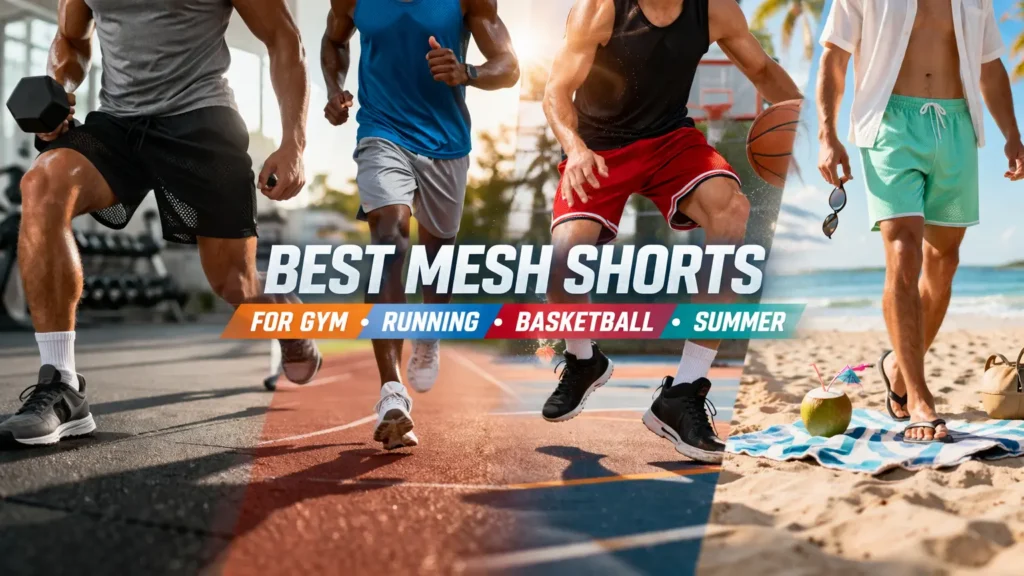
Why Mesh Shorts Still Win in Performance-Heavy Categories
The appeal of Mesh Shorts is easy to understand once you strip away the hype. YSTAR’s product page describes them as breathable, lightweight sportswear built for comfort and flexibility, commonly used for training, games, and casual wear. The same page notes typical features like elastic waistbands, drawstrings, liner options, and materials such as 100% polyester mesh, recycled polyester, and recycled nylon. In short: mesh shorts are popular because they solve several small problems at once instead of trying to be fashionable first and functional later.
That performance logic is supported by broader clothing research. A narrative review on sports clothing in the heat notes that sportswear is typically designed with lightweight and breathable fabrics and structures to improve sweat evaporation and comfort during exercise. A 2025 study on knitted fabrics worn close to the skin similarly found that thermal and moisture-management properties contribute significantly to wearer comfort, with high-air-permeability fabrics showing efficient moisture management and comparable drying times. The basic lesson is not mysterious: when the fabric manages heat and moisture better, the garment becomes easier to wear during exertion.
That is also why YSTAR’s own content on top trends and benefits of mesh shorts in modern activewear feels commercially relevant rather than fluffy. The company frames mesh shorts around lightweight comfort, ventilation, freedom of movement, and broader crossover from training gear into casual use. That crossover is important. The best pair for many buyers is not the one that excels only in one sport. It is the one that can handle workouts, warm weather, and everyday movement without becoming uncomfortable or visually awkward.
What “Best” Actually Means for Different Activities
A lot of people ask for the “best” mesh shorts as if there is one universal answer. There is not. The best pair depends on what kind of motion, temperature, and friction the garment will face.
For gym training, the shorts must stay out of the way during repeated movement patterns.
For running, they must help manage heat and moisture without turning clingy or heavy.
For basketball, they need freedom of movement, durability, and enough structure not to shift awkwardly.
For summer use, they should feel easy, airy, and versatile enough for daily wear.
That is why YSTAR’s article on how to choose mesh shorts that are both practical and stylish is a useful reference point. The article frames mesh shorts as part of a performance system rather than just an aesthetic choice, and it focuses on factors such as fabric structure, breathability, GSM, mobility, durability, and training-specific needs. That is a much smarter way to evaluate the category than simply chasing color or trend language.
Gym Use: Mobility First, Distraction Last
The gym is where badly designed shorts get exposed quickly. If the fabric traps heat, if the inseam fights your stride, or if the waistband shifts under load, the shorts stop being background equipment and start becoming part of the problem.
Good gym-oriented Mesh Shorts usually share a few traits. They have enough airflow to stay comfortable during indoor training. They maintain a clean range of motion during squats, lunges, step-ups, and machine work. They are not so flimsy that they feel transparent or unstable when damp. YSTAR’s own training-focused article makes this point clearly by emphasizing heat and moisture, friction and chafing, and range of motion under load as three of the first things serious athletes should judge. It also notes that better-ventilated mesh shorts reduced “shorts-related discomfort” reports in one semi-pro league case by more than 40% across a season, which is exactly the kind of small-but-real improvement buyers care about.
For gym buyers, that means the best mesh shorts are usually the ones with balanced fabric weight, clean mesh structure, a reliable waistband, and enough room to move without looking oversized. YSTAR’s mesh-shorts page also highlights customization across waistband types, labels, prints, and fabrics, which matters for gyms, teams, and private-label buyers who are not just buying one retail pair but building a usable product line.
Running Use: Heat Management Stops Being Optional
Running is where the difference between “lightweight” and actually wearable becomes obvious. Once sweat, heat, and repeated motion build up, poorly chosen shorts feel sticky, heavy, or irritating fast.
Is guidance on exercising in hot environments specifically recommends loose-fitting, lightweight, moisture-wicking clothing, especially when temperature and humidity rise. That recommendation lines up with the broader sportswear literature: if sweat management and airflow are weak, comfort and heat tolerance both suffer. A 2025 fabric study also found that moisture-management performance and drying behavior are key comfort variables in garments worn close to the skin. For runners, especially in summer, those variables stop being theoretical very quickly.
This is why content like Top 10 Mesh Shorts for Summer Marathon Running and Top 10 Reasons Why Mesh Shorts Are a Must-Have for Marathon Runners makes sense in the first place. Marathon-related use is not just about style or even pure speed. It is about how a garment behaves under continuous heat, movement, and moisture. In real terms, the best running-friendly mesh shorts are usually lighter, quicker to dry, less clingy, and less prone to friction-related irritation than generic casual shorts.
That also explains why YSTAR’s summer-running and training content leans so heavily on ventilation, lighter fabric weights, and movement-specific logic. For summer runners, shorts should not merely “look breathable.” They should help delay that sticky, overheated feeling that turns a planned run into a negotiation with discomfort.
Basketball Use: Range of Motion and Durability Need to Coexist
Basketball shorts have always sat in a slightly different category because they must survive frequent cuts, jumps, defensive slides, and repeated changes of direction. The best basketball-ready Mesh Shorts therefore need a different balance than pure running shorts.
They need enough freedom for explosive movement.
They need enough structure not to ride awkwardly or twist during play.
They need enough durability to handle repeated use in gyms, on courts, and through heavy washing cycles.
YSTAR’s product page explicitly includes mesh basketball shorts in its range and positions mesh as adaptable for training and games, which fits this use case well. More importantly, the company’s training-focused article points out that serious athletes repeat the same movement patterns thousands of times, so shorts must manage heat, friction, and range of motion at the same time. That is basketball in one sentence.
For basketball, longer lengths can still work if they do not interfere with movement, but the bigger question is whether the construction helps or hinders the athlete. The best pair for court use is not necessarily the one with the loudest style language. It is the one that stays comfortable during repeated effort and still feels dependable after a full season of wear.

Summer Use: The Best Pair Is the One You Actually Keep Reaching For
Summer adds another layer to the equation because even non-athletes start prioritizing airflow, softness, and a looser-feeling fabric experience. In that setting, Mesh Shorts become more than training gear. They become part of the warm-weather wardrobe.
YSTAR’s 2025 article 5 best mesh shorts for men breathe easy style big in 2025 captures this shift well. The article emphasizes that the best mesh shorts balance breathability and aesthetics, making them suitable for workouts, casual errands, beach-adjacent use, and general hot-weather wear. It also points buyers toward moisture-wicking, quick-drying materials, practical pockets, waistband comfort, and inseam selection — all of which matter more in summer because discomfort shows up faster.
There is also a sustainability angle that modern buyers increasingly care about. In its 2025 eco-conscious article, YSTAR notes growing attention to material safety, durability, and environmental impact, and says the company is investing in recycled polyester options and recycled-material mesh-short lines where possible. The mesh-shorts category page also lists recycled nylon and recycled polyester among commonly used materials. That does not magically solve all textile-impact questions, but it does show that the category is moving toward durability plus better material choices rather than throwaway seasonal thinking.
A Practical Comparison Table
| Use case | What matters most | Best mesh shorts characteristics | What to avoid |
|---|---|---|---|
| Gym training | Mobility, waistband stability, heat control | Mid-weight mesh, clean stretch, secure waistband, non-clingy fit | Overly heavy shorts or thin see-through mesh |
| Running | Breathability, moisture handling, lightness, chafe control | Lightweight build, airflow-friendly mesh, quick-drying fabric, runner-friendly cut | Thick fabric, poor moisture release, awkward seams |
| Basketball | Range of motion, durability, structure | Durable mesh, enough room for movement, stable fit during jumps and cuts | Shorts that twist, ride up, or feel flimsy |
| Summer casual wear | Airiness, comfort, versatility, style | Soft hand feel, breathable construction, easy everyday silhouette | Shorts that only work in the gym and nowhere else |
| Team / bulk orders | Repeatability, custom options, wash durability | Stable construction, customizable fabrics/printing, quality control | Trend-only styles without practical performance logic |
This table matters because it makes one thing obvious: the best mesh shorts are context-specific. A pair that excels in one use case may be only average in another.
The Fabric and Construction Details That Separate Good From Great
Most buyers can spot color and cut. Fewer know how to judge the details that actually change performance. But those details are usually what decide whether a pair of shorts becomes a favorite or ends up ignored in the drawer.
From YSTAR’s training and product pages, the practical checkpoints look like this:
- fabric weight that is light but not flimsy
- mesh structure that allows airflow without looking sloppy
- waistband engineering that stays comfortable and stable
- enough space for movement without excess bulk
- moisture management that feels good in use, not only on paper
- printing and customization options that do not compromise wearability
This is one reason the company’s mesh-shorts content keeps returning to the same theme: construction matters. The mesh-shorts page highlights breathability, elasticity, moisture absorption, deodorization, antibacterial processing, and custom options, while the training-focused article argues that mesh shorts should be treated as engineered gear rather than just another polyester SKU. For serious buyers, that is exactly the right attitude.
Five Questions Buyers Commonly Ask About Mesh Shorts
Are mesh shorts actually better for the gym than regular athletic shorts?
They often are, especially when heat buildup and freedom of movement matter. Well-made mesh shorts usually provide better airflow and a lighter feel during indoor training, which can make them more comfortable over longer sessions. The biggest difference appears when the workout gets sweaty and repeated movement starts exposing poor fabric behavior.
Are mesh shorts good for running in hot weather?
Yes, that is one of their strongest use cases. Running in heat puts more pressure on clothing to stay light, breathable, and quick to dry. Specifically recommends loose-fitting, lightweight, moisture-wicking clothing for hot conditions, which aligns closely with why mesh shorts are often preferred in summer running.
Can mesh shorts work for basketball, or are they mostly for running?
They work well for basketball too, provided the cut and durability match the demands of the sport. Basketball needs more movement tolerance and sturdier construction than casual shorts, so the best pair is usually one that combines airflow with enough structure to survive frequent cuts, jumps, and repeated washes.
Are mesh shorts only sportswear now, or can they be worn casually?
They have clearly moved beyond pure sportswear. YSTAR’s own 2025 content treats mesh shorts as useful not only for workouts but also for casual wear, travel, and summer everyday use. The key is choosing a clean silhouette and a fabric that feels good enough outside the gym.
What should buyers look for when choosing a mesh-shorts supplier?
Look for technical clarity, not just attractive product photos. A reliable supplier should be able to explain fabric options, mesh structure, customization choices, performance priorities, and how the shorts are intended to be used. If the supplier cannot connect product design to real training or seasonal use, that is usually a bad sign.
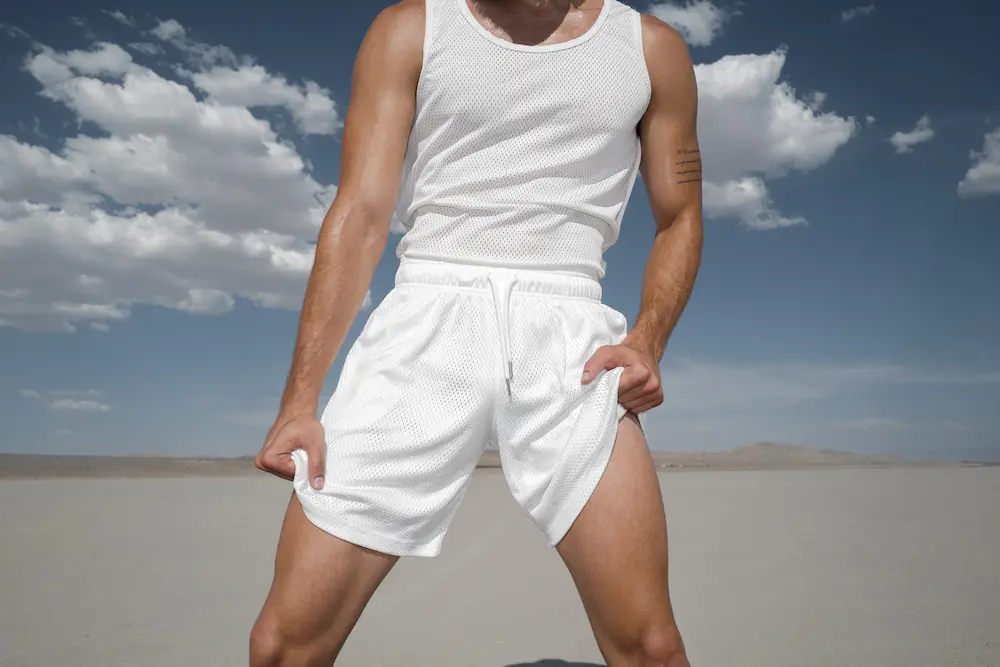
The Best Pair Is the One That Matches the Way You Move
At the start, the buyer only wanted “something light for the gym.” By the end, the real question turned out to be much more useful: what kind of Mesh Shorts actually make sense for the body, the activity, and the climate they are meant for?
That is why the best mesh shorts for gym, running, basketball, and summer activities are not one single universal model. They are the pairs that understand what movement feels like under real conditions. In the gym, that means stable mobility. In running, it means better heat and moisture management. In basketball, it means range of motion plus durability. In summer, it means a short that stays easy to wear when the temperature climbs.
YSTAR’s product pages and 2025 mesh-shorts content make one thing clear: good mesh shorts should be judged like performance gear, not filler apparel. If the garment manages heat, comfort, fit, and durability in a way that actually supports the user, then it stops being “just shorts” and becomes part of the performance system. And that is the whole point of choosing the right pair in the first place.
References
- YSTAR Wear, How to Choose Mesh Shorts That Are Both Practical and Stylish.
- Di Domenico et al., The Role of Sports Clothing in Thermoregulation, Comfort, and Performance During Exercise in the Heat.
- CDC NIOSH, Does Slip-Resistant Footwear Reduce Slips, Trips, and Falls in Food Service?
- Vasile et al., Thermal and Moisture Management Properties of Knitted Fabrics for Skin-Contact Workwear.
- ACSM, Exercising in Hot and Cold Environments.
- World Footwear, World Footwear Yearbook 2025.
- YSTAR Wear, Top Trends and Benefits of Mesh Shorts in Modern Activewear.
- YSTAR Wear, Navigating Sustainability in Fashion: How Mesh Shorts Fit into an Evolving Eco-Conscious Landscape.
- YSTAR Wear, Recommended Mesh Shorts for Men in 2025.
- YSTAR Wear, Mesh Shorts Product Category and Customization Information.