Rychlý přehled: Profesionální výroba fotbalových dresů
Průnik sportovní vědy a textilního inženýrství zásadně proměnil atletické oblečení. Výroba profesionálního fotbalového dresu již není jen stříhání a šití; je to vysoce sofistikovaná disciplína vyžadující hluboké pochopení termodynamiky, aerodynamika, a polymerní chemie. Po celá desetiletí, hráči soutěžili v těžké, tkaniny pohlcující vlhkost, které omezují pohyb a zvyšují únavu. Dnes, globální trh se sportovním oblečením vyžaduje ultralehké, hydrofobní materiály navržené pro zvýšení sportovního výkonu. Úředníci pro zadávání zakázek, ředitelé klubů, a značky sportovního oblečení čelí při získávání těchto specializovaných oděvů stále složitějšímu dodavatelskému řetězci. Identifikace továrny s technologickou infrastrukturou pro provádění sublimace s vysokou hustotou, laserem řezaná ventilace, a ergonomické 3D přizpůsobení je prvořadé. Tato složitost způsobila významný posun ve strategiích získávání zdrojů B2B, což vede k masivnímu nárůstu poptávky po technologicky vyspělých velkoobchod výrobců fotbalových dresů schopné splnit přísné mezinárodní standardy výkonu.
How to Evaluate a Professional Football Jersey Manufacturer
Choosing a professional football jersey manufacturer involves more than comparing product photos or requesting the lowest quotation. Pro kluby, distributors, sportswear brands, a kupci soukromých značek, the manufacturer’s production capabilities directly affect product consistency, customization flexibility, and delivery reliability.
Před zadáním hromadné objednávky, buyers should evaluate several important areas:
1. Production Equipment and In-House Capabilities
Ask whether the manufacturer handles key processes internally or relies on multiple subcontractors. Relevant capabilities may include fabric inspection, digital sublimation printing, precision cutting, šití, heat pressing, finishing, and final garment inspection. A clear understanding of the production workflow helps buyers identify potential quality-control gaps.
2. Experience with Custom Teamwear
A supplier experienced in football apparel should understand different jersey structures, player and fan fits, youth sizing, sponsor artwork, club crests, číslování, and personalized names. Buyers should request relevant product samples or production examples to assess whether the factory can handle their specific requirements.
3. Sample Development and Quality Control
A reliable manufacturer should have a defined sample approval process and documented inspection procedures. Buyers should confirm how fabric specifications, míry oděvu, print colors, umístění loga, šití, and packaging are checked before shipment.
4. Certification and Documentation
If a project requires textile safety or recycled-content claims, request the relevant certificates and verify their scope, validity, and applicability to the actual product and production site. A certificate should not be treated as automatic proof that every material or component in an order is covered.
5. Communication and Reorder Support
For repeat teamwear programs, the supplier should be able to retain approved artwork, measurement specifications, material details, color references, and production records. These records make future orders easier to compare with the original approved batch.
A practical supplier evaluation should consider production capability, sample accuracy, quality documentation, sdělení, and delivery performance together. The lowest initial quotation is not necessarily the most cost-effective choice if it creates additional inspection, rework, or replacement costs.
Evoluce tkanin pro vysoce výkonné fotbalové soupravy
Od těžké bavlny po mikrotechnický polyester
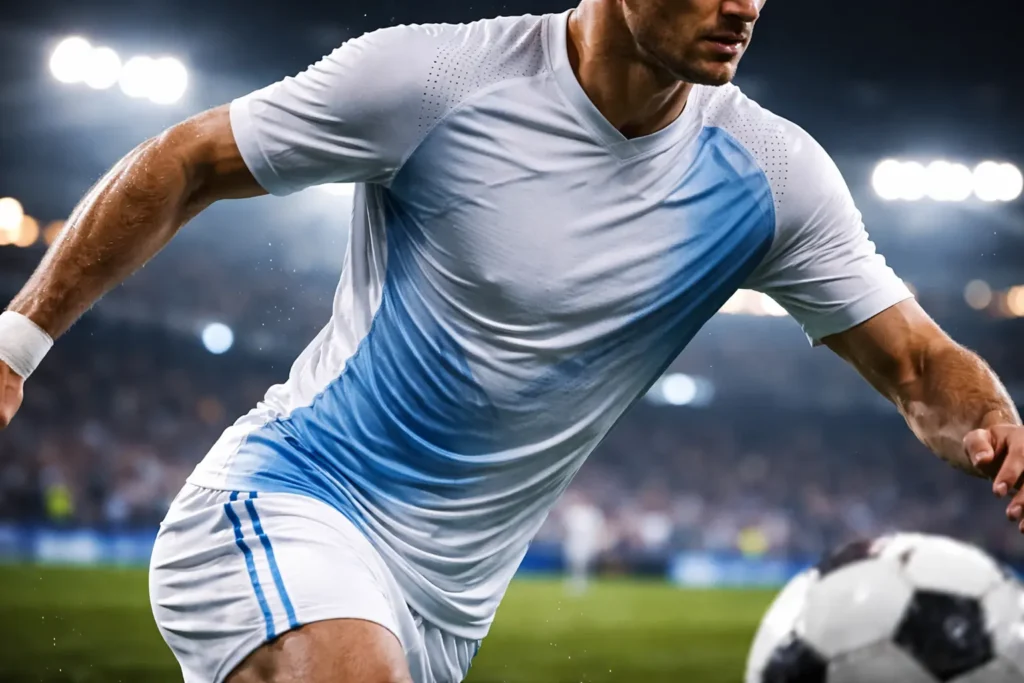
Pochopení chemického složení moderních výkonných polymerů je prvním krokem ve výrobním procesu. Tradiční bavlna, se svými vysokými hydrofilními vlastnostmi, zadržuje pot, sčítání až 40% větší váhu oděvu během 90minutového zápasu. Moderní výroba využívá výhradně mikrotechnologický polyester (PET) a směsi elastanu. Tyto syntetické příze jsou extrudovány do multifilamentních struktur, které vytvářejí mikroskopické kanálky. Prostřednictvím kapilárního působení, tyto kanály odvádějí vlhkost z epidermis na vnější povrch látky, kde se rychle odpařuje. Tato nepřetržitá rychlost přenosu vlhkosti (MVTR) je nezbytný pro udržení tělesné teploty sportovce. Je to vědecky doložená realita v rámci profesionálního sportovního odvětví, které se specializovalo vlastní fotbalové dresy nabízejí lepší výkon konkrétně proto, že tyto patentované struktury odvádějící vlhkost zabraňují tepelnému vyčerpání při vysoce intenzivní kardiovaskulární námaze. Dále, snížené koeficienty tření těchto syntetických mikrovláken drasticky minimalizují oděrky kůže.
Parametry materiálu: GSM, Směsi spandexu, a pevnost v tahu
Kromě základní chemie polymerů, fyzická architektonická konstrukce tkaniny určuje její konečný výkon v terénu. Výrobci musí GSM pečlivě kalibrovat (Gramů na metr čtvereční). Standardní repliková sada může využívat a 150-160 GSM tkanina, upřednostňuje odolnost pro každodenní nošení. nicméně, autentické sady pro zápasový den jsou navrženy tak, aby byly neuvěřitelně lehké 110-130 GSM. K dosažení tohoto snížení hmotnosti bez snížení pevnosti v tahu, tkanina musí být pletena pomocí moderních interlockových nebo žakárových strojů.
Elastane may be incorporated into selected football jersey fabrics when additional stretch and recovery are required. nicméně, the appropriate fiber composition depends on the knitting structure, střih oděvu, intended use, and target price point. Buyers should evaluate stretch and recovery performance through fabric testing rather than relying on a fixed elastane percentage as a universal specification.
Rozpoznání těchto technických rozdílů je pro regionální distributory naprosto zásadní velkoobchod výrobců fotbalových dresů fungující v různých klimatických podmínkách, kde rovnováha mezi extrémně nízkou prodyšností a strukturální integritou určuje úspěch produktu na trhu.
How to Select and Test Football Jersey Fabrics Before Production
Fabric selection should be based on the intended use of the football jersey rather than GSM alone. A lightweight fabric may be suitable for match-day apparel, while a team training shirt or fan replica may require a different balance of weight, neprůhlednost, protáhnout se, a trvanlivost.
B2B buyers should compare the following fabric characteristics before approving a material:
Fabric Weight and Opacity
GSM indicates the mass of a fabric per square meter, but it does not independently determine garment quality. Buyers should check whether the fabric remains sufficiently opaque when stretched, whether the color appears consistent under different lighting conditions, and whether the finished garment feels appropriate for its intended use.
Stretch and Recovery
For jerseys designed for active movement, evaluate how the fabric stretches horizontally and vertically and whether it returns to its original dimensions after repeated extension. Elastane may be included when additional stretch and recovery are required, but the ideal fiber composition depends on the fabric construction and garment design.
Moisture Management and Air Permeability
Moisture management and air permeability are related but different properties. Moisture-wicking performance concerns the movement of liquid moisture across or through a textile, while air permeability measures how easily air passes through it. Buyers should request relevant test results rather than treating one property as proof of the other.
Colorfastness and Dimensional Stability
Fabric and printed panels should be checked for color transfer, shade variation, shrinkage, and distortion after appropriate washing or conditioning tests. These checks are particularly important for team orders involving multiple sizes and repeat production batches.
A Practical Fabric Evaluation Checklist
| Test Area | What Buyers Should Check | Proč na tom záleží |
|---|---|---|
| Hmotnost látky | GSM consistency across rolls | Helps maintain consistent garment specifications |
| Neprůhlednost | Transparency under stretching | Supports suitable coverage during movement |
| Obnova protažení | Fabric returns after extension | Helps maintain fit and shape |
| Propustnost vzduchu | Airflow through the fabric | Supports ventilation requirements |
| Řízení vlhkosti | Liquid moisture spreading and drying behavior | Helps assess fabric suitability for active use |
| Stálobarevnost | Resistance to washing-related color change | Helps preserve the appearance of the jersey |
For larger orders, buyers should approve the actual fabric swatch and retain a reference sample. This creates a clear benchmark for bulk production and future repeat orders.
Verze přehrávače vs. Verze ventilátoru: Klíčové konstrukční rozdíly
Anatomie autentické košile Match Day
Fyzická geometrie a proces řezání oděvu představují další vrstvu složitosti výroby. Odvětví striktně rozlišuje mezi ‚verzí hráče‘’ (autentický) a ‚Verze pro fanoušky’ (replika) řezy. Autentické zápasové košile jsou konstruovány pomocí dynamiky, 3D atletický střih.
This involves a closer athletic fit and carefully shaped panels designed to follow the body’s contours and reduce excess fabric. The construction should support freedom of movement while maintaining a secure and comfortable fit during football activities. Any specific aerodynamic performance benefit should be supported by appropriate testing rather than assumed from garment fit alone.
Průramky jsou vyvýšené, a rozměry hrudníku jsou zúžené. Pro profesionální kluby, akademií, and semi-pro leagues seeking a closer, movement-oriented fit, opuštění obecných hranatých šablon a získávání zdrojů zakázková fotbalová trička, která se hodí právě svým sportovcům’ odlišné biometrické profily se v moderním fotbale staly nesmlouvavým standardem nákupu. Verze repliky, naopak, využívá rovný, uvolněná geometrie navržená tak, aby vyhovovala širší škále tvarů těla, upřednostňuje ležérní pohodlí před vysokorychlostní aerodynamikou.
Antropometrické škálování napříč demografickými údaji
Když se ponoříme hlouběji do antropometrického škálování napříč různými demografickými skupinami, klasifikace těchto vzorů se stává složitým matematickým cvičením. Změna měřítka vzoru není pouze záležitostí univerzálního zmenšování nebo zvětšování rozměrů. Geometrie těla u dětí a dospívajících vyžadují zcela odlišné matematické proporce ve srovnání s plně vyvinutými dospělými. Sklon ramen, pokles od hrudníku k pasu, a obvod průramku musí být přepočítán pro každou věkovou skupinu, aby byla zajištěna svoboda pohybu. Převládající výrobní problém, se kterým se setkává mnoho značek, spočívá ve zvládnutí složitého přechodu mezi nimi mládežnické fotbalové dresy vs střih pro dospělés, protože neupravení strukturálního odstupňování vede k omezujícím výstřihům nebo neúměrně dlouhým spodním liniím, které brání biomechanice mladého sportovce na hřišti. Pokročilí výrobci vzorů využívají digitální CAD software k dokonalému vyrovnání těchto specifických rozměrových přechodů, zajištění optimálního výkonu na každé úrovni akademie.
Football Jersey Sample Development and Pre-Production Approval
A successful bulk manufacturing project should begin with a clearly documented sample approval process. Even when a buyer has supplied complete artwork and technical specifications, a physical sample is necessary to confirm how the design, tkanina, vejít se, and construction work together.
The sample development process should include the following stages:
Stage 1: Artwork and Technical Specification Review
Before sample production, the buyer and manufacturer should confirm the jersey design, color references, loga sponzorů, club crest dimensions, jména hráčů, čísla, printing positions, and size requirements. Artwork files should be checked for resolution, color mode, and production compatibility.
Stage 2: Fabric and Color Confirmation
The selected fabric should be checked against the agreed material specification, GSM range, textura, and stretch requirements. Printed color swatches or fabric panels should be reviewed under consistent lighting before the full garment sample is approved.
Stage 3: Fit and Measurement Review
The sample should be measured against the approved size chart. Buyers should check chest width, délka těla, šířka ramen, délka rukávu, armhole construction, and neckline dimensions. If the order includes adult and youth sizes, each size range should be reviewed separately.
Stage 4: Construction and Branding Inspection
Inspect the stitching, švy, hems, štítky, printed graphics, odznaky, and heat-applied elements. Pay particular attention to logo alignment, edge finishing, and whether decorative components remain securely attached during normal handling.
Stage 5: Written Pre-Production Approval
Once the sample meets the agreed requirements, both parties should retain an approved reference sample or documented approval record. Any subsequent changes to fabric, artwork, measurements, or construction should be confirmed before bulk production begins.
Pre-Production Sample Approval Checklist
| Inspection Item | Approval Requirement |
|---|---|
| Artwork | Correct logos, sponzorská grafika, jména, a čísla |
| Tkanina | Agreed composition, hmotnost, textura, a barvu |
| Měření | Dimensions match the approved size chart |
| Konstrukce | Consistent stitching, švy, hems, and finishing |
| Branding | Correct placement, vzhled, and attachment |
| Obal | Approved labels, folding, and packing requirements |
A signed-off sample is an important production reference. It helps reduce misunderstandings between the buyer and factory and provides a practical benchmark for bulk quality inspections.
Pokročilá prodyšnost: Laserem řezaná ventilace & Síťové zóny
Termoregulace na hřišti
Termoregulační nároky kladené na lidský organismus při profesionálním zápase jsou extrémní. Záložník se může krýt 11 kilometrů, generuje obrovské metabolické teplo. Bojovat proti tomu, elitní fotbalová trička integrují pokročilé ventilační systémy s mapováním těla. Analýzou termovizních dat, inženýři identifikují zóny s vysokou teplotou – převážně v podpaží, střed hrudníku, a spodní bederní oblast. Továrny poté nasadí specializované techniky žakárového pletení, aby hladce přecházely tkaniny z pevné propojené struktury do síťoviny s otevřenými otvory v přesně stejném souvislém panelu tkaniny.. Pochopení této termodynamické vědy, vedle toho přesně vědět jak nastavit velikost pro každou věkovou skupinu, zajišťuje, že oděv působí spíše jako aktivní chladicí mechanismus než jako tepelná past, drasticky prodloužit okno maximálního výkonu hráče. Tento bezproblémový přechod eliminuje potřebu objemných vnitřních švů, které by mohly způsobit tření, zachování dokonale hladkého interiéru.
Konstrukce laserem řezaných perforací
Přesnost potřebná k provedení další pokročilé ventilace nás přivádí k laserem řezaným perforacím. Ve verzích pro špičkové hráče, továrny používají počítačem řízené CO2 lasery k vypalování mikroskopických otvorů do bočních panelů. Laser nejen řeže látku, ale současně kauterizuje syntetické okraje, zabraňuje roztřepení materiálu při nesmírném namáhání zápalkou.
Laser-cut perforations can create localized ventilation openings and may reduce material in selected areas. Their practical contribution depends on hole size, umístění, fabric construction, and the garment’s overall design. Buyers should evaluate the finished garment for airflow, edge quality, and fabric stability.
Integrace těchto vysoce pokročilých aerodynamických a termoregulačních funkcí vyžaduje sofistikovaného výrobního partnera vybaveného nejmodernějšími automatizovanými stroji.. Prodiskutovat integraci těchto elitních specifikací do vaší příští obchodní objednávky, nebo požádat o podrobnou technickou konzultaci, povzbuzujeme vás k tomu kontaktujte nás přímo mluvit s naším týmem výrobních inženýrů. Naše zařízení překlenuje propast mezi inovativní textilní vědou a škálovatelnou velkoobchodní výrobou, zajistit, aby každý steh sloužil funkčnímu účelu.
Technická specifikace: Verze přehrávače vs. Verze ventilátoru
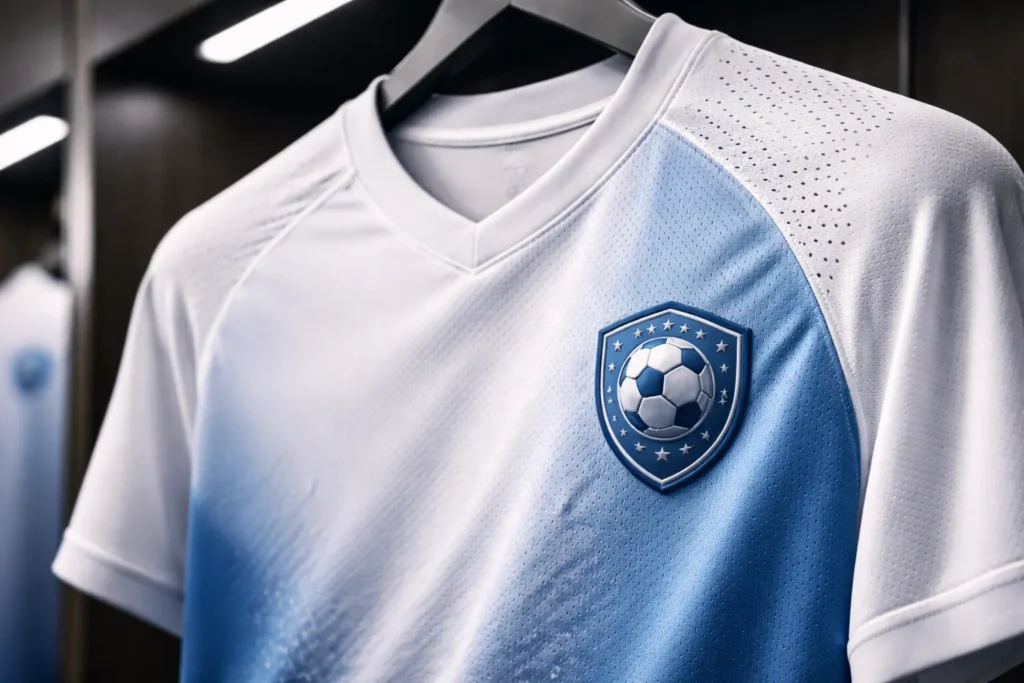
Abychom plně pochopili výrobní požadavky, B2B kupující musí pochopit přesné fyzikální a chemické rozdíly mezi dvěma primárními vrstvami fotbalového oblečení.
| Parametr specifikace | Verze přehrávače (Autentická shoda) | Verze ventilátoru (Replika stadionu) |
| Tkanina GSM | 110 – 130 GSM (Ultra lehký) | 150 – 160 GSM (Standardní hmotnost) |
| Směs materiálu | 88-92% Polyester / 8-12% Elastan | 100% Polyester (Minimální natažení) |
| Přizpůsobit geometrii | 3D Ergonomický sportovní střih (Zúžené) | Standardní rovný střih (Uvolněný) |
| Klubový znak/logo | Tepelně lisovaný 3D silikon/TPU | Přímá výšivka nebo tkaná nášivka |
| Větrání Tech | Laserem vyřezané otvory & mapované žakárové pletivo | Standardní unifikovaná látková konstrukce |
| Profil lemu | Zakřivený spodní lem (pro zastrčení) | Rovný lem |
Pokročilé technologie značky ve sportovním oblečení
Posun k tepelně aplikovaným 3D silikonovým hřebenům
Historicky, fotbalové kluby ukazovaly svou identitu prostřednictvím silně vyšívaných erbů. Zatímco tradiční, tyto silné záplaty přidávají zbytečnou váhu a vytvářejí tuhé oblasti na hrudi. Horší, abrazivní podkladové nitě uvnitř košile způsobují silné tření o kůži, což vede k nechvalně známému problému tření bradavek při dlouhodobé sportovní námaze. Moderní výroba to vyřešila tepelně aplikovaným 3D silikonem a termoplastickým polyuretanem (TPU) odznaky.
Tyto pokročilé hřebeny jsou vyráběny vstřikováním, vytváření vysoce detailních, vícestrukturní, a kovové povrchové úpravy, které nelze dosáhnout jehlou a nití. Při montáži oděvu, průmyslové tepelné lisy spojují silikon přímo s polyesterem při přesných teplotách (typicky 150 °C až 160 °C pro 12-15 sekundy). Výsledkem je úplné spláchnutí, interiér bez tření. Pro sportovce, šetří kritické gramy hmotnosti; pro komerčního kupujícího, dodává elegantní, futuristický, a vysoce prémiová estetika, která vyžaduje vyšší maloobchodní cenu.
Tradiční přímá výšivka a tkané odznaky
Navzdory atletické převaze silikonových hřebenů, přímá výšivka a tkané odznaky s vysokou hustotou zůstávají ve velké míře využívány při výrobě vějířových verzí. Logika je zde založena na chování spotřebitelů a životnosti životního cyklu. Replikové sady jsou vystaveny neúnavným cyklům ve standardních domácích pračkách a vysokoteplotních bubnových sušičkách, podmínky, které mohou nakonec degradovat tepelná lepidla. Vysoce odolná výšivka zajišťuje, že erb klubu přežije roky přísného praní bez loupání. Pro velkoobchodního kupujícího, vyvažování inventáře mezi high-tech verzemi hráčů a odolnými, nákladově efektivní verze s vyšívaným ventilátorem je klíčem k maximalizaci pronikání na trh.
How to Inspect Football Jersey Logos, Badges, and Printing Quality
Branding is one of the most visible elements of a custom football jersey. Club crests, sponzorská grafika, jména hráčů, and numbers must remain consistent with the approved design across the entire production batch.
Different branding methods require different inspection criteria. Buyers should not apply the same acceptance standard to sublimation graphics, heat-applied badges, výšivka, and woven patches.
Sublimation Printing Inspection
Check whether the printed design matches the approved artwork and color references. Inspect gradients, fine lines, loga sponzorů, and panel alignment. Look for visible banding, blurred edges, uneven color areas, or unwanted marks.
Silicone and TPU Badge Inspection
Check the badge dimensions, thickness, surface finish, positioning, and edge bonding. Gently inspect the perimeter for lifting or incomplete adhesion. The appropriate bonding settings depend on the badge material, fabric construction, and heat-press equipment, so buyers should approve the actual production result rather than relying on one universal temperature or pressing time.
Embroidery and Woven Patch Inspection
Inspect stitch density, edge finishing, thread consistency, patch alignment, and backing comfort. The badge should be securely attached without excessive puckering or loose threads.
Jména, Čísla, and Sponsor Graphics
For personalized team orders, compare the printed or applied names and numbers against the final roster. Check spelling, font style, velikost, pozice, and alignment. A small artwork error can affect multiple garments if it is not identified before production.
Branding Quality Inspection Checklist
| Component | Key Inspection Points |
|---|---|
| Sublimation Graphics | Color accuracy, sharpness, alignment, and print defects |
| Silikon / TPU Badges | Position, edge bonding, thickness, and surface finish |
| Výšivka | Stitch consistency, loose threads, and backing finish |
| Woven Patches | Artwork clarity, dimensions, and attachment |
| Names and Numbers | Spelling, font, velikost, and placement |
| Sponsor Logos | Artwork accuracy and consistent positioning |
Pro hromadné objednávky, buyers should define the acceptable appearance and attachment standards before production. A documented approval sample makes it easier for the factory’s quality-control team to inspect every batch consistently.
Fyzika sublimačního tisku
Vysokoteplotní penetrace inkoustu
Při výrobě živé, vícebarevné sady se složitými přechody nebo logy sponzorů, tradiční sítotisk je zastaralý. Sítotiskové plastisolové inkousty sedí na vrchní části látky, blokování prodyšnosti a nakonec praskání při stresu. Prémiové sportovní oblečení závisí výhradně na sublimačním tisku.
Tento proces zahrnuje tisk grafiky na specializovaný přenosový papír pomocí disperzních barviv. Papír a prázdná bílá polyesterová tkanina jsou poté vedeny průmyslovým rotačním kalendářovým lisem při teplotách přesahujících 200 °C (392°F). Pod tímto extrémním teplem a tlakem, pevné barvivo se okamžitě změní na plyn (sublimace) a prostupuje otevřenými póry polyesterových vláken. Jak látka chladne, póry se uzavřou, trvalé zachycení pigmentu uvnitř příze.
Dosažení absolutní stálosti barev
Because disperse dyes are transferred into polyester fibers during sublimation, the process can produce durable graphics without creating the same surface film associated with some other printing methods. nicméně, color performance still depends on ink quality, transfer conditions, fabric composition, and aftercare. Buyers should assess colorfastness through appropriate washing and exposure tests and should not assume that printed garments are completely immune to fading or wear.
Sublimation printing generally preserves the fabric’s original structure more effectively than methods that create a continuous surface coating. Nicméně, the finished garment’s breathability and moisture-management performance depend on the underlying fabric construction and should be evaluated separately.
Nákupní týmy B2B musí zajistit, aby jejich výrobní partneři používali vysokou kvalitu, ekologické sublimační inkousty (jako je EPSON nebo Kiian) k dosažení nejhlubší černé a nejzářivějších neonových barev, které vyžaduje moderní značka klubu.

Dodržování, Udržitelnost, a Průmyslové předpisy
Globální textilní bezpečnost: Standard OEKO-TEX 100
Textile products entering markets such as the European Union and North America must meet the applicable chemical safety and product compliance requirements. OEKO-TEX STANDARD 100 is a voluntary product certification that tests textiles and their components for harmful substances. It can provide useful supporting evidence for buyers, brands, a maloobchodníky, but it should not be presented as a universal mandatory import certificate.
Buyers should check the certificate number, validity, certificate holder, product description, and certified article scope. They should also confirm whether the actual fabric, tiskový proces, Příslušenství, and finished garment are covered by the relevant certification.
Toto nezávislé testování zaručuje, že každá jednotlivá složka oděvu – od polyesterových přízí a sublimačních barviv až po šicí nitě a silikonové hřebeny – byla přísně testována na škodlivé látky..
Zařízení musí prokázat absolutní nepřítomnost karcinogenních azobarviv, těžké kovy, formaldehyd, a škodlivé ftaláty. Pokud se neověří soulad výrobce s OEKO-TEX, může to mít za následek zabavení celých velkoobchodních zásilek celními orgány, což má za následek katastrofální finanční ztráty a poškození značky.
The Push for Recycled Polyester (rPET) a certifikace GRS
Řídí se globálními mandáty od hlavních řídících orgánů, jako je FIFA a MOV, průmysl sportovního oblečení prochází masivním obratem směrem k udržitelnosti. Výroba panenského polyesteru do značné míry závisí na těžbě ropy.
Recyklovaný polyester (rPET) can be produced from eligible recycled feedstocks, including certain post-consumer PET materials. The source of recycled content should be verified through appropriate supplier documentation and chain-of-custody records. It should not automatically be described as ocean-recovered plastic unless the specific material origin can be demonstrated.
Recycled polyester can be engineered for sportswear applications, but its performance depends on the feedstock, recycling process, kvalita příze, knitting structure, and finishing treatments. Buyers should compare recycled and virgin polyester fabrics using the same relevant performance tests rather than assuming that both materials perform identically.
When making verified recycled-content claims, brands should obtain appropriate transaction documentation and traceability evidence for the materials used. Globální recyklovaný standard (GRS) provides a framework for verifying recycled content and tracking materials through the supply chain, subject to its certification and claim requirements.This certification tracks the entire supply chain, zajištění ověřené sledovatelnosti recyklovaných materiálů a zajištění etických pracovních postupů během výroby.
Výrobní harmonogramy a protokoly pro zajištění kvality
Správa dodacích dob dodavatelského řetězce
Pro B2B distributory, koordinace dodávek sad před začátkem nové sportovní sezóny je zásadní. Pochopení výrobních časů předchází nákladným úzkým místům dodavatelského řetězce. Standardní výrobní cyklus začíná fází vzorkování, což obvykle vyžaduje 7 na 14 dní. Během tohoto okna, továrna navrhuje vzory CAD, testuje sublimační barevné kódy na fyzických vzornících, a vytváří finále “Vrchol produkce” (TOP) vzorek ke schválení.
Po schválení, Hromadná výroba zahájena. Pro standardní velkoobchodní objednávky v rozmezí od 1,000 na 10,000 jednotky, řezání, sublimující, šití, a stisknutí časové osy 30 na 45 dní. Kupující musí strategicky zohlednit dodatečné doby námořní přepravy (obvykle 25-35 dní do přístavů EU/USA) a potenciální přetížení továren před velkými globálními turnaji, jako je mistrovství světa nebo mistrovství Evropy.
Football Jersey Manufacturing Costs, Lead Times, and Reorder Planning
The cost of a professional football jersey is influenced by more than fabric consumption and sewing labor. Customization requirements, objednané množství, obal, quality-control procedures, and shipping arrangements can all affect the final landed cost.
For distributors, kluby, and sportswear brands, evaluating the complete order cost is more useful than comparing the factory unit price alone.
What Affects the Manufacturing Cost?
- Fabric and Material: Fiber composition, hmotnost tkaniny, knitting structure, and special performance features influence material costs.
- Přizpůsobení: Sublimation artwork, silicone badges, výšivka, tkané záplaty, jména, and numbers may require different processes and additional labor.
- Objednávkové množství: Larger orders may distribute setup and development costs across more units, subject to the factory’s minimum order requirements and production efficiency.
- Obal: Individual bags, štítky velikosti, hangtags, customized cartons, and retail-ready packaging can affect the total quotation.
- Inspection and Testing: Additional fabric tests, sample revisions, or third-party inspections should be included in the project budget when required.
- Logistics: Freight, insurance, customs duties, brokerage, and destination delivery contribute to the final landed cost.
How to Calculate the Landed Cost
A practical comparison should include all major expenses associated with bringing the finished jerseys to the buyer’s destination.
Landed Cost = Product Cost + Sampling and Development + Obal + Freight + Insurance + Import Duties and Taxes + Customs and Local Delivery Charges
The exact calculation depends on the agreed Incoterms, destination country, shipping method, and applicable import rules. Buyers should confirm which costs are included in the supplier’s quotation and which remain their responsibility.
How to Plan Production and Delivery
A realistic production schedule should distinguish between sample development, sample revisions, bulk manufacturing, final inspection, a dopravu. The timeline should also account for artwork approval, size-list confirmation, material availability, and public holidays.
Instead of relying on a general lead-time estimate, buyers should request a written production schedule with clear milestones:
- Artwork and specification confirmation
- Fabric and color approval
- Sample production and revisions
- Pre-production sample sign-off
- Bulk cutting, tisk, and sewing
- Final inspection and packing
- Shipment booking and dispatch
Keeping Reorders Consistent
For repeat orders, buyers should retain the approved sample, artwork files, fabric specifications, color references, size charts, label details, and packaging requirements. These records help the manufacturer compare new production batches with the original order.
Before confirming a reorder, buyers should also check whether the original fabric, dye lot, obruby, and production methods are still available. If any specification has changed, the difference should be reviewed and approved before manufacturing.
Good reorder management helps reduce avoidable variation and makes long-term teamwear sourcing more predictable.
Čtyřbodový systém kontroly tkanin
Špičkové továrny implementují mezinárodně uznávaný čtyřbodový systém pro kontrolu kvality tkaniny před řezáním jediného panelu. Role polyesteru jsou vedeny přes osvětlené kontrolní stroje, kde technici penalizují tkaninu za vady, jako jsou zádrhely, chybějící příze, barvící skvrny, nebo barevné variace. Pokud se v hodu nahromadí více než 40 trestné body za 100 čtverečních yardů, je zcela odmítnut. Po montáži, oděvy procházejí přísnými protokoly detekce jehly a testováním pevnosti švů, aby bylo zajištěno, že vydrží fyzickou agresi soutěžního fotbalu. Partnerství s výrobcem, který tyto zprávy o kontrole kvality transparentně sdílí, je maximální zárukou vaší investice.
Bulk Football Jersey Quality Control: From Fabric Inspection to Final Packing
Quality control should cover the entire manufacturing process rather than relying only on a final visual inspection. For wholesale football jersey orders, defects identified after shipment can lead to replacement costs, delayed deliveries, and additional communication between buyers and suppliers.
A structured inspection plan should include several checkpoints.
1. Incoming Fabric Inspection
Before cutting begins, inspect fabric rolls for holes, snags, stains, shade variation, uneven knitting, and inconsistent weight. Fabric lots should be checked against the approved material specification and reference swatches.
2. Cutting and Panel Inspection
Check panel dimensions, cutting accuracy, směr tkaniny, and matching components. For patterned or sublimated jerseys, confirm that graphics align correctly across adjoining panels.
3. Sewing and Assembly Inspection
Inspect seam consistency, stitch density, neckline construction, sleeve attachment, hems, and loose threads. Pay attention to stress areas such as underarms and side seams, where poor construction may become visible during wear.
4. Finished Garment Inspection
Compare finished garments with the approved sample and measurement chart. Check garment dimensions, kvalitu tisku, umístění loga, color consistency, labeling, and overall appearance.
5. Packing and Shipment Inspection
Confirm that size labels, product labels, quantities, folding methods, and carton markings match the purchase order. For personalized team orders, check that each name and number corresponds to the correct size and quantity.
Recommended Quality Control Checkpoints
| Production Stage | Inspection Focus | Required Record |
|---|---|---|
| Fabric Receiving | Hmotnost, defects, shade, and material specifications | Fabric inspection report |
| Panel Cutting | Dimensions, panel matching, and cutting accuracy | Cutting inspection record |
| Šití | Švy, stitches, hems, a stavebnictví | In-process inspection report |
| Finishing | Loga, tisk, measurements, a vzhled | Finished garment checklist |
| Balení | Labels, velikosti, quantities, and carton details | Packing list and final inspection record |
Buyers should agree on the inspection method, sampling level, defect classification, and acceptance criteria before production. For larger orders, an independent pre-shipment inspection may also be considered when required by the purchase agreement.
A documented quality-control process gives both the manufacturer and buyer a clearer basis for evaluating the finished order.

Frequently Asked Questions About Professional Football Jersey Manufacturing
1. What fabric is commonly used for professional football jerseys?
Polyester-based fabrics are widely used in football jersey manufacturing because they can be engineered for lightweight construction, řízení vlhkosti, color printing, and easy-care performance. Some designs incorporate elastane to provide additional stretch and recovery. The best fabric depends on the intended use, vejít se, klima, and buyer’s technical requirements.
2. What is the difference between player version and fan version football jerseys?
Player version jerseys generally feature a closer athletic fit and may incorporate lightweight fabrics, engineered mesh panels, and heat-applied branding. Fan version jerseys typically use a more relaxed fit designed for everyday comfort. Exact differences vary by manufacturer and product specification, so buyers should compare approved samples rather than rely on product labels alone.
3. How do manufacturers check football jersey quality before bulk production?
A professional quality-control process may include fabric inspection, measurement checks, cutting accuracy, stitching inspection, print and badge verification, finished garment inspection, and packing checks. Buyers should agree on inspection criteria and retain an approved pre-production sample as a reference for bulk manufacturing.
4. Is sublimation printing suitable for custom football jerseys?
Dye-sublimation is widely used for polyester football jerseys, particularly when designs include gradients, multiple colors, sponzorská grafika, and detailed patterns. The dye is transferred into the polyester fibers rather than forming a conventional surface layer. Final color performance depends on the fabric, inks, transfer conditions, and care practices, so appropriate colorfastness testing is recommended.
5. What should buyers check when sourcing football jerseys from a manufacturer?
Buyers should evaluate the manufacturer’s production capabilities, fabric specifications, možnosti přizpůsobení, sample development process, quality-control procedures, certification documents, minimum order requirements, production lead times, and shipping arrangements. A clear technical specification and written sample approval process help reduce misunderstandings before bulk production.
Reference:
- “Termodynamické vlastnosti mikrotechnického polyesteru v elitním sportovním oblečení.” Dr. Alistair Vance, Textilní ústav biomechaniky, Journal of Athletic Apparel Science.
- “Snížení aerodynamického odporu ve 3D ergonomických fotbalových sadách.” Dr. Elena Rostová, Evropský institut sportovních technologií, International Journal of Sports Physics.
- “Fyzika disperzních barviv ve vysokoteplotní sublimaci.” Dr. Kenji Sato, Tokijské výzkumné centrum polymerů, Digitální textilní inženýrství čtvrtletník.
- “Minimalizace kožního tření a oděru prostřednictvím technologií TPU Heat-Press Technologies.” Dr. Sarah Jenkinsová, Globální iniciativa dermatologie ve sportu, Journal of Sports Medicine.
- “Analýza životního cyklu rPET (Recyklovaný polyethylentereftalát) v komerčním sportovním oblečení.” Dr. Marcus Thorne, Institut pro udržitelný textil, Recenze zelené výroby.
- “Antropometrické měřítko a třídění vzorů pro sportovní oblečení.” Dr. Chloe Dubois, Pařížská akademie módní technologie, Apparel Engineering Journal.
- “Standard OEKO-TEX 100: Soulad a dopad na globální dodavatelský řetězec.” Regulační rada Mezinárodní asociace OEKO-TEX, Roční dodržování předpisů v oblasti textilu.
- “Rychlosti přenosu vlhkosti (MVTR) v Jacquard Knit Structures.” Dr. Wei Chen, Pokročilá laboratoř materiálových věd, Polymer Performance Journal.
Odborné poznatky: Strategický nákup profesionálních fotbalových dresů
Základní logika nákupu (Proč & Co): Získávání komerčních fotbalových dresů daleko přesahuje základní operace stříhání a šití; vyžaduje to překlenout propast mezi atletickou biomechanikou a textilní fyzikou. Základní výrobní rozhodnutí závisí na konstrukci tkaniny, která vyvažuje ultranízký GSM (hmotnost) s vysokou rychlostí přenosu vlhkosti (MVTR). Zadáním mikrokonstruovaného polyesteru s an 8-12% směs elastanu, B2B kupující si zajišťují oděvy, které poskytují aerodynamický roztažnost ve čtyřech směrech a zároveň aktivně ochlazují sportovce prostřednictvím kapilárního řízení vlhkosti.
Strategické možnosti & Technická hlediska
-
Hráč vs. Architektura ventilátoru (Volba)
Geometrické rozlišení: Velkoobchodní kupující musí svůj inventář explicitně rozdělit. Verze přehrávače vyžadují 3D ergonomický kužel a laserem řezané perforace, aby se eliminoval aerodynamický odpor. Naopak, Fan verze vyžadují uvolněnou, rovná geometrie pro přizpůsobení různým tvarům těla, v kombinaci s vysoce odolným přímým vyšíváním pro maximální odolnost při domácím praní. -
Silikonové 3D hřebeny vs. Tření (Ohleduplnost)
Snižování atletických rizik: Tradiční vyšívané nášivky vytvářejí na hrudi pevný třecí bod, což vede k vážnému oděru kůže během intenzivních 90minutových zápasů. Špičkové specifikace zdrojů vyžadují tepelně aplikované 3D TPU nebo silikonové hřebeny pro elitní sady. Tyto spoje jsou zcela v jedné rovině s polyesterovou matricí, aby se zcela eliminovalo vnitřní tření a zároveň se snížily kritické gramy na celkové hmotnosti. -
Chemická bezpečnost & OEKO-TEX (Dodržování)
Navigace v globálních celnicích: Použití vysokoteplotní sublimace barviv vyžaduje absolutní chemickou bezpečnost. B2B smlouvy o nákupu musí vyžadovat standard OEKO-TEX 100 certifikace k vědeckému prokázání nepřítomnosti karcinogenních azobarviv a těžkých kovů, zajištění hladkého celního odbavení na přísně regulované evropské a severoamerické trhy.
Final Takeaway: Building a Reliable Football Jersey Manufacturing Partnership
Professional football jersey manufacturing combines textile selection, vzorové inženýrství, ventilation design, branding technology, kontrola kvality, and supply chain coordination. Each element contributes to the finished garment, but no single technical feature can guarantee overall product quality.
Pro kluby, distributors, and sportswear brands, successful sourcing begins with clear product specifications and a qualified manufacturing partner. Buyers should evaluate fabric performance, vejít se, customization methods, sample accuracy, inspection procedures, and delivery arrangements before approving a bulk order.
A well-managed production process also requires documented sample approval, consistent quality standards, and reliable communication between the buyer and manufacturer. These practices help reduce production uncertainty and support more consistent results across repeat orders.
Whether developing player-inspired match jerseys, fan replicas, training kits, or fully customized teamwear, working with an experienced football jersey manufacturer can help turn design concepts into commercially practical products.
YSTAR Wear supports custom sportswear development and OEM/ODM manufacturing for buyers looking for personalized football jerseys, teamwear, and related apparel solutions. Contact the team to discuss fabric options, customization requirements, sample development, and bulk production planning.