Forbhreathnú Tapa: Déantúsaíocht Peile Gairmiúil Jersey
Tá athrú bunúsach tagtha ar éadaí lúthchleasaíochta mar gheall ar a dtrasnaíonn eolaíocht spóirt agus innealtóireacht teicstíle. Ní oibríocht shimplí gearrtha agus fuála a thuilleadh é geansaí peile gairmiúil a mhonarú; is disciplín thar a bheith sofaisticiúil é a éilíonn tuiscint dhomhain ar theirmidinimic, aeraidinimic, agus ceimic polaiméire. Ar feadh na mblianta, imreoirí san iomaíocht i trom, fabraicí ionsúite taise a chuir srian ar ghluaiseacht agus a mhéadaigh tuirse. Inniu, éilíonn an margadh domhanda éadaí spóirt ultra-éadrom, ábhair hidreafóbach a ndearnadh innealtóireacht orthu chun aschur lúthchleasaíochta a fheabhsú. Oifigigh soláthair, stiúrthóirí club, agus tá slabhra soláthair ag éirí níos casta ag brandaí éadaí spóirt agus na baill éadaigh speisialaithe seo á bhfoinsiú acu. Monarcha a aithint leis an mbonneagar teicneolaíochta chun sublimation ard-dlúis a fhorghníomhú, aeráil léasair-ghearrtha, agus tá oiriúint eirgeanamaíochta 3D ríthábhachtach. Tá athrú suntasach tagtha ar straitéisí foinsithe B2B mar gheall ar an gcastacht seo, as a dtiocfaidh ardú ollmhór ar an éileamh ar ardteicneolaíocht monaróirí geansaí peile mórdhíola in ann caighdeáin feidhmíochta idirnáisiúnta dochta a chomhlíonadh.
How to Evaluate a Professional Football Jersey Manufacturer
Choosing a professional football jersey manufacturer involves more than comparing product photos or requesting the lowest quotation. Le haghaidh clubanna, dáileoirí, sportswear brands, agus ceannaitheoirí lipéad príobháideacha, the manufacturer’s production capabilities directly affect product consistency, customization flexibility, and delivery reliability.
Sula gcuirtear ordú mórchóir, buyers should evaluate several important areas:
1. Production Equipment and In-House Capabilities
Ask whether the manufacturer handles key processes internally or relies on multiple subcontractors. Relevant capabilities may include fabric inspection, digital sublimation printing, precision cutting, fuála, heat pressing, ag críochnú, and final garment inspection. A clear understanding of the production workflow helps buyers identify potential quality-control gaps.
2. Experience with Custom Teamwear
A supplier experienced in football apparel should understand different jersey structures, player and fan fits, sizing óige, sponsor artwork, suaitheantais club, uimhrithe, and personalized names. Buyers should request relevant product samples or production examples to assess whether the factory can handle their specific requirements.
3. Sample Development and Quality Control
A reliable manufacturer should have a defined sample approval process and documented inspection procedures. Buyers should confirm how fabric specifications, garment measurements, print colors, socrúchán lógó, fuála, and packaging are checked before shipment.
4. Certification and Documentation
If a project requires textile safety or recycled-content claims, request the relevant certificates and verify their scope, validity, and applicability to the actual product and production site. A certificate should not be treated as automatic proof that every material or component in an order is covered.
5. Communication and Reorder Support
For repeat teamwear programs, the supplier should be able to retain approved artwork, measurement specifications, material details, color references, and production records. These records make future orders easier to compare with the original approved batch.
A practical supplier evaluation should consider production capability, sample accuracy, quality documentation, cumarsáide, and delivery performance together. The lowest initial quotation is not necessarily the most cost-effective choice if it creates additional inspection, rework, or replacement costs.
Éabhlóid na Fabraicí Peile Ardfheidhmíochta
Ó Cadás Trom go poileistir Micri-Innealtóireachta
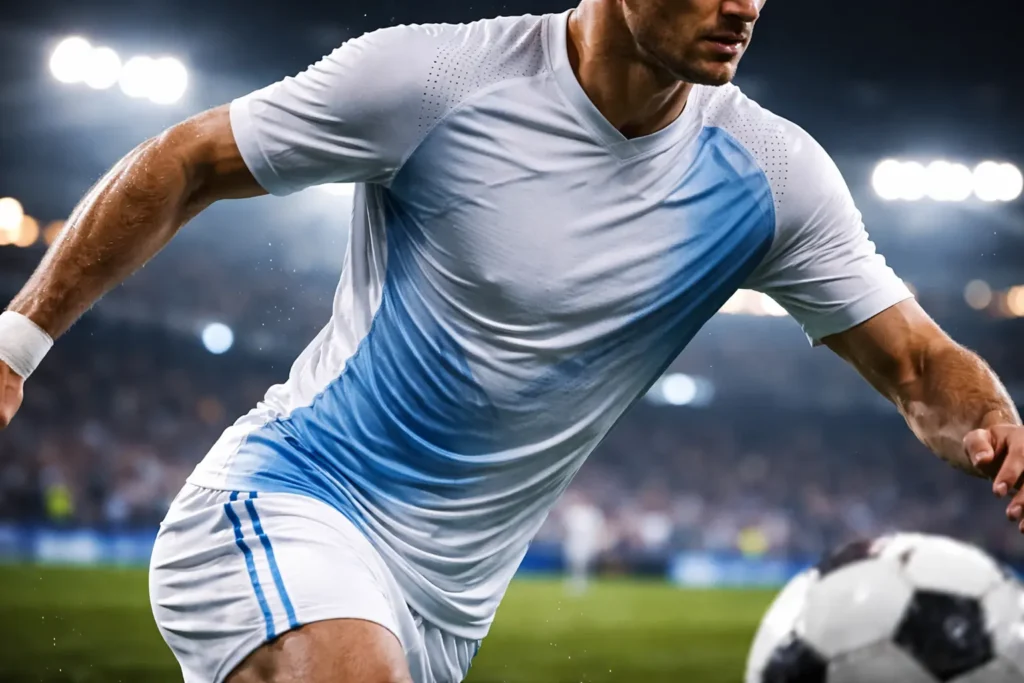
Is é tuiscint a fháil ar chomhdhéanamh ceimiceach polaiméirí feidhmíochta nua-aimseartha an chéad chéim sa phróiseas déantúsaíochta. Cadás traidisiúnta, lena n-airíonna hidreafileacha ard, coinníonn allais, ag cur suas le 40% níos mó meáchain don bhall éadaigh le linn chluiche 90 nóiméad. Úsáideann táirgeadh nua-aimseartha go heisiach poileistear micrea-innealtóireacht (PET) agus meascáin elastane. Déantar na snátha sintéiseacha seo a easbhrú isteach i struchtúir multifilament a chruthaíonn bealaí micreascópacha. Trí ghníomhaíocht ribeach, tarraingíonn na bealaí seo taise ar shiúl ón eipideirm go dtí dromchla seachtrach na fabraice, áit a ghalaíonn sé go tapa. An ráta tarchurtha gaile taise leanúnach seo (MVTR) riachtanach chun teocht choirp an lúthchleasaí a chothabháil. Is réaltacht í atá doiciméadaithe go heolaíoch laistigh den tionscal spóirt gairmiúil a rinne speisialaithe cuireann geansaithe peile saincheaptha feidhmíocht níos fearr ar fáil go sonrach toisc go gcuireann na struchtúir dílsithe taise-wicking seo cosc ar ídiú teirmeach le linn exertion cardashoithíoch ard-déine. Ina theannta sin, Laghdaíonn comhéifeachtaí laghdaithe frithchuimilte na micrishnáithíní sintéiseacha seo scríobacha craiceann go suntasach.
Paraiméadair Ábhar: GSM, Cumaisc Spandex, agus Neart Teanntachta
Taobh amuigh den cheimic polaiméire bonn, cinneann tógáil fhisiciúil ailtireachta na fabraice a fheidhmíocht réimse deiridh. Ní mór do mhonaróirí an GSM a chalabrú go cúramach (Gram in aghaidh an Mhéadair Chearnógach). Féadfaidh trealamh macasamhail caighdeánach úsáid a bhaint as a 150-160 Fabraic GSM, tosaíocht a thabhairt do marthanacht do chaitheamh laethúil. ach, Déantar feisteáin bharántúla lá na gcluichí a innealtóireacht go fíor-éadrom 110-130 GSM. Chun seo a laghdú meáchain a bhaint amach gan cur isteach ar neart teanntachta, ní mór an fabraic a chniotáil ag baint úsáide as ard-mheaisíní idirghlasa nó jacquard.
Elastane may be incorporated into selected football jersey fabrics when additional stretch and recovery are required. ach, the appropriate fiber composition depends on the knitting structure, oiriúnach éadaigh, intended use, and target price point. Buyers should evaluate stretch and recovery performance through fabric testing rather than relying on a fixed elastane percentage as a universal specification.
Tá sé ríthábhachtach na hidirdhealuithe teicniúla seo a aithint do dháileoirí réigiúnacha agus monaróirí geansaí peile mórdhíola ag feidhmiú in aeráidí éagsúla, i gcás ina n-ordaíonn an chothromaíocht idir breathability an-éadrom fíor-éadrom agus sláine struchtúrach rathúlacht an táirge sa mhargadh.
How to Select and Test Football Jersey Fabrics Before Production
Fabric selection should be based on the intended use of the football jersey rather than GSM alone. A lightweight fabric may be suitable for match-day apparel, while a team training shirt or fan replica may require a different balance of weight, teimhneacht, síneadh, agus marthanacht.
B2B buyers should compare the following fabric characteristics before approving a material:
Fabric Weight and Opacity
GSM indicates the mass of a fabric per square meter, but it does not independently determine garment quality. Buyers should check whether the fabric remains sufficiently opaque when stretched, whether the color appears consistent under different lighting conditions, and whether the finished garment feels appropriate for its intended use.
Stretch and Recovery
For jerseys designed for active movement, evaluate how the fabric stretches horizontally and vertically and whether it returns to its original dimensions after repeated extension. Elastane may be included when additional stretch and recovery are required, but the ideal fiber composition depends on the fabric construction and garment design.
Moisture Management and Air Permeability
Moisture management and air permeability are related but different properties. Moisture-wicking performance concerns the movement of liquid moisture across or through a textile, while air permeability measures how easily air passes through it. Buyers should request relevant test results rather than treating one property as proof of the other.
Colorfastness and Dimensional Stability
Fabric and printed panels should be checked for color transfer, shade variation, crapadh, and distortion after appropriate washing or conditioning tests. These checks are particularly important for team orders involving multiple sizes and repeat production batches.
A Practical Fabric Evaluation Checklist
| Réimse Tástála | What Buyers Should Check | Cén Fáth a bhfuil Tábhacht ag baint leis |
|---|---|---|
| Meáchan Fabraic | GSM consistency across rolls | Helps maintain consistent garment specifications |
| Teimhneacht | Transparency under stretching | Supports suitable coverage during movement |
| Stretch Recovery | Fabric returns after extension | Helps maintain fit and shape |
| Tréscaoilteacht Aeir | Airflow through the fabric | Supports ventilation requirements |
| Bainistíocht Taise | Liquid moisture spreading and drying behavior | Helps assess fabric suitability for active use |
| Dath-fastness | Resistance to washing-related color change | Helps preserve the appearance of the jersey |
For larger orders, buyers should approve the actual fabric swatch and retain a reference sample. This creates a clear benchmark for bulk production and future repeat orders.
Leagan Imreoir vs. Leagan Fan: Príomhdhifríochtaí Tógála
Anatamaíocht Léine Lá Meaitseála Barántúil
Cruthaíonn céimseata fisiceach agus próiseas gearrtha an éadaigh ciseal eile de chastacht déantúsaíochta. Déanann an tionscal idirdhealú go docht idir 'Leagan Imreoir’ (barántúla) agus ‘Fan Version’ (macasamhail) gearrthacha. Tógtar léinte barántúla lá chluiche ag baint úsáide as dinimiciúil, 3D gearrtha lúthchleasaíochta.
This involves a closer athletic fit and carefully shaped panels designed to follow the body’s contours and reduce excess fabric. The construction should support freedom of movement while maintaining a secure and comfortable fit during football activities. Any specific aerodynamic performance benefit should be supported by appropriate testing rather than assumed from garment fit alone.
Tá na poill armhóil ardaithe, agus tá na toisí cófra barrchaolaithe. Le haghaidh clubanna gairmiúla, acadaimh, and semi-pro leagues seeking a closer, movement-oriented fit, teimpléid cineálach boxy a thréigean agus foinsiú léinte peile saincheaptha a d'oirfeadh go beacht dá lúthchleasaithe’ tá próifílí bithmhéadracha ar leith tagtha chun bheith ina gcaighdeán soláthair do-idirbheartaithe sa pheil nua-aimseartha. An leagan macasamhail, contrártha, úsáideann díreach, céimseata réchúiseach deartha chun freastal ar éagsúlacht níos leithne de chruthanna coirp, tosaíocht a thabhairt do chompord ócáideach thar aeraidinimic ardluais.
Scálú Antraipiméadrach Trasna Déimeagrafaic
Agus muid ag dul níos doimhne isteach i scálú antraipiméadrach thar dhéimeagrafaic éagsúla, is cleachtadh matamaitice casta é grádú na bpatrún seo. Ní ceist amháin é patrún a scálú chun na toisí a chrapadh go huilíoch nó a mhéadú. Tá comhréireanna matamaitice go hiomlán difriúil ag teastáil ó chéimseata coirp péidiatraiceacha agus ógánach i gcomparáid le daoine fásta lánfhorbartha. An fána ghualainn, cófra-go-waist titim, agus ní mór imlíne armhole a athríomh do gach aoisghrúpa chun saoirse gluaiseachta a chinntiú. Dúshlán déantúsaíochta coitianta a bhíonn ag go leor brandaí is ea an t-aistriú casta idir geansaithe peile óige vs gearrtha fástas, de bharr mainneachtain an grádú struchtúrach a choigeartú beidh necklines sriantach nó leathlínte fada díréireach a chuireann bac ar bhithmheicníocht lúthchleasaí óg ar an pháirc. Úsáideann déantóirí patrún chun cinn bogearraí digiteacha CAD chun na trasaistrithe sainiúla seo a ghrádú go foirfe, ag cinntiú an fheidhmíocht is fearr ag gach leibhéal acadaimh.
Football Jersey Sample Development and Pre-Production Approval
A successful bulk manufacturing project should begin with a clearly documented sample approval process. Even when a buyer has supplied complete artwork and technical specifications, a physical sample is necessary to confirm how the design, fabraic, oiriúnach, and construction work together.
The sample development process should include the following stages:
Stage 1: Artwork and Technical Specification Review
Before sample production, the buyer and manufacturer should confirm the jersey design, color references, lógónna urraithe, club crest dimensions, ainmneacha imreoirí, uimhreacha, printing positions, and size requirements. Artwork files should be checked for resolution, color mode, and production compatibility.
Stage 2: Fabric and Color Confirmation
The selected fabric should be checked against the agreed material specification, GSM range, uigeacht, and stretch requirements. Printed color swatches or fabric panels should be reviewed under consistent lighting before the full garment sample is approved.
Stage 3: Fit and Measurement Review
The sample should be measured against the approved size chart. Buyers should check chest width, fad coirp, leithead ghualainn, sleeve length, armhole construction, and neckline dimensions. If the order includes adult and youth sizes, each size range should be reviewed separately.
Stage 4: Construction and Branding Inspection
Inspect the stitching, seams, hems, lipéid, printed graphics, suaitheantais, and heat-applied elements. Pay particular attention to logo alignment, edge finishing, and whether decorative components remain securely attached during normal handling.
Stage 5: Written Pre-Production Approval
Once the sample meets the agreed requirements, both parties should retain an approved reference sample or documented approval record. Any subsequent changes to fabric, saothar ealaíne, measurements, or construction should be confirmed before bulk production begins.
Pre-Production Sample Approval Checklist
| Inspection Item | Approval Requirement |
|---|---|
| Saothar ealaíne | Correct logos, grafaicí urraíochta, ainmneacha, agus uimhreacha |
| Fabraic | Agreed composition, meáchan, uigeacht, agus dath |
| Tomhais | Dimensions match the approved size chart |
| Tógáil | Consistent stitching, seams, hems, agus ag críochnú |
| Brandáil | Correct placement, cuma, and attachment |
| Pacáistiú | Approved labels, folding, and packing requirements |
A signed-off sample is an important production reference. It helps reduce misunderstandings between the buyer and factory and provides a practical benchmark for bulk quality inspections.
Breathability Casta: Aeráil léasair-ghearrtha & Criosanna Mogall
Teirmeaglú ar an bPáirc
Is mór na héilimh theirmriallaithe a chuirtear ar chorp an duine le linn cluiche gairmiúil. Is féidir le imreoir lár páirce clúdach os a chionn 11 ciliméadar, teas meitibileach ollmhór a ghiniúint. Chun seo a chomhrac, Comhtháthaíonn léinte Peile mionlach ardchórais aerála léarscáilithe coirp. Trí anailís a dhéanamh ar shonraí íomháithe teirmeach, sainaithníonn innealtóirí criosanna ardteasa – na héadaí go príomha, lár an cófra, agus an réigiún lumbar níos ísle. Ansin imscarann monarchan teicnící cniotála jacquard speisialaithe chun an fabraic a aistriú gan uaim ó struchtúr soladach comhghlasála isteach i mogall poll oscailte laistigh den phainéal fabraice leanúnach céanna.. An eolaíocht teirmidinimiciúil seo a thuiscint, taobh le fios go díreach conas a méid do gach aoisghrúpa, cinntíonn sé go bhfeidhmíonn an éadaí mar mheicníocht fuaraithe gníomhach seachas gaiste teirmeach, síneadh suntasach a dhéanamh ar fhuinneog buaicfheidhmíochta imreora. Cuireann an t-aistriú gan uaim seo deireadh leis an ngá atá le seams toirtiúla inmheánacha a d'fhéadfadh a bheith ina chúis le smideadh, taobh istigh breá réidh a chothabháil.
Innealtóireacht Perforations Laser-ghearrtha
De bharr na beachtas atá ag teastáil chun aeráil ardfhorbartha a fhorghníomhú, is amhlaidh a théann muid chuig perforations léasair-ghearrtha. I leaganacha ard-imreoirí, úsáideann monarchana léasair CO2 ríomhtreoraithe chun poill micreascópacha a dhó isteach sna painéil cliathánach. Ní hamháin go ndéanann an léasair an fabraic a ghearradh ach ag an am céanna rabhaidh sé na himill shintéiseacha, an t-ábhar a chosc ó bheith ag stealladh faoi strus ollmhór cluiche.
Laser-cut perforations can create localized ventilation openings and may reduce material in selected areas. Their practical contribution depends on hole size, socrúchán, fabric construction, and the garment’s overall design. Buyers should evaluate the finished garment for airflow, edge quality, and fabric stability.
Teastaíonn comhpháirtí déantúsaíochta sofaisticiúil atá feistithe le hinnealra uathoibrithe den chéad scoth chun na gnéithe aeradinimiciúla agus teirmeriallaitheacha hyper-chun cinn seo a chomhtháthú.. Plé a dhéanamh ar chomhtháthú na sonraíochtaí mionlach seo i do chéad ordú tráchtála eile, nó comhairliúchán teicniúil mionsonraithe a iarraidh, molaimid duit déan teagmháil linn go díreach chun labhairt lenár bhfoireann innealtóireachta táirgeachta. Dúnann ár saoráid an bhearna idir eolaíocht nuálaíoch teicstíle agus déantúsaíocht mórdhíola inscálaithe, a chinntiú go bhfreastalaíonn gach stitch cuspóir feidhmiúil.
Sonraíocht Theicniúil: Leagan Imreoir vs. Leagan Fan
Chun na riachtanais déantúsaíochta a thuiscint go hiomlán, Ní mór do cheannaitheoirí B2B na difríochtaí fisiceacha agus ceimiceacha cruinne idir an dá phríomhshraith d'éadaí peile a thuiscint.
| Paraiméadar Sonraíochta | Leagan Imreoir (Cluiche Barántúil) | Leagan Fan (Staidiam macasamhail) |
| Fabraic GSM | 110 – 130 GSM (Ultra-éadrom) | 150 – 160 GSM (Meáchan caighdeánach) |
| Cumasc Ábhar | 88-92% poileistir / 8-12% Leaisteán | 100% poileistir (Stráice íosta) |
| Céimseata Fit | 3D Gearrthóg Lúthchleas eirgeanamaíochta (barrchaolaithe) | Gearrtha Díreach Caighdeánach (ar a suaimhneas) |
| Club Crest/Lógó | Silicone 3D/TPU teas-bhrúite | Bróidnéireacht Dhíreach nó Paiste Uigí |
| Teicne aerála | Poill gearrtha léasair & mogalra jacquard mapáilte | Tógáil fabraic aontaithe caighdeánach |
| Próifíl Hemline | Imeall eireaball cuartha (le haghaidh tucking isteach) | Imeall díreach |
Ard-theicneolaíochtaí Brandála in Éadaí Spóirt
An Suaitheantais Sileacain 3D a Bhaineann le Teas a Aistriú
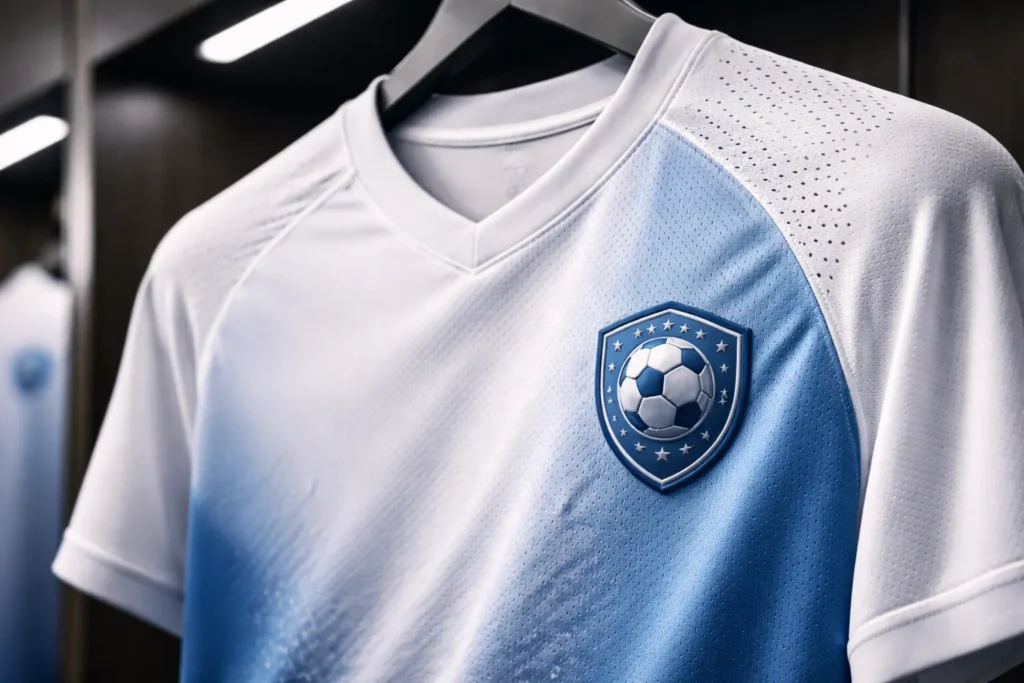
Go stairiúil, léirigh clubanna peile a bhféiniúlacht trí shuaitheantais an-bróidnithe. Cé go traidisiúnta, cuireann na paistí tiubh seo meáchan gan ghá agus cruthaíonn siad limistéir dochta ar an cófra. Níos measa, is cúis le frithchuimilt ghéar in aghaidh an chraiceann iad na snáitheanna droma scríobacha taobh istigh den léine, as a n-eascraíonn an tsaincheist mhíchlúiteach a bhaineann le ruaigeadh clúidín le linn aclaíochta fada lúthchleasaíochta. Tá sé seo réitithe ag déantúsaíocht nua-aimseartha trí shilicón 3D teas-fheidhmithe agus Polúireatán Teirmeaplaisteach (TPU) suaitheantais.
Déantar na suaitheantais ardleibhéil seo a mhonarú le múnlú insteallta, ag cruthú an-mhionsonraithe, il-uigeachta, agus bailchríocha miotalacha nach féidir a bhaint amach le snáthaid agus snáithe. Le linn tionól éadaigh, nascann cófraí teasa tionsclaíocha an silicone go díreach leis an poileistear ag teochtaí beachta (go hiondúil 150°C go 160°C le haghaidh 12-15 soicind). Mar thoradh air seo i flush go hiomlán, taobh istigh gan cuimilte. Don lúthchleasaí, sábhálann sé gram criticiúil de réir meáchain; don cheannaitheoir tráchtála, seachadann sé sleek, futuristic, agus aeistéitiúil ardphréimh a ordaíonn pointe praghsanna miondíola níos airde.
Bróidnéireacht Dhíreach Thraidisiúnta agus Suaitheantais Uigí
In ainneoin fheabhas lúthchleasa na suaitheantais silicone, Baintear úsáid mhór fós as bróidnéireacht dhíreach agus suaitheantais fite ard-dlúis chun leaganacha de lucht leanúna a tháirgeadh. Tá an loighic anseo bunaithe ar iompar tomhaltóirí agus marthanacht saolré. Déantar feisteáin macasamhla a chur faoi thimthriallta gan staonadh i ngnáth-innill níocháin tí agus i dtriomadóirí brú ardteochta, coinníollacha ar féidir leo greamacháin teirmeacha a dhíghrádú sa deireadh. Cinntíonn bróidnéireacht tromshaothair go mairfidh suaitheantas an chlub blianta de dhian-níochán gan feannadh. Do cheannaitheoir mórdhíola, cothromú an fhardail idir leaganacha imreoir ardteicneolaíochta agus buan, tá leaganacha lucht leanúna bróidnithe éifeachtach ó thaobh costais an eochair chun dul i bhfód sa mhargadh a uasmhéadú.
How to Inspect Football Jersey Logos, Suaitheantais, and Printing Quality
Branding is one of the most visible elements of a custom football jersey. Club crests, grafaicí urraíochta, ainmneacha imreoirí, and numbers must remain consistent with the approved design across the entire production batch.
Different branding methods require different inspection criteria. Buyers should not apply the same acceptance standard to sublimation graphics, heat-applied badges, bróidnéireacht, and woven patches.
Sublimation Printing Inspection
Check whether the printed design matches the approved artwork and color references. Inspect gradients, fine lines, lógónna urraithe, and panel alignment. Look for visible banding, blurred edges, uneven color areas, or unwanted marks.
Silicone and TPU Badge Inspection
Check the badge dimensions, thickness, surface finish, positioning, and edge bonding. Gently inspect the perimeter for lifting or incomplete adhesion. The appropriate bonding settings depend on the badge material, fabric construction, and heat-press equipment, so buyers should approve the actual production result rather than relying on one universal temperature or pressing time.
Embroidery and Woven Patch Inspection
Inspect stitch density, edge finishing, thread consistency, patch alignment, and backing comfort. The badge should be securely attached without excessive puckering or loose threads.
Ainmneacha, Numbers, and Sponsor Graphics
For personalized team orders, compare the printed or applied names and numbers against the final roster. Check spelling, font style, méid, seasamh, and alignment. A small artwork error can affect multiple garments if it is not identified before production.
Branding Quality Inspection Checklist
| Component | Key Inspection Points |
|---|---|
| Sublimation Graphics | Color accuracy, sharpness, alignment, and print defects |
| sileacain / TPU Badges | Position, edge bonding, thickness, and surface finish |
| Bróidnéireacht | Stitch consistency, loose threads, and backing finish |
| Woven Patches | Artwork clarity, dimensions, and attachment |
| Names and Numbers | Spelling, font, méid, and placement |
| Sponsor Logos | Artwork accuracy and consistent positioning |
For bulk orders, buyers should define the acceptable appearance and attachment standards before production. A documented approval sample makes it easier for the factory’s quality-control team to inspect every batch consistently.
Fisic Priontála Dath-Sublimation
Treá Dúigh Ardteochta
Nuair a déantúsaíochta bríomhar, feisteáin il-daite le grádáin chasta nó lógónna urraithe, tá priontáil scáileáin traidisiúnta imithe i léig. Suíonn dúigh plastisol clóite scáileáin ar bharr na fabraice, bac a chur ar breathability agus ar deireadh scoilteadh faoi strus. Braitheann éadaí lúthchleasaíochta préimhe go hiomlán ar phriontáil ruaime sublimation.
Is éard atá i gceist leis an bpróiseas seo ná an ghrafaic a phriontáil ar pháipéar aistrithe speisialaithe ag baint úsáide as ruaimeanna scaipthe. Cothaítear an páipéar agus an fabraic bán poileistear ansin trí phreas féilire rothlach tionsclaíoch ag teocht os cionn 200 ° C. (392°F). Faoin teas agus brú mhór seo, casann an dath soladach ina ghás láithreach (sublimation) agus trí phiocháin oscailte na snáithíní poileistear. De réir mar a fhuaraíonn an fabraic, na pores gar, ag gabháil leis an lí go buan laistigh den snáth.
Fastness Dath Iomlán a bhaint amach
Because disperse dyes are transferred into polyester fibers during sublimation, the process can produce durable graphics without creating the same surface film associated with some other printing methods. ach, color performance still depends on ink quality, transfer conditions, comhdhéanamh fabraice, and aftercare. Buyers should assess colorfastness through appropriate washing and exposure tests and should not assume that printed garments are completely immune to fading or wear.
Sublimation printing generally preserves the fabric’s original structure more effectively than methods that create a continuous surface coating. mar sin féin, the finished garment’s breathability and moisture-management performance depend on the underlying fabric construction and should be evaluated separately.
Caithfidh foirne soláthair B2B a chinntiú go mbaineann a gcomhpháirtithe déantúsaíochta úsáid as ardghrád, dúigh sublimation cairdiúla don chomhshaol (mar EPSON nó Kiian) a bhaint amach ar an blacks is doimhne agus dathanna neon is beoga a cheanglaítear le brandáil club nua-aimseartha.

Comhlíonadh, Inbhuanaitheacht, agus Rialacháin Tionscail
Sábháilteacht Dhomhanda Teicstíle: Caighdeán OEKO-TEX 100
Textile products entering markets such as the European Union and North America must meet the applicable chemical safety and product compliance requirements. OEKO-TEX STANDARD 100 is a voluntary product certification that tests textiles and their components for harmful substances. It can provide useful supporting evidence for buyers, brandaí, agus miondíoltóirí, but it should not be presented as a universal mandatory import certificate.
Buyers should check the certificate number, validity, certificate holder, product description, and certified article scope. They should also confirm whether the actual fabric, próiseas priontála, gabhálais, and finished garment are covered by the relevant certification.
Cinntíonn an tástáil neamhspleách seo go ndearnadh tástáil dhian ar gach comhpháirt den bhall éadaigh - ó na snátha poileistear agus na ruaimeanna sublimation go snáitheanna fuála agus suaitheantais silicone - le haghaidh substaintí díobhálacha.
Ní mór do shaoráidí a chruthú nach bhfuil datháin azo carcanaigineacha ann go hiomlán, miotail throma, formaildéad, agus fthalates díobhálacha. Mura ndéantar comhlíonadh OEKO-TEX an mhonaróra a fhíorú, féadfaidh údaráis chustaim lastais mhórdhíola iomlána a ghaibhniú., mar thoradh ar chaillteanais airgeadais tubaisteach agus damáiste branda.
An Brú le haghaidh poileistir Athchúrsáilte (rPET) agus Deimhniú GRS
Tiomáinte ag sainorduithe domhanda ó chomhlachtaí rialaithe móra ar nós FIFA agus an IOC, tá an tionscal éadaí spóirt ag dul i ngleic go mór leis an inbhuanaitheacht. Braitheann táirgeadh poileistear maighdean go mór ar eastóscadh peitriliam.
poileistear athchúrsáilte (rPET) can be produced from eligible recycled feedstocks, including certain post-consumer PET materials. The source of recycled content should be verified through appropriate supplier documentation and chain-of-custody records. It should not automatically be described as ocean-recovered plastic unless the specific material origin can be demonstrated.
Recycled polyester can be engineered for sportswear applications, but its performance depends on the feedstock, recycling process, yarn quality, knitting structure, and finishing treatments. Buyers should compare recycled and virgin polyester fabrics using the same relevant performance tests rather than assuming that both materials perform identically.
When making verified recycled-content claims, brands should obtain appropriate transaction documentation and traceability evidence for the materials used. An Caighdeán Athchúrsáilte Domhanda (GRS) provides a framework for verifying recycled content and tracking materials through the supply chain, subject to its certification and claim requirements.This certification tracks the entire supply chain, inrianaitheacht fhíoraithe na n-ábhar athchúrsáilte a sholáthar agus a chinntiú gur coinníodh cleachtais eiticiúla saothair le linn an táirgthe.
Amlínte Táirgthe agus Prótacail um Dhearbhú Cáilíochta
Amanna Luaidhe an tSlabhra Soláthair a Bhainistiú
Do dháileoirí B2B, tá sé ríthábhachtach seachadadh feisteáin a chomhordú roimh thús séasúr nua spóirt. Coisceann tuiscint ar amanna luaidhe monarchan baic chostasacha sa slabhra soláthair. Tosaíonn an timthriall déantúsaíochta caighdeánach leis an gCéim Samplála, a éilíonn go hiondúil 7 chun 14 laethanta. Le linn na fuinneoige seo, déanann an mhonarcha na patrúin CAD a innealtóireacht, déanann sé tástáil ar na cóid datha sublimation ar swatches fisiceacha, agus déanann sé cluiche ceannais “Barr Táirgeadh” (BARR) sampla le faomhadh.
Nuair a bheidh sé ceadaithe, Cuirtear tús le Táirgeadh Bulc. Le haghaidh orduithe mórdhíola caighdeánach ó 1,000 chun 10,000 aonaid, an gearradh, sublimating, fuála, agus raonta amlíne brú 30 chun 45 laethanta. Ní mór do cheannaitheoirí amanna breise loingseoireachta muirí a chur san áireamh go straitéiseach (go hiondúil 25-35 laethanta chuig calafoirt AE/SAM) agus plódú monarchan féideartha roimh mhórchomórtais dhomhanda mar Chorn an Domhain nó Craobhchomórtais na hEorpa.
Football Jersey Manufacturing Costs, Lead Times, and Reorder Planning
The cost of a professional football jersey is influenced by more than fabric consumption and sewing labor. Customization requirements, cainníocht a ordú, pacáistiú, quality-control procedures, and shipping arrangements can all affect the final landed cost.
For distributors, clubanna, and sportswear brands, evaluating the complete order cost is more useful than comparing the factory unit price alone.
What Affects the Manufacturing Cost?
- Fabric and Material: Fiber composition, meáchan fabraice, knitting structure, and special performance features influence material costs.
- Saincheapadh: Sublimation artwork, silicone badges, bróidnéireacht, paistí fite, ainmneacha, and numbers may require different processes and additional labor.
- Cainníocht Ordú: Larger orders may distribute setup and development costs across more units, subject to the factory’s minimum order requirements and production efficiency.
- Pacáistiú: Individual bags, lipéid méide, hangtags, customized cartons, and retail-ready packaging can affect the total quotation.
- Inspection and Testing: Additional fabric tests, sample revisions, or third-party inspections should be included in the project budget when required.
- Logistics: Freight, insurance, customs duties, brokerage, and destination delivery contribute to the final landed cost.
How to Calculate the Landed Cost
A practical comparison should include all major expenses associated with bringing the finished jerseys to the buyer’s destination.
Landed Cost = Product Cost + Sampling and Development + Pacáistiú + Freight + Insurance + Import Duties and Taxes + Customs and Local Delivery Charges
The exact calculation depends on the agreed Incoterms, destination country, shipping method, and applicable import rules. Buyers should confirm which costs are included in the supplier’s quotation and which remain their responsibility.
How to Plan Production and Delivery
A realistic production schedule should distinguish between sample development, sample revisions, bulk manufacturing, final inspection, agus iompar. The timeline should also account for artwork approval, size-list confirmation, material availability, and public holidays.
Instead of relying on a general lead-time estimate, buyers should request a written production schedule with clear milestones:
- Artwork and specification confirmation
- Fabric and color approval
- Sample production and revisions
- Pre-production sample sign-off
- Bulk cutting, priontáil, and sewing
- Final inspection and packing
- Shipment booking and dispatch
Keeping Reorders Consistent
For repeat orders, buyers should retain the approved sample, artwork files, fabric specifications, color references, cairteacha méid, sonraí lipéad, and packaging requirements. These records help the manufacturer compare new production batches with the original order.
Before confirming a reorder, buyers should also check whether the original fabric, dye lot, trims, and production methods are still available. If any specification has changed, the difference should be reviewed and approved before manufacturing.
Good reorder management helps reduce avoidable variation and makes long-term teamwear sourcing more predictable.
An Córas Cigireachta Fabraic Ceithre Pointe
Cuireann monarchana ard-deireadh an Córas Ceithre Pointe aitheanta go hidirnáisiúnta i bhfeidhm maidir le rialú cáilíochta fabraice sula ndéantar painéal amháin a ghearradh. Cothaítear rollaí poileistear trí mheaisíní iniúchta soilsithe ina ngearrann teicneoirí pionós ar an bhfabraic mar gheall ar lochtanna cosúil le snags, snátha ar iarraidh, spotaí ruaime, nó éagsúlachtaí datha. Má charnadh rolla níos mó ná 40 pointí pionóis in aghaidh an 100 slat cearnach, diúltaítear dó go hiomlán. Iar-thionól, déantar prótacail dhian-bhraite snáthaidí ar bhaill éadaigh agus tástáil ar neart seam lena chinntiú gur féidir leo ionsaí fisiciúil peile iomaíoch a sheasamh. Is é dul i gcomhpháirtíocht le monaróir a roinneann na tuarascálacha QA seo go trédhearcach an chosaint deiridh do d’infheistíocht.
Bulk Football Jersey Quality Control: From Fabric Inspection to Final Packing
Quality control should cover the entire manufacturing process rather than relying only on a final visual inspection. For wholesale football jersey orders, defects identified after shipment can lead to replacement costs, delayed deliveries, and additional communication between buyers and suppliers.
A structured inspection plan should include several checkpoints.
1. Incoming Fabric Inspection
Before cutting begins, inspect fabric rolls for holes, snags, stains, shade variation, uneven knitting, and inconsistent weight. Fabric lots should be checked against the approved material specification and reference swatches.
2. Cutting and Panel Inspection
Check panel dimensions, cruinneas gearrtha, fabric direction, and matching components. For patterned or sublimated jerseys, confirm that graphics align correctly across adjoining panels.
3. Sewing and Assembly Inspection
Inspect seam consistency, dlús stitch, neckline construction, iatán muinchille, hems, and loose threads. Pay attention to stress areas such as underarms and side seams, where poor construction may become visible during wear.
4. Finished Garment Inspection
Compare finished garments with the approved sample and measurement chart. Check garment dimensions, caighdeán priontála, socrúchán lógó, comhsheasmhacht dath, labeling, and overall appearance.
5. Packing and Shipment Inspection
Confirm that size labels, product labels, quantities, folding methods, and carton markings match the purchase order. For personalized team orders, check that each name and number corresponds to the correct size and quantity.
Recommended Quality Control Checkpoints
| Production Stage | Inspection Focus | Required Record |
|---|---|---|
| Fabric Receiving | Meáchan, defects, shade, and material specifications | Fabric inspection report |
| Panel Cutting | Dimensions, panel matching, and cutting accuracy | Cutting inspection record |
| fuála | Seams, stitches, hems, agus tógáil | In-process inspection report |
| Finishing | Lógónna, priontáil, measurements, agus cuma | Finished garment checklist |
| Pacáil | Lipéid, méideanna, quantities, and carton details | Packing list and final inspection record |
Buyers should agree on the inspection method, sampling level, defect classification, and acceptance criteria before production. For larger orders, an independent pre-shipment inspection may also be considered when required by the purchase agreement.
A documented quality-control process gives both the manufacturer and buyer a clearer basis for evaluating the finished order.

Frequently Asked Questions About Professional Football Jersey Manufacturing
1. What fabric is commonly used for professional football jerseys?
Polyester-based fabrics are widely used in football jersey manufacturing because they can be engineered for lightweight construction, bainistíocht taise, color printing, and easy-care performance. Some designs incorporate elastane to provide additional stretch and recovery. The best fabric depends on the intended use, oiriúnach, aeráid, and buyer’s technical requirements.
2. What is the difference between player version and fan version football jerseys?
Player version jerseys generally feature a closer athletic fit and may incorporate lightweight fabrics, engineered mesh panels, and heat-applied branding. Fan version jerseys typically use a more relaxed fit designed for everyday comfort. Exact differences vary by manufacturer and product specification, so buyers should compare approved samples rather than rely on product labels alone.
3. How do manufacturers check football jersey quality before bulk production?
A professional quality-control process may include fabric inspection, measurement checks, cruinneas gearrtha, stitching inspection, print and badge verification, finished garment inspection, and packing checks. Buyers should agree on inspection criteria and retain an approved pre-production sample as a reference for bulk manufacturing.
4. Is sublimation printing suitable for custom football jerseys?
Dye-sublimation is widely used for polyester football jerseys, particularly when designs include gradients, multiple colors, grafaicí urraíochta, and detailed patterns. The dye is transferred into the polyester fibers rather than forming a conventional surface layer. Final color performance depends on the fabric, inks, transfer conditions, and care practices, so appropriate colorfastness testing is recommended.
5. What should buyers check when sourcing football jerseys from a manufacturer?
Buyers should evaluate the manufacturer’s production capabilities, fabric specifications, roghanna saincheaptha, sample development process, quality-control procedures, certification documents, minimum order requirements, production lead times, and shipping arrangements. A clear technical specification and written sample approval process help reduce misunderstandings before bulk production.
Tagairtí:
- “Airíonna Teirmidinimiciúla poileistir Micri-Innealaithe in Éadaí Spóirt mionlach.” Bhí an Dr. Alistair Vance, Institiúid Teicstíle na Bithmeicnic, Journal of Athletic Apparel Science.
- “Laghdú Draice Aerdinimiciúil i bhFeisteas Peile Eirgeanamaíochta 3D.” Bhí an Dr. Elena Rostova, An Institiúid Eorpach um Theicneolaíocht Spóirt, Iris Idirnáisiúnta na Fisice Spóirt.
- “Fisic na Ruaimeanna Scaipthe i Sublimation Ardteochta.” Bhí an Dr. Kenji Sato, Ionad Taighde Polaiméir Tóiceo, Innealtóireacht Dhigiteach Teicstíle gach ráithe.
- “Frithchuimilt Craicinn agus Íoslaghdú Scríobadh trí TPU Teas-Preas Teicneolaíochtaí.” Bhí an Dr. Sarah Jenkins, Tionscnamh Deirmeolaíochta Domhanda i Spóirt, Iris an Leighis Spóirt.
- “Anailís Saolré ar rPET (Teirephthalate poileitiléin Athchúrsáilte) in Éadaí Spóirt Tráchtála.” Bhí an Dr. Marcus Thorne, Institiúid Teicstílí Inbhuanaithe, Athbhreithniú Déantúsaíochta Glas.
- “Scálú Antraipiméadrach agus Grádú Patrún do Éadaí Lúthchleas Gael.” Bhí an Dr. Chloe Dubois, Acadamh na Teicneolaíochta Faisin i bPáras, Iris Innealtóireacht Éadaí.
- “Caighdeán OEKO-TEX 100: Comhlíonadh agus Tionchar Slabhra Soláthair Dhomhanda.” Bord Rialála Chumann Idirnáisiúnta OEKO-TEX, Comhlíonadh Teicstíle Bliantúil.
- “Rátaí Tarchurtha Glais Taise (MVTR) i Struchtúir Chniotála Jacquard.” Bhí an Dr. Wei Chen, Saotharlann na nEolaíochtaí Ardleibhéil, Iris Feidhmíochta Polymer.
Léargais Saineolaithe: Soláthar Straitéiseach Geansaithe Peile Gairmiúla
Croí-loighic Soláthair (Cén fáth & Cad): Téann foinsiú geansaithe peile tráchtála i bhfad níos faide ná oibríochtaí bunúsacha gearrtha agus fuála; éilíonn sé an bhearna idir bithmheicnic lúthchleasaíochta agus fisic teicstíle a líonadh. Braitheann an cinneadh déantúsaíochta bunúsach ar innealtóireacht fabraic a chothromaíonn GSM ultra-íseal (meáchan) le Ráta Tarchurtha Glais Taise ard (MVTR). Trí poileistear micrea-innealtóireacht a shonrú le an 8-12% meascán elastane, Daingníonn ceannaitheoirí B2B baill éadaigh a sholáthraíonn stráice aerdinimiciúil ceithre bhealach agus iad ag fuarú an lúthchleasaí go gníomhach trí bhainistíocht taise ribeach.
Roghanna Straitéiseacha & Cúrsaí Teicniúla
-
Imreoir vs. Ailtireacht lucht leanúna (Rogha)
An Idirdhealú Geoiméadrach: Ní mór do cheannaitheoirí mórdhíola a gcuid fardal a dheighilt go sainráite. Teastaíonn barrchaolú eirgeanamaíochta 3D agus perforations gearrtha léasair chun deireadh a chur le tarraing aerdinimiciúil le haghaidh leaganacha imreoir. Os a choinne sin, A cheangal ar leaganacha lucht leanúna ar relaxed, céimseata dhíreach chun freastal ar chruthanna coirp éagsúla, péireáilte le bróidnéireacht dhíreach tromshaothair le haghaidh uasmharthanachta sciúradh intíre. -
Suaitheantais Silicone 3D vs. Chafing (Comaoin)
Maolú Riosca Lúthchleasa: Cruthaíonn paistí bróidnithe traidisiúnta pointe cuimilte docht ar an cófra, as a dtiocfaidh scríobadh craicinn dian le linn cluichí dian 90 nóiméad. Sainordaíonn sonraíochtaí foinsithe préimhe 3D TPU nó suaitheantais silicone feidhmithe teasa le haghaidh feisteáin mionlach. Sreabhann na bannaí seo go hiomlán leis an maitrís poileistear chun frithchuimilt taobh istigh a dhíchur go hiomlán agus gram ríthábhachtach a bearrtha as an meáchan iomlán. -
Sábháilteacht Cheimiceach & OEKO-TEX (Comhlíonadh)
Nascleanúint Custaim Dhomhanda: Teastaíonn sábháilteacht iomlán cheimiceach chun sublimation datha ardteochta a úsáid. Caithfidh conarthaí soláthair B2B Caighdeán OEKO-TEX a éileamh 100 deimhniú chun a chruthú go heolaíoch nach bhfuil ruaimeanna azo carcanaigineacha agus miotal trom ann, imréiteach custaim réidh a áirithiú i margaí Eorpacha agus Mheiriceá Thuaidh atá rialaithe go docht.
Final Takeaway: Building a Reliable Football Jersey Manufacturing Partnership
Professional football jersey manufacturing combines textile selection, pattern engineering, ventilation design, branding technology, rialú cáilíochta, and supply chain coordination. Each element contributes to the finished garment, but no single technical feature can guarantee overall product quality.
Le haghaidh clubanna, dáileoirí, and sportswear brands, successful sourcing begins with clear product specifications and a qualified manufacturing partner. Buyers should evaluate fabric performance, oiriúnach, customization methods, sample accuracy, inspection procedures, and delivery arrangements before approving a bulk order.
A well-managed production process also requires documented sample approval, consistent quality standards, and reliable communication between the buyer and manufacturer. These practices help reduce production uncertainty and support more consistent results across repeat orders.
Whether developing player-inspired match jerseys, fan replicas, feisteáin traenála, or fully customized teamwear, working with an experienced football jersey manufacturer can help turn design concepts into commercially practical products.
YSTAR Wear supports custom sportswear development and OEM/ODM manufacturing for buyers looking for personalized football jerseys, teamwear, and related apparel solutions. Contact the team to discuss fabric options, customization requirements, forbairt samplach, and bulk production planning.