Resumo rápido: O que as equipes devem esperar das camisas de futebol personalizadas em 2026/2027
Camisas de futebol personalizadas direto da fábrica estão se tornando uma decisão mais inteligente para roupas de equipe
Uma camisa de futebol personalizada não é mais apenas uma camisa com o logotipo do time. Para 2026/2027 equipes, tornou-se uma peça de roupa de alto desempenho, ferramenta de identidade de marca, espaço de exibição do patrocinador, produto de fanwear, e decisão de aquisição em um pacote. Clubes, escolas, academias, ligas amadoras, organizadores de torneio, distribuidores, e compradores de roupas esportivas de marca própria agora comparam o peso do tecido, desempenho de absorção de umidade, qualidade de sublimação, consistência de tamanho, layout do patrocinador, Quantidade mínima, velocidade de amostragem, opções de certificação, embalagem, e reordenar o suporte antes de fazer pedidos em grandes quantidades.
O mercado também está se tornando mais prático. As equipes querem camisas com aparência profissional, sinta-se respirável durante as partidas, apoiar a identidade do clube, e pode ser reordenado durante a temporada quando novos jogadores ingressam. Os distribuidores querem designs repetíveis e produção previsível. As escolas querem roupas duráveis que sobrevivam à lavagem. Os patrocinadores querem visibilidade clara. Resumidamente, uma boa camisa precisa ter desempenho tanto em campo quanto dentro da planilha de compras. Glamouroso? Nem sempre. Importante? Absolutamente.
Para compradores que comparam categorias de produtos, revisando Camisa de futebol personalizada e uniformes de futebol opções podem ajudar a esclarecer formatos uniformes comuns, escolhas de tecido, caminhos de personalização, e possibilidades de produção de roupas de equipe antes de passar para a aprovação da arte, amostragem, e produção em massa.
O que é uma camisa de futebol personalizada 2026/2027 Roupas de equipe?
Definição básica de uma camisa de futebol personalizada
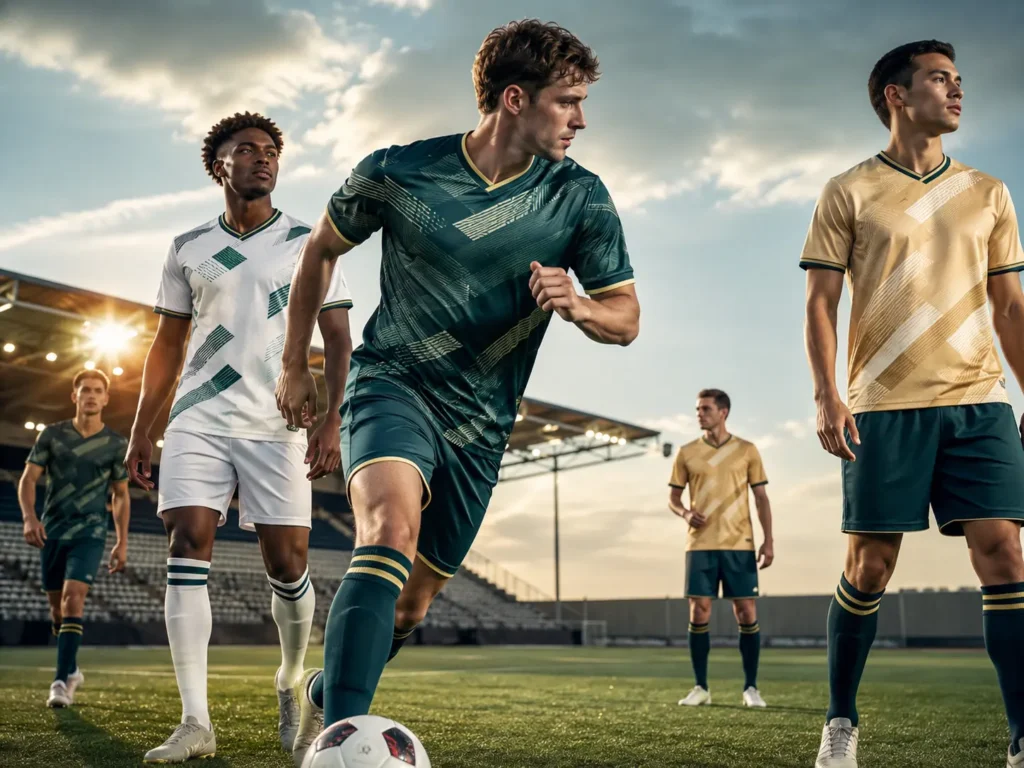
Uma camisa de futebol personalizada é uma camisa de futebol ou futebol projetada especificamente para um time, clube, escola, academia, torneio, grupo de fãs, ou marca própria de roupas esportivas. Pode incluir cores personalizadas, brasão do clube, logotipos de patrocinadores, nomes de jogadores, números dos jogadores, estilo de colarinho, corte de manga, painéis laterais, tipo de tecido, ajustar, método de decoração, etiqueta de cuidados, e embalagem.
As camisas de futebol personalizadas modernas geralmente são produzidas por sublimação, transferência de calor, impressão de tela, bordado, remendos tecidos, ou decoração híbrida. Muitos compradores também encomendam shorts combinando, meias, camisas de goleiro, camisas de treino, fatos de treino, jaquetas, bolsas, e mercadorias de fãs. Isso significa que o fornecimento de camisas não é simplesmente um trabalho de design. É um plano completo de fornecimento de roupas de equipe.
Por que 2026/2027 As camisas estão se tornando mais técnicas
As equipes agora esperam mais de seus kits. Os jogadores querem peso leve, respirável, tecidos de secagem rápida. Os treinadores querem um dimensionamento consistente. Os clubes querem cores que combinem com sua identidade. Os patrocinadores querem logotipos legíveis. Distribuidores querem pedidos repetidos estáveis. Compradores de marca própria desejam embalagens personalizadas e controle da marca. É por isso que o fornecimento de camisas de futebol personalizadas deve começar com a função: intensidade da partida, clima, idade do jogador, quantidade do pedido, necessidades do patrocinador, preço alvo, e prazo de entrega.
O design ainda importa, mas projetar sem controle de produção é arriscado. Uma camisa pode ficar incrível em uma maquete e ainda assim falhar se o tecido parecer pesado, o dimensionamento está errado, a impressão do patrocinador descasca, ou o novo pedido não corresponde ao primeiro lote. Isso não é uma tendência. Isso é um pequeno desastre usando uma coleira.
A ascensão do poliéster reciclado ecológico (PET) Fornecimento
Por que as camisas de futebol rPET estão crescendo
Poliéster reciclado, frequentemente chamado de rPET, é uma das direções materiais mais fortes para 2026/2027 roupas de time de futebol. Clubes, escolas, academias, e marcas próprias de roupas esportivas estão cada vez mais interessadas em materiais de menor impacto porque a sustentabilidade está se tornando parte da narrativa da marca. Para um clube, As camisas rPET podem apoiar uma mensagem mais limpa: fornecimento responsável, roupa de equipe moderna, e uma maior consciência ambiental.
No entanto, os compradores não devem escolher rPET apenas porque soa bem no título de um produto. Eles deveriam verificar o conteúdo reciclado, documentação de certificação, se necessário, toque de tecido, brilho de cor de sublimação, encolhimento, respirabilidade, desempenho de absorção de suor, diferença de preço, Quantidade mínima, e disponibilidade de pedidos repetidos. Uma camisa reciclada ainda precisa ser confortável, durável, e imprimível. A sustentabilidade é valiosa, mas os jogadores ainda reclamarão se a camisa parecer uma sacola plástica de supermercado. Justo.
O que os compradores devem verificar antes de escolher o rPET
Antes de selecionar rPET para camisas personalizadas de times de futebol, os compradores devem perguntar se o fornecedor pode fornecer documentação sobre conteúdo reciclado, estoque de tecido consistente, resultados de cores estáveis após sublimação, e instruções de lavagem claras. Se o pedido for para escolas, equipes juvenis, ou mercados de varejo, as expectativas de segurança e certificação devem ser confirmadas antecipadamente.
| Tipo de tecido | Benefício Principal | Melhor uso | Cheque do comprador |
|---|---|---|---|
| Poliéster Padrão | Econômico e durável | Times amadores, equipes escolares, kits de orçamento | GSM, cor de impressão, encolhimento |
| rPET Poliéster | Posicionamento ecológico | Clubes, academias, marcas próprias | Certificação, sensação de mão, estabilidade de cor |
| Mistura de poliéster-elastano | Melhor alongamento e movimento corporal | Treinamento de elite, fósforos ajustados | Recuperação de estiramento e tolerância ao tamanho |
| Malha de poliéster | Ventilação melhorada | Jogos e treinos em clima quente | Respirabilidade e transparência |
| Jacquard Poliéster | Textura e estrutura premium | Camisetas e fanwear de varejo do clube | Quantidade mínima, estabilidade de textura, custo |
Lógica de decisão rPET
Se o seu clube deseja um posicionamento de sustentabilidade, escolha camisas de futebol rPET com documentação. Se o pedido for altamente sensível ao preço e a sustentabilidade não for necessária, poliéster padrão pode ser mais econômico. Se o comprador vender para escolas, clubes, ou mercados com foco ecológico, rPET pode melhorar o valor da marca. Se a precisão das cores for crítica, solicite uma amostra de sublimação antes da produção em massa.
Padrões de sublimação geométrica minimalista de inspiração retrô
Por que o minimalismo retrô está retornando
O design do futebol está voltando à memória, mas com uma execução mais limpa. As equipes estão revisitando a energia dos kits dos anos 1990 e início dos anos 2000 através de listras diagonais, divisas tonais, painéis de ombro geométricos, padrões de grade, colarinhos contrastantes, guarnição da manga, e bloqueio de cores herdadas. A diferença é que 2026/2027 os designs são mais controlados e menos caóticos.
A geometria minimalista de inspiração retrô funciona porque dá identidade ao time sem fazer a camisa parecer um cone de treinamento explodido. Padrões sutis podem fazer um clube parecer sério, local, e memorável. Eles também deixam espaço para logotipos de patrocinadores, o que é importante para clubes amadores e equipes semiprofissionais que dependem de receitas de patrocínio.
Para inspiração de design em torno de detalhes personalizados, elementos exclusivos da equipe, e identidade do clube, os compradores podem revisar tendências de uniformes de futebol personalizados antes de preparar um briefing de design claro para a fábrica.
Por que a sublimação funciona bem para desenhos geométricos
A sublimação é um dos métodos de produção mais fortes para camisas de futebol totalmente personalizadas porque o design passa a fazer parte do tecido de poliéster. It can create gradients, listras, geometric effects, club crests, gráficos de patrocinadores, números dos jogadores, sleeve details, and background textures without adding a heavy surface print layer.
This makes sublimated football jerseys suitable for bulk team orders, tournament kits, home and away versions, camisas de goleiro, tops de treino, and fanwear collections. If the team wants full-color graphics, sublimation is usually the best choice. If only player names and numbers vary, heat transfer can still be useful. If the club wants premium crest texture, a woven patch or embroidery can be added.
Design Decision Logic
If the team wants heritage identity, choose retro geometric layouts. If the buyer wants a modern premium look, use tonal graphics instead of loud patterns. If the jersey includes many sponsors, keep the background clean. If the club sells fan jerseys, create a cleaner retail version and a sponsor-heavy match version. The jersey should not fight its own logos. That is a design argument nobody wins.
Tendência 3 — Lightweight Performance Fabrics with Breathable Mesh Zones
Fabric GSM and Performance Feel
Fabric GSM is one of the most practical decisions in Custom Football Jersey sourcing. GSM afeta o peso, sensação de mão, durabilidade, respirabilidade, transparency, and perceived value. A lighter jersey can feel faster and cooler, but it may feel too thin for some teams. A heavier jersey can feel premium, but it may trap heat in hot climates.
| Peso do tecido | Feel | Melhor uso | Buyer Note |
|---|---|---|---|
| 120–135 GSM | Ultraleve | Tempo quente, elite training | May feel thinner and need careful QC |
| 140–155 GSM | Equilibrado | Match jerseys, equipes juvenis, club orders | Most versatile range for many teams |
| 160–180 GSM | Stronger body | Clubes amadores, fan jerseys, cooler climates | More durable feel but warmer |
| 180+ GSM | Premium or retail feel | Fanwear, tracksuit tops, colder climates | May not be ideal for intense summer matches |
Mesh Panel Placement
Breathable mesh zones can be used under the arms, along side panels, across the upper back, or around ventilation areas. For hot-weather teams, lightweight polyester with mesh panels can improve comfort during matches. For fan merchandise, buyers may choose a slightly heavier fabric because supporters often value hand feel more than match-day ventilation.
If players compete in hot weather, prioritize lighter GSM and mesh. If jerseys are used for fan merchandise, prioritize hand feel and durability. If the team plays contact-heavy matches, avoid fabric that is too thin. If the buyer wants one jersey for both matchwear and retail, choose a balanced GSM around the middle range.
Tendência 4 — Factory-Direct Customization to Maximize Club Budgets
How Sourcing Direct from the Manufacturer Maximizes Club Budgets
Factory-direct sourcing can help clubs, academias, distribuidores, and event organizers reduce unnecessary trading layers and gain better control over specifications. Buyers can discuss fabric, GSM, estilo de colarinho, sleeve style, sublimation artwork, sponsor positions, rótulos, embalagem, tabelas de tamanhos, and reorder plans more directly with the production team.
This matters because team budgets are rarely unlimited. A club may need home kits, away kits, camisas de goleiro, camisas de treino, shorts, meias, and spare player sets. A distributor may need multiple designs and sizes. A school may need fast delivery before the season starts. Factory-direct sourcing does not magically solve every problem, but it gives buyers better control when communication is clear.
When evaluating supplier background, buyers should check whether the company can support production, costumização, documentação, and export communication. Working with an experienced Custom Football Jersey manufacturer can make the difference between a smooth bulk order and a season-opening panic session.
Cost Structure Buyers Should Understand
| Cost Item | What It Includes | Buyer Risk If Ignored |
|---|---|---|
| Fabric Cost | Poliéster, PET, malha, spandex, jacquard | Wrong performance level |
| Printing Cost | Sublimação, transferência de calor, impressão de tela | Logo durability issues |
| Acessórios | Colarinho, punhos, rótulos, emblemas, guarnições | Inconsistent premium feel |
| Quantidade mínima | Minimum order quantity by design or color | Budget planning errors |
| Amostragem | Projeto, ajustar, cor, and fabric approval | Bulk production mistakes |
| Packaging | Polybag, size sticker, carton marking | Sorting confusion after delivery |
| Envio | Air, sea, express, or combined transport | Delivery delay before match season |
Factory-Direct Decision Logic
If the team needs 20–50 jerseys quickly, choose a simple sublimated design with low MOQ. If the buyer needs 300–1,000 pieces, factory-direct customization offers stronger cost control. If the order includes fanwear and matchwear, separate the fabric and fit specifications. If the club needs repeat orders, confirm that the factory archives color files, obra de arte, tabelas de tamanhos, and production records.
Tendência 5 — Sponsor-Ready Layouts and Cleaner Branding Zones
Why Sponsor Placement Matters
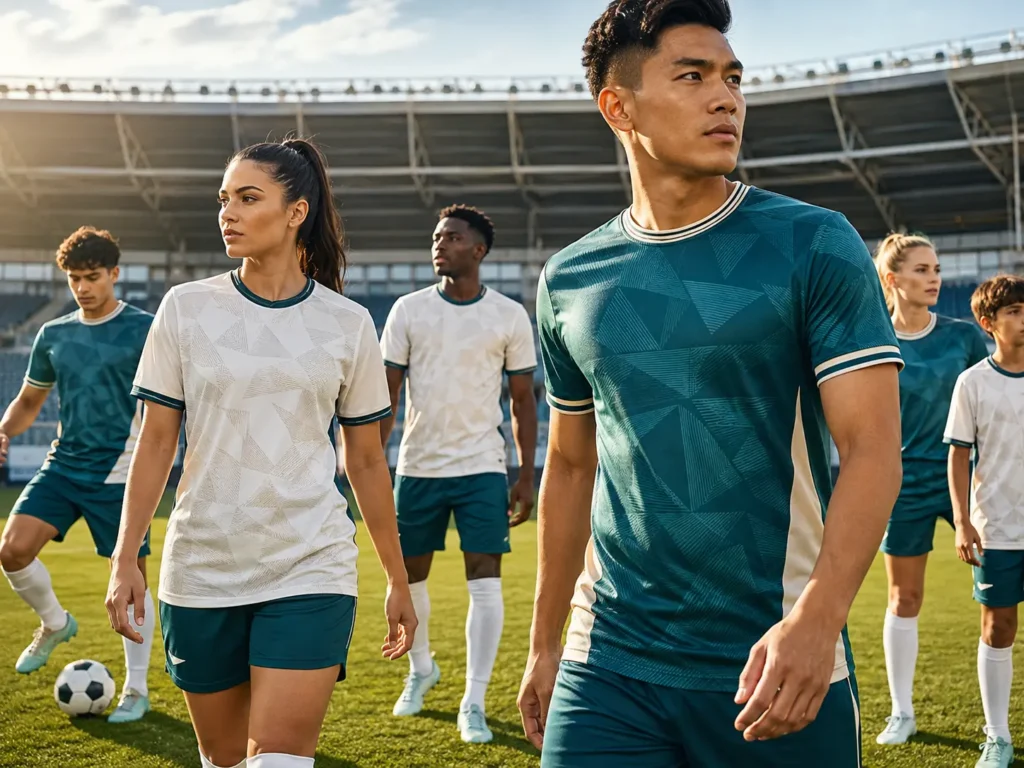
Many clubs depend on sponsors to support their season budget. That means jersey design must protect sponsor visibility without destroying the club identity. Common sponsor areas include front chest, back panel, mangas, shorts, training kits, tournament jerseys, academy uniforms, and fanwear.
Para 2026/2027, cleaner sponsor zones will become more important. Background patterns should be controlled around sponsor logos. Contrast panels can improve readability. Small sponsor marks should not sit on busy gradients. Logos should be supplied as vector artwork whenever possible.
Design Rules for Sponsor-Friendly Jerseys
If sponsors are important, choose cleaner sublimation backgrounds. If the design is for fanwear, reduce sponsor clutter. If the team has multiple sponsors, use structured panel zones. If sponsor logos include complex colors, request a physical print sample. If competition rules apply, confirm logo placement, number size, and color contrast before production.
Tendência 6 — Global Styling: Country-Inspired Custom Football Jersey Design
Why Regional Design Influence Matters
Football jersey trends are no longer driven only by professional clubs. Local culture, national colors, moda urbana, fan communities, and regional tournament identities influence what teams want. Some buyers prefer classic European minimalism. Others want Latin American color energy, African pattern references, Middle Eastern elegance, Asian clean geometry, or North American sportswear boldness.
For clubs and distributors studying international design taste, the article on football jersey trend can help buyers understand how different markets interpret custom designs and why local identity is becoming more important in teamwear.
Localized Design Elements
Localized jerseys may include city skyline patterns, founding years, local symbols, cores regionais, hidden collar messages, subtle mascot graphics, cultural pattern details, tournament marks, or sponsor-ready local campaign versions. These details make the jersey feel owned by the team, not borrowed from a template library.
If the team wants stronger emotional value, use localized details. If the buyer is a distributor, create design families that allow color and symbol changes for multiple teams. If the club sells fan jerseys, keep local elements visible but clean enough for casual wear.
Tendência 7 — Gender-Inclusive and Youth-Specific Fit Development
Why Size Range Matters
Modern teamwear buyers need more than one men’s size chart. Youth academies need child-specific sizing. Women’s teams may require adjusted fit rather than simply smaller men’s jerseys. Fanwear may need a relaxed fit. Goalkeeper jerseys may need extra room in the sleeve and chest. Plus-size options may also be important for club merchandise.
A reliable Custom Football Jersey factory should help buyers confirm chest width, comprimento do corpo, largura dos ombros, comprimento da manga, collar width, shorts waist, shorts length, and tolerance range. Pre-shipment measurement inspection is especially important for youth teams because small sizing errors become obvious very quickly. Kids are honest. Parents are even more honest.
Size Chart QC Table
| Measurement Point | Por que é importante | Cheque do comprador |
|---|---|---|
| Chest Width | Controls overall fit | Compare sample and bulk |
| Comprimento do corpo | Affects comfort and appearance | Check youth and adult ranges |
| Largura dos ombros | Affects movement | Confirm athletic or relaxed fit |
| comprimento da manga | Affects player comfort | Check short and long sleeve options |
| Collar Width | Affects comfort and head opening | Inspect sample fit |
| Shorts Waist | Affects kit usability | Confirm elastic and drawcord |
| Tolerance Range | Controls bulk consistency | Include in QC inspection |
Tendência 8 — Heat-Resistant, Wash-Durable Numbers and Names
Why Number Durability Affects Team Satisfaction
Nothing makes a team unhappy faster than peeling numbers, cracked names, wrong spelling, color bleeding, misaligned sponsor prints, or numbers that cannot be read from the sideline. Player names and numbers look like small details until they fail. Then they become the entire complaint.
For sublimated jerseys, names and numbers can be printed directly into the fabric. For small orders or player-specific changes, heat transfer vinyl can be useful. For premium badges, embroidery or woven patches can be added. Buyers should confirm wash testing, método de impressão, number size, font, contraste de cor, and player list accuracy before bulk production.
| Decoration Method | Melhor uso | Força | Cheque do comprador |
|---|---|---|---|
| Sublimação | Full custom team jerseys | Permanent print feel | Fabric must be polyester |
| Heat Transfer Vinyl | Names and numbers | Flexible for small orders | Peeling resistance |
| Impressão de tela | Simple logos | Cost-effective in bulk | Color registration |
| Bordado | Crests and badges | Premium texture | Weight and comfort |
| Woven Patch | Club badge | Professional look | Edge durability |
Decoration Decision Logic
If the jersey needs full graphics, sublimation is usually best. If names and numbers vary by player, heat transfer can work. If the team wants premium badge value, add woven patches or embroidery. If the order is low budget, choose clean sublimation without too many extra patches.
Tendência 9 — AI-Assisted Jersey Mockups and Faster Digital Sampling
Why Digital Mockups Matter
Digital mockups are becoming essential because teams want faster approval before production. A good mockup should show front, voltar, mangas, colarinho, shorts, meias, sponsor positions, colocação de número, and colorways. It reduces misunderstanding and helps decision-makers approve the final look before samples are made.
For buyers studying design possibilities and team identity ideas, revisando unique custom soccer uniforms can help develop stronger creative direction before sending artwork to the factory.
Buyer Checklist for Digital Sampling
- Provide club logo in vector format.
- Confirm Pantone, HEX, or other color references.
- Prepare sponsor files in high resolution.
- Confirm player number font.
- Confirm collar and sleeve style.
- Confirm home, away, goalkeeper, and training versions.
- Prepare size breakdown.
- Confirm player name and number list before bulk production.
- Confirm artwork ownership and reorder file storage.
Tendência 10 — Complete Team Kit Bundles Instead of Jersey-Only Orders
Why Teams Prefer Full Kits
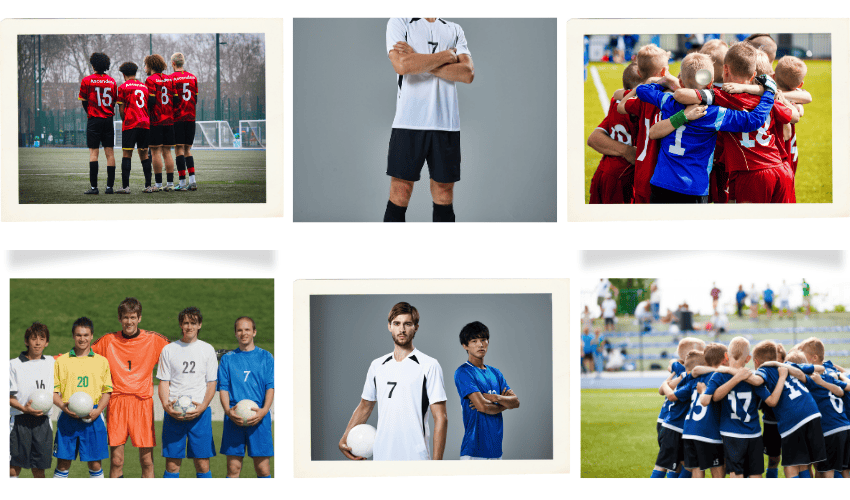
Teams increasingly prefer complete kit bundles instead of jersey-only orders. A complete set may include jerseys, shorts, meias, goalkeeper kits, camisas de treino, fatos de treino, warm-up jackets, bolsas, and fanwear. This creates a more professional image and reduces sourcing complexity.
| Bundle Type | Includes | Best Buyer |
|---|---|---|
| Basic Match Kit | Jersey, shorts, meias | Amateur clubs and school teams |
| Academy Kit | Match kit, training shirt, tracksuit | Youth programs and academies |
| Club Retail Kit | Player kit plus fan jersey | Clubs with supporters |
| Tournament Kit | Home and away jerseys, goalkeeper kit | Event organizers |
| Distributor Bundle | Mixed designs and sizes | Teamwear wholesalers |
Bundle Decision Logic
If the team needs a professional image, order complete kits. If budget is limited, start with the match kit first. If the buyer is a distributor, offer modular bundles by price tier. If the club sells merchandise, separate matchwear and fanwear specifications so each product fits its real use.
Material and Performance Checklist for Custom Football Jerseys
Key Fabric Parameters Buyers Should Check
| Parâmetro | Recommended Check | Por que é importante |
|---|---|---|
| Fabric Composition | Poliéster, PET, spandex blend | Affects print and performance |
| GSM | 120–180 GSM common range | Affects weight and durability |
| Moisture Wicking | Sweat movement test | Player comfort |
| Respirabilidade | Mesh or air permeability | Hot-weather performance |
| Stretch Recovery | Pull and recovery test | Fit and movement |
| Solidez da cor | Wash and sweat testing | Durabilidade de impressão |
| Shrinkage | After-wash measurement | Size stability |
| Seam Strength | Pull test | Match durability |
| Durabilidade de impressão | Wash cycle check | Logo and number life |
| Certificação | OEKO-TEX, GRS, or buyer-required documents | Safety and sustainability |
Compliance and Quality Considerations for 2026/2027 Roupas de equipe
Textile Safety and Restricted Substances
Football jerseys touch skin, absorb sweat, and are washed repeatedly. Buyers should consider harmful substance control, solidez da cor, skin-contact safety, etiquetas de cuidado, and certification documentation if selling to schools, clubes, equipes juvenis, or regulated retail markets.
rPET Certification and Sustainability Claims
If the jersey is marketed as recycled polyester, the claim should be supported by documentation. Sustainability statements should not be vague. For private-label buyers and distributors, clear documents reduce customer questions and protect brand credibility.
League and Tournament Kit Rules
Teams should confirm number size, sponsor placement, contraste de cor, and competition rules before approving artwork. Some leagues require specific numbering visibility or restrict sponsor location. Fixing artwork before production is easy. Fixing a rule violation after bulk production is a small tragedy wearing cleats.
Buyer QC Documents
- Fabric specification sheet.
- Size chart.
- Artwork approval file.
- Sample approval record.
- Color confirmation.
- Bulk production photos.
- Pre-shipment inspection report.
- Packing list.
- Care label information.
- Certification documents if required.
- Reorder file archive.
Common Mistakes When Buying Custom Football Jerseys
Erro 1: Choosing Design Before Fabric
A great pattern fails if the fabric is uncomfortable. Start with climate, intensidade da partida, tecido GSM, and player comfort before finalizing artwork.
Erro 2: Ignoring Size Tolerance
Size inconsistency creates complaints, especially for youth teams, women’s teams, and repeat orders. Always approve a size chart and sample measurements.
Erro 3: Using Low-Resolution Logos
Poor logo files create blurry sublimation and weak sponsor presentation. Vector artwork is strongly recommended.
Erro 4: Overloading the Jersey with Sponsors
Too many sponsor marks reduce visual quality. Use structured zones and prioritize readability.
Erro 5: Not Ordering Spare Jerseys
Teams need replacements for new players, lost kits, damaged jerseys, and mid-season changes. Spare jerseys are cheaper than emergency reorders.
Erro 6: Choosing Supplier Only by Unit Price
The cheapest unit price may hide problems in fabric, print, dimensionamento, delivery, embalagem, or reorder support. A jersey that arrives late or fits badly is not cheap. It is just a delayed headache.
Lógica de decisão do comprador: Which Custom Football Jersey Should You Choose?
If Your Team Needs the Best Budget Control
Choose factory-direct sublimated jerseys with standard polyester, clean design, and minimal extra patches. Keep sponsor zones simple and order spare pieces with the first batch.
If Your Club Wants Sustainability Positioning
Choose rPET football jerseys with documented recycled content. Confirm fabric feel, sublimation brightness, certification needs, and price difference before bulk production.
If Your Team Plays in Hot Weather
Choose lightweight polyester, painéis de malha respirável, moisture-wicking construction, and a comfortable athletic fit. Avoid overly heavy retail fabrics for match play.
If Your Club Sells Fan Jerseys
Choose a slightly heavier retail feel, cleaner sponsor layout, better packaging, and sizing options for supporters. Fan jerseys should look good off the pitch too.
If You Are a Distributor
Choose 3–5 template families with customizable colors, sponsor zones, size ranges, and repeatable production files. This makes selling easier across multiple teams and markets.
Factory-Direct Sourcing Checklist Before Placing Bulk Orders
- Confirm fabric type and GSM.
- Confirm MOQ and unit price.
- Approve size chart and fit sample.
- Confirm artwork, cores, sponsor placement, and number font.
- Confirm print method.
- Confirm collar, sleeve, shorts, and socks options.
- Prepare player name and number list.
- Confirm sample timeline and bulk lead time.
- Confirm packaging, carton marking, and shipping method.
- Confirm reorder policy and artwork file storage.
- Confirm QC inspection and payment terms.
Antes de fazer um pedido em grandes quantidades, prepare club logo files, color codes, sponsor artwork, size breakdown, target budget, preferência de tecido, delivery deadline, and expected reorder plan. A clear custom football jersey project consultation helps the supplier recommend a practical production route instead of guessing. Guessing is fun in party games, not in bulk teamwear production.
Recomendação Final: Choose Jerseys by Team Identity, Desempenho, and Supply Plan
The best Custom Football Jersey for 2026/2027 is not simply the most colorful design. It should match team identity, conforto do jogador, necessidades do patrocinador, orçamento, Quantidade mínima, sustainability goals, delivery schedule, and reorder planning. A good jersey performs on the pitch, photographs well, supports club branding, and can be repeated reliably when the team needs more pieces.
Choose rPET if sustainability matters. Choose sublimation if full custom graphics are important. Choose lightweight mesh if players compete in hot weather. Choose structured sponsor zones if club funding depends on visibility. Choose complete kits if the team wants a professional image. Choose factory-direct sourcing if you need cost control, customization flexibility, and clearer production communication.
For clubs and distributors, the smartest order is not the cheapest order. It is the order that arrives correctly, fits properly, prints clearly, survives washing, supports reorders, and makes the team look like it planned the season before the whistle blew.
FAQ About Custom Football Jersey Trends
1. What is the biggest Custom Football Jersey trend for 2026/2027?
The biggest Custom Football Jersey trend for 2026/2027 is the combination of recycled polyester, impressão por sublimação, retro-inspired geometric design, lightweight performance fabrics, and factory-direct customization. As equipes querem camisas com aparência profissional, feel comfortable during matches, support sponsor visibility, and stay within budget. Buyers are also asking more questions about MOQ, sampling time, precisão de cores, consistência de tamanho, e reordenar suporte.
2. Are recycled polyester football jerseys good for teams?
Sim, recycled polyester football jerseys can be a good choice for teams that want sustainability positioning and modern sportswear branding. No entanto, buyers should verify recycled content, certification if required, toque de tecido, brilho de cor de sublimação, encolhimento, respirabilidade, and price difference compared with standard polyester. rPET is most useful when the club, escola, distributor, or private-label brand can clearly communicate its sustainability value to players and customers.
3. Is sublimation better for custom football jerseys?
Sublimation is excellent for custom football jerseys because it allows full-color graphics, gradientes, geometric patterns, club crests, logotipos de patrocinadores, nomes, and numbers to become part of the polyester fabric. This creates a lightweight feel without heavy surface print layers. Sublimation is especially suitable for team kits, retro designs, layouts prontos para patrocinadores, and bulk orders that need consistent artwork across many sizes.
4. How can teams reduce Custom Football Jersey costs?
Teams can reduce Custom Football Jersey costs by sourcing directly from the manufacturer, choosing standard polyester or balanced GSM fabrics, using sublimation instead of multiple decoration methods, limiting unnecessary patches, preparing artwork correctly, confirming sponsor positions early, ordering spare jerseys with the main batch, and avoiding emergency reorders. Clear artwork and size breakdowns also reduce sampling delays and production mistakes.
5. What should I check before ordering football jerseys in bulk?
Before ordering football jerseys in bulk, buyers should check fabric composition, GSM, desempenho de absorção de umidade, respirabilidade, size chart, measurement tolerance, Quantidade mínima, aprovação de amostra, método de impressão, sponsor placement, precisão de cores, nomes e números dos jogadores, embalagem, carton marking, tempo de espera, shipping method, certification requirements, e reordenar suporte. A proper checklist helps prevent sizing problems, print mistakes, delivery delays, and inconsistent repeat orders.
Referências
- “Materials Market Report 2025” — Research Team — Textile Exchange — Textile Materials Report
- “STANDARD 100 by OEKO-TEX Product Information” — Certification Team — OEKO-TEX Association — Textile Safety Standard
- “Global Recycled Standard Overview” — Certification Team — Textile Exchange — Sustainability Certification Resource
- “FIFA Equipment Regulations” — Regulatory Team — Fédération Internationale de Football Association — Football Equipment Regulation
- “Laws of the Game: Players’ Equipment” — Technical Board — International Football Association Board — Football Rules Resource
- “Textiles: Tests for Colour Fastness” — Standards Committee — International Organization for Standardization — Textile Testing Standard
- “Performance Apparel Fabric Testing Guide” — Technical Team — AATCC — Textile Testing Resource
- “Sportswear Design and Teamwear Market Trends” — Apparel Research Team — Sportswear Industry Resource — Market Insight Report