Riepilogo veloce: What Teams Should Expect from Custom Football Jerseys in 2026/2027
Factory-Direct Custom Football Jerseys Are Becoming a Smarter Teamwear Decision
A Custom Football Jersey is no longer just a shirt with a team logo. Per 2026/2027 squadre, it has become a performance garment, brand identity tool, sponsor display space, fanwear product, and procurement decision in one package. Club, scuole, accademie, campionati dilettantistici, tournament organizers, distributori, and private-label sportswear buyers now compare fabric weight, prestazioni di assorbimento dell'umidità, sublimation quality, coerenza dimensionale, sponsor layout, MOQ, sampling speed, certification options, confezione, and reorder support before placing bulk orders.
The market is also becoming more practical. Teams want jerseys that look professional, feel breathable during matches, support club identity, and can be reordered during the season when new players join. Distributors want repeatable designs and predictable production. Schools want durable garments that survive washing. Sponsors want clear visibility. Insomma, a good jersey needs to perform both on the pitch and inside the purchasing spreadsheet. Glamorous? Non sempre. Important? Assolutamente.
For buyers comparing product categories, reviewing Custom Football Jersey and soccer uniforms options can help clarify common uniform formats, scelte del tessuto, customization paths, and teamwear production possibilities before moving into artwork approval, sampling, and bulk production.
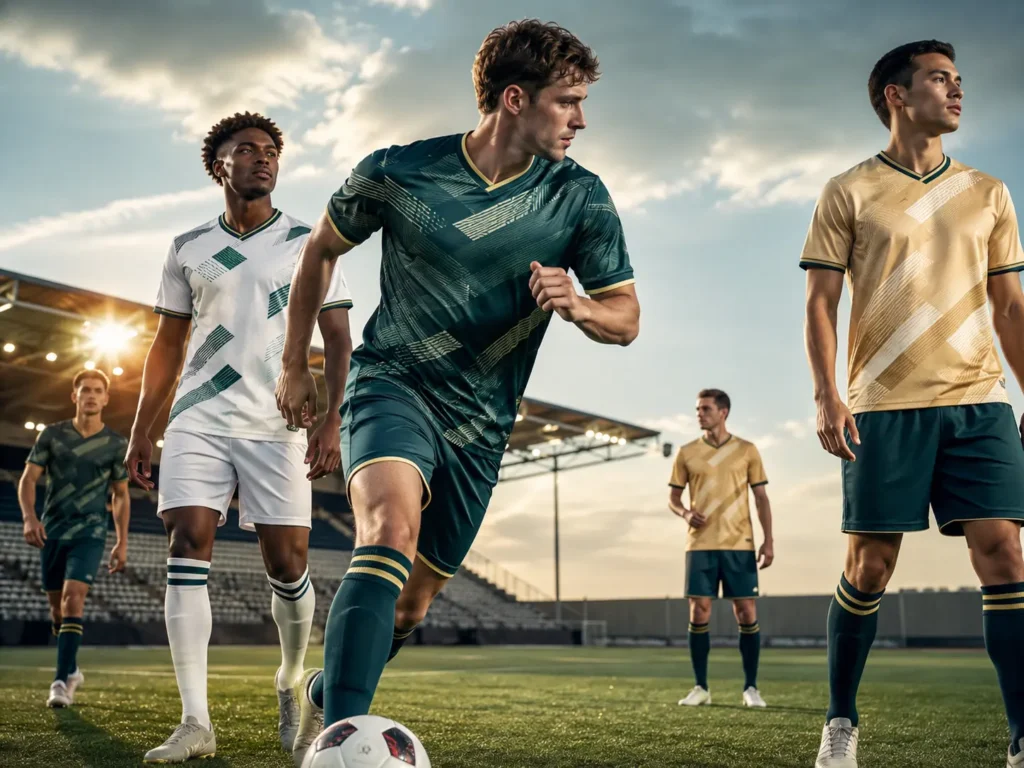
What Is a Custom Football Jersey in 2026/2027 Abbigliamento da squadra?
Basic Definition of a Custom Football Jersey
A Custom Football Jersey is a football or soccer shirt designed specifically for a team, club, scuola, accademia, tournament, fan group, or private-label sportswear brand. It can include custom colors, club crest, loghi degli sponsor, nomi dei giocatori, numeri dei giocatori, stile del colletto, sleeve cut, side panels, tipo di tessuto, adatto, decoration method, etichetta di cura, and packaging.
Modern custom football jerseys are usually produced through sublimation, trasferimento di calore, serigrafia, ricamo, toppe tessute, or hybrid decoration. Many buyers also order matching shorts, calzini, goalkeeper jerseys, training shirts, tracksuits, jackets, borse, e articoli per i tifosi. That means jersey sourcing is not simply a design job. It is a complete teamwear supply plan.
Perché 2026/2027 Jerseys Are Becoming More Technical
Teams now expect more from their kits. Players want lightweight, traspirante, tessuti ad asciugatura rapida. Coaches want consistent sizing. Clubs want colors that match their identity. Sponsors want readable logos. Distributors want stable repeat orders. Private-label buyers want custom packaging and brand control. This is why Custom Football Jersey sourcing should start with function: match intensity, clima, player age, quantità dell'ordine, sponsor needs, target price, and delivery deadline.
Design still matters, but design without production control is risky. A jersey can look amazing in a mockup and still fail if the fabric feels heavy, the sizing runs wrong, the sponsor print peels, or the reorder does not match the first batch. That is not a trend. That is a tiny disaster wearing a collar.
The Rise of Eco-Friendly Recycled Polyester (rPET) Sourcing
Why rPET Football Jerseys Are Growing
Poliestere riciclato, often called rPET, is one of the strongest material directions for 2026/2027 abbigliamento della squadra di calcio. Club, scuole, accademie, and private-label sportswear brands are increasingly interested in lower-impact materials because sustainability is becoming part of brand storytelling. For a club, rPET jerseys can support a cleaner message: responsible sourcing, modern teamwear, and stronger environmental awareness.
Tuttavia, buyers should not choose rPET only because it sounds good in a product title. They should check recycled content, certification documentation if needed, fabric hand feel, sublimation color brightness, restringimento, traspirabilità, prestazioni traspiranti, price difference, MOQ, and repeat-order availability. A recycled jersey still needs to be comfortable, durevole, and printable. Sustainability is valuable, but players will still complain if the shirt feels like a plastic grocery bag. Abbastanza giusto.
What Buyers Should Check Before Choosing rPET
Before selecting rPET for custom football team jerseys, buyers should ask whether the supplier can provide recycled-content documentation, consistent fabric stock, stable color results after sublimation, and clear washing instructions. If the order is for schools, squadre giovanili, or retail markets, safety and certification expectations should be confirmed early.
| Tipo di tessuto | Main Benefit | Miglior utilizzo | Buyer Check |
|---|---|---|---|
| Standard Polyester | Cost-effective and durable | Amateur teams, squadre scolastiche, budget kits | GSM, print color, restringimento |
| rPET Polyester | Eco-friendly positioning | Club, accademie, private-label brands | Certificazione, sensazione della mano, color stability |
| Misto poliestere-elastan | Better stretch and body movement | Elite training, fitted matchwear | Stretch recovery and size tolerance |
| Poliestere a rete | Improved ventilation | Hot-weather matches and training | Breathability and transparency |
| Poliestere jacquard | Premium texture and structure | Club retail jerseys and fanwear | MOQ, texture stability, cost |
rPET Decision Logic
If your club wants sustainability positioning, choose rPET football jerseys with documentation. If the order is highly price-sensitive and sustainability is not required, standard polyester may be more cost-efficient. If the buyer sells to schools, club, or eco-focused markets, rPET can improve brand value. If color accuracy is critical, request a sublimation sample before bulk production.
Retro-Inspired Minimalist Geometric Sublimation Patterns
Why Retro Minimalism Is Returning
Football design is returning to memory, but with cleaner execution. Teams are revisiting 1990s and early 2000s kit energy through diagonal stripes, tonal chevrons, geometric shoulder panels, grid patterns, contrast collars, sleeve trim, and heritage color blocking. The difference is that 2026/2027 designs are more controlled and less chaotic.
Retro-inspired minimalist geometry works because it gives a team identity without making the jersey look like a training cone exploded. Subtle patterns can make a club look serious, local, and memorable. They also leave space for sponsor logos, which matters for amateur clubs and semi-professional teams that rely on sponsorship income.
For design inspiration around personalized details, team-exclusive elements, and club identity, gli acquirenti possono rivedere custom soccer uniforms trends before preparing a clear design brief for the factory.
Why Sublimation Works Well for Geometric Designs
Sublimation is one of the strongest production methods for full custom football jerseys because the design becomes part of the polyester fabric. It can create gradients, strisce, geometric effects, stemmi del club, grafica degli sponsor, numeri dei giocatori, dettagli sulle maniche, and background textures without adding a heavy surface print layer.
This makes sublimated football jerseys suitable for bulk team orders, tournament kits, home and away versions, goalkeeper jerseys, cime da allenamento, and fanwear collections. If the team wants full-color graphics, sublimation is usually the best choice. If only player names and numbers vary, heat transfer can still be useful. If the club wants premium crest texture, a woven patch or embroidery can be added.
Design Decision Logic
If the team wants heritage identity, choose retro geometric layouts. If the buyer wants a modern premium look, use tonal graphics instead of loud patterns. If the jersey includes many sponsors, keep the background clean. If the club sells fan jerseys, create a cleaner retail version and a sponsor-heavy match version. The jersey should not fight its own logos. That is a design argument nobody wins.
Tendenza 3 — Lightweight Performance Fabrics with Breathable Mesh Zones
Fabric GSM and Performance Feel
Fabric GSM is one of the most practical decisions in Custom Football Jersey sourcing. Il GSM influisce sul peso, sensazione della mano, durabilità, traspirabilità, transparency, and perceived value. A lighter jersey can feel faster and cooler, but it may feel too thin for some teams. A heavier jersey can feel premium, but it may trap heat in hot climates.
| Peso del tessuto | Feel | Miglior utilizzo | Nota dell'acquirente |
|---|---|---|---|
| 120–135 GSM | Ultraleggero | Tempo caldo, elite training | May feel thinner and need careful QC |
| 140–155 GSM | Balanced | Match jerseys, squadre giovanili, club orders | Most versatile range for many teams |
| 160–180 GSM | Stronger body | Amateur clubs, fan jerseys, cooler climates | More durable feel but warmer |
| 180+ GSM | Premium or retail feel | Abbigliamento per tifosi, tracksuit tops, colder climates | May not be ideal for intense summer matches |
Mesh Panel Placement
Breathable mesh zones can be used under the arms, along side panels, across the upper back, or around ventilation areas. For hot-weather teams, lightweight polyester with mesh panels can improve comfort during matches. For fan merchandise, buyers may choose a slightly heavier fabric because supporters often value hand feel more than match-day ventilation.
If players compete in hot weather, prioritize lighter GSM and mesh. If jerseys are used for fan merchandise, prioritize hand feel and durability. If the team plays contact-heavy matches, avoid fabric that is too thin. If the buyer wants one jersey for both matchwear and retail, choose a balanced GSM around the middle range.
Tendenza 4 — Factory-Direct Customization to Maximize Club Budgets
How Sourcing Direct from the Manufacturer Maximizes Club Budgets
Factory-direct sourcing can help clubs, accademie, distributori, and event organizers reduce unnecessary trading layers and gain better control over specifications. Buyers can discuss fabric, GSM, stile del colletto, sleeve style, sublimation artwork, sponsor positions, etichette, confezione, tabelle delle taglie, and reorder plans more directly with the production team.
This matters because team budgets are rarely unlimited. A club may need home kits, away kits, goalkeeper jerseys, training shirts, pantaloncini, calzini, and spare player sets. A distributor may need multiple designs and sizes. A school may need fast delivery before the season starts. Factory-direct sourcing does not magically solve every problem, but it gives buyers better control when communication is clear.
When evaluating supplier background, buyers should check whether the company can support production, personalizzazione, documentation, and export communication. Working with an experienced Custom Football Jersey manufacturer can make the difference between a smooth bulk order and a season-opening panic session.
Cost Structure Buyers Should Understand
| Cost Item | What It Includes | Buyer Risk If Ignored |
|---|---|---|
| Fabric Cost | Poliestere, rPET, maglia, spandex, jacquard | Wrong performance level |
| Printing Cost | Sublimazione, trasferimento di calore, screen print | Logo durability issues |
| Accessori | Collare, polsini, etichette, distintivi, finiture | Inconsistent premium feel |
| MOQ | Minimum order quantity by design or color | Budget planning errors |
| Campionamento | Progetto, adatto, colore, and fabric approval | Bulk production mistakes |
| Confezione | Polybag, size sticker, carton marking | Sorting confusion after delivery |
| Spedizione | Air, sea, express, or combined transport | Delivery delay before match season |
Factory-Direct Decision Logic
If the team needs 20–50 jerseys quickly, choose a simple sublimated design with low MOQ. If the buyer needs 300–1,000 pieces, factory-direct customization offers stronger cost control. If the order includes fanwear and matchwear, separate the fabric and fit specifications. If the club needs repeat orders, confirm that the factory archives color files, artwork, tabelle delle taglie, and production records.
Tendenza 5 — Sponsor-Ready Layouts and Cleaner Branding Zones
Why Sponsor Placement Matters
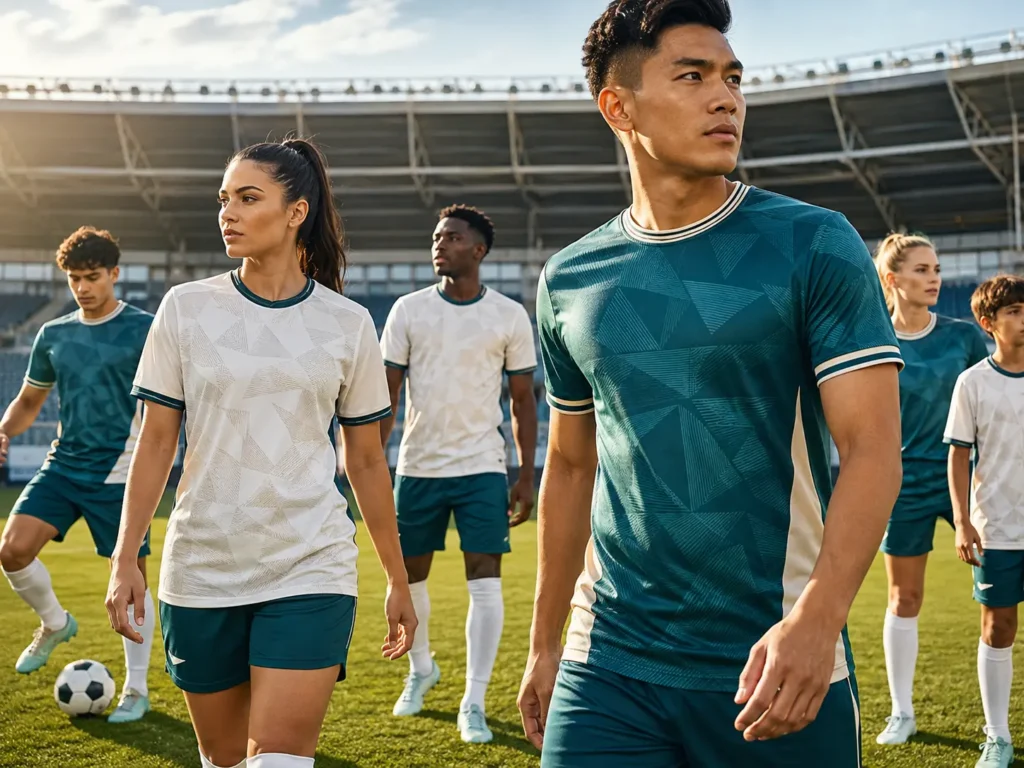
Many clubs depend on sponsors to support their season budget. That means jersey design must protect sponsor visibility without destroying the club identity. Common sponsor areas include front chest, back panel, maniche, pantaloncini, training kits, tournament jerseys, academy uniforms, and fanwear.
Per 2026/2027, cleaner sponsor zones will become more important. Background patterns should be controlled around sponsor logos. Contrast panels can improve readability. Small sponsor marks should not sit on busy gradients. Logos should be supplied as vector artwork whenever possible.
Design Rules for Sponsor-Friendly Jerseys
If sponsors are important, choose cleaner sublimation backgrounds. If the design is for fanwear, reduce sponsor clutter. If the team has multiple sponsors, use structured panel zones. If sponsor logos include complex colors, request a physical print sample. If competition rules apply, confirm logo placement, number size, and color contrast before production.
Tendenza 6 — Global Styling: Country-Inspired Custom Football Jersey Design
Why Regional Design Influence Matters
Football jersey trends are no longer driven only by professional clubs. Local culture, colori nazionali, abbigliamento da strada, fan communities, and regional tournament identities influence what teams want. Some buyers prefer classic European minimalism. Others want Latin American color energy, African pattern references, Middle Eastern elegance, Asian clean geometry, or North American sportswear boldness.
For clubs and distributors studying international design taste, the article on football jersey trend can help buyers understand how different markets interpret custom designs and why local identity is becoming more important in teamwear.
Localized Design Elements
Localized jerseys may include city skyline patterns, founding years, local symbols, regional colors, hidden collar messages, subtle mascot graphics, cultural pattern details, tournament marks, or sponsor-ready local campaign versions. These details make the jersey feel owned by the team, not borrowed from a template library.
If the team wants stronger emotional value, use localized details. If the buyer is a distributor, create design families that allow color and symbol changes for multiple teams. If the club sells fan jerseys, keep local elements visible but clean enough for casual wear.
Tendenza 7 — Gender-Inclusive and Youth-Specific Fit Development
Why Size Range Matters
Modern teamwear buyers need more than one men’s size chart. Youth academies need child-specific sizing. Women’s teams may require adjusted fit rather than simply smaller men’s jerseys. Fanwear may need a relaxed fit. Goalkeeper jerseys may need extra room in the sleeve and chest. Plus-size options may also be important for club merchandise.
A reliable Custom Football Jersey factory should help buyers confirm chest width, lunghezza del corpo, larghezza delle spalle, Lunghezza della manica, collar width, shorts waist, shorts length, and tolerance range. Pre-shipment measurement inspection is especially important for youth teams because small sizing errors become obvious very quickly. Kids are honest. Parents are even more honest.
Size Chart QC Table
| Punto di misurazione | Perché è importante | Buyer Check |
|---|---|---|
| Larghezza del torace | Controls overall fit | Compare sample and bulk |
| Lunghezza del corpo | Affects comfort and appearance | Check youth and adult ranges |
| Larghezza della spalla | Affects movement | Confirm athletic or relaxed fit |
| Lunghezza della manica | Affects player comfort | Check short and long sleeve options |
| Collar Width | Affects comfort and head opening | Inspect sample fit |
| Shorts Waist | Affects kit usability | Confirm elastic and drawcord |
| Tolerance Range | Controls bulk consistency | Include in QC inspection |
Tendenza 8 — Heat-Resistant, Wash-Durable Numbers and Names
Why Number Durability Affects Team Satisfaction
Nothing makes a team unhappy faster than peeling numbers, cracked names, wrong spelling, color bleeding, misaligned sponsor prints, or numbers that cannot be read from the sideline. Player names and numbers look like small details until they fail. Then they become the entire complaint.
For sublimated jerseys, names and numbers can be printed directly into the fabric. For small orders or player-specific changes, heat transfer vinyl can be useful. For premium badges, embroidery or woven patches can be added. Buyers should confirm wash testing, metodo di stampa, number size, font, contrasto di colore, and player list accuracy before bulk production.
| Decoration Method | Miglior utilizzo | Forza | Buyer Check |
|---|---|---|---|
| Sublimazione | Full custom team jerseys | Permanent print feel | Fabric must be polyester |
| Heat Transfer Vinyl | Names and numbers | Flexible for small orders | Peeling resistance |
| Serigrafia | Simple logos | Cost-effective in bulk | Color registration |
| Ricamo | Crests and badges | Premium texture | Weight and comfort |
| Woven Patch | Club badge | Professional look | Edge durability |
Decoration Decision Logic
If the jersey needs full graphics, sublimation is usually best. If names and numbers vary by player, heat transfer can work. If the team wants premium badge value, add woven patches or embroidery. If the order is low budget, choose clean sublimation without too many extra patches.
Tendenza 9 — AI-Assisted Jersey Mockups and Faster Digital Sampling
Why Digital Mockups Matter
Digital mockups are becoming essential because teams want faster approval before production. A good mockup should show front, Indietro, maniche, collare, pantaloncini, calzini, sponsor positions, number placement, and colorways. It reduces misunderstanding and helps decision-makers approve the final look before samples are made.
For buyers studying design possibilities and team identity ideas, reviewing unique custom soccer uniforms can help develop stronger creative direction before sending artwork to the factory.
Buyer Checklist for Digital Sampling
- Provide club logo in vector format.
- Confirm Pantone, HEX, or other color references.
- Prepare sponsor files in high resolution.
- Confirm player number font.
- Confirm collar and sleeve style.
- Confirm home, away, goalkeeper, and training versions.
- Prepare size breakdown.
- Confirm player name and number list before bulk production.
- Confirm artwork ownership and reorder file storage.
Tendenza 10 — Complete Team Kit Bundles Instead of Jersey-Only Orders
Why Teams Prefer Full Kits
Teams increasingly prefer complete kit bundles instead of jersey-only orders. A complete set may include jerseys, pantaloncini, calzini, goalkeeper kits, training shirts, tracksuits, warm-up jackets, borse, and fanwear. This creates a more professional image and reduces sourcing complexity.
| Bundle Type | Includes | Best Buyer |
|---|---|---|
| Basic Match Kit | Maglia, pantaloncini, calzini | Amateur clubs and school teams |
| Academy Kit | Match kit, training shirt, tracksuit | Youth programs and academies |
| Club Retail Kit | Player kit plus fan jersey | Clubs with supporters |
| Tournament Kit | Home and away jerseys, goalkeeper kit | Event organizers |
| Distributor Bundle | Mixed designs and sizes | Teamwear wholesalers |
Bundle Decision Logic
If the team needs a professional image, order complete kits. If budget is limited, start with the match kit first. If the buyer is a distributor, offer modular bundles by price tier. If the club sells merchandise, separate matchwear and fanwear specifications so each product fits its real use.
Material and Performance Checklist for Custom Football Jerseys
Key Fabric Parameters Buyers Should Check
| Parametro | Recommended Check | Perché è importante |
|---|---|---|
| Composizione del tessuto | Poliestere, rPET, spandex blend | Affects print and performance |
| GSM | 120–180 GSM common range | Affects weight and durability |
| Idratazione | Sweat movement test | Comodità del giocatore |
| Traspirabilità | Mesh or air permeability | Hot-weather performance |
| Recupero dello stiramento | Pull and recovery test | Fit and movement |
| Solidità del colore | Wash and sweat testing | Print durability |
| Shrinkage | After-wash measurement | Size stability |
| Forza della cucitura | Pull test | Match durability |
| Durata della stampa | Wash cycle check | Logo and number life |
| Certificazione | OEKO-TEX, GR, or buyer-required documents | Safety and sustainability |
Compliance and Quality Considerations for 2026/2027 Abbigliamento da squadra
Textile Safety and Restricted Substances
Football jerseys touch skin, absorb sweat, and are washed repeatedly. Buyers should consider harmful substance control, solidità del colore, skin-contact safety, etichette per la cura, and certification documentation if selling to schools, club, squadre giovanili, or regulated retail markets.
rPET Certification and Sustainability Claims
If the jersey is marketed as recycled polyester, the claim should be supported by documentation. Sustainability statements should not be vague. For private-label buyers and distributors, clear documents reduce customer questions and protect brand credibility.
League and Tournament Kit Rules
Teams should confirm number size, posizionamento dello sponsor, contrasto di colore, and competition rules before approving artwork. Some leagues require specific numbering visibility or restrict sponsor location. Fixing artwork before production is easy. Fixing a rule violation after bulk production is a small tragedy wearing cleats.
Buyer QC Documents
- Fabric specification sheet.
- Tabella delle taglie.
- Artwork approval file.
- Sample approval record.
- Color confirmation.
- Bulk production photos.
- Pre-shipment inspection report.
- Packing list.
- Care label information.
- Certification documents if required.
- Reorder file archive.
Common Mistakes When Buying Custom Football Jerseys
Errore 1: Choosing Design Before Fabric
A great pattern fails if the fabric is uncomfortable. A cominciare dal clima, match intensity, tessuto GSM, and player comfort before finalizing artwork.
Errore 2: Ignoring Size Tolerance
Size inconsistency creates complaints, especially for youth teams, women’s teams, e ripetere gli ordini. Always approve a size chart and sample measurements.
Errore 3: Using Low-Resolution Logos
Poor logo files create blurry sublimation and weak sponsor presentation. Vector artwork is strongly recommended.
Errore 4: Overloading the Jersey with Sponsors
Too many sponsor marks reduce visual quality. Use structured zones and prioritize readability.
Errore 5: Not Ordering Spare Jerseys
Teams need replacements for new players, lost kits, damaged jerseys, and mid-season changes. Spare jerseys are cheaper than emergency reorders.
Errore 6: Choosing Supplier Only by Unit Price
The cheapest unit price may hide problems in fabric, print, dimensionamento, delivery, confezione, or reorder support. A jersey that arrives late or fits badly is not cheap. It is just a delayed headache.
Logica decisionale dell'acquirente: Which Custom Football Jersey Should You Choose?
If Your Team Needs the Best Budget Control
Choose factory-direct sublimated jerseys with standard polyester, clean design, and minimal extra patches. Keep sponsor zones simple and order spare pieces with the first batch.
If Your Club Wants Sustainability Positioning
Choose rPET football jerseys with documented recycled content. Confirm fabric feel, sublimation brightness, esigenze di certificazione, and price difference before bulk production.
If Your Team Plays in Hot Weather
Choose lightweight polyester, pannelli in rete traspirante, moisture-wicking construction, and a comfortable athletic fit. Avoid overly heavy retail fabrics for match play.
If Your Club Sells Fan Jerseys
Choose a slightly heavier retail feel, cleaner sponsor layout, better packaging, and sizing options for supporters. Fan jerseys should look good off the pitch too.
If You Are a Distributor
Choose 3–5 template families with customizable colors, sponsor zones, size ranges, and repeatable production files. This makes selling easier across multiple teams and markets.
Factory-Direct Sourcing Checklist Before Placing Bulk Orders
- Confirm fabric type and GSM.
- Confirm MOQ and unit price.
- Approve size chart and fit sample.
- Confirm artwork, colori, posizionamento dello sponsor, and number font.
- Confirm print method.
- Confirm collar, sleeve, pantaloncini, and socks options.
- Prepare player name and number list.
- Confirm sample timeline and bulk lead time.
- Confirm packaging, carton marking, and shipping method.
- Confirm reorder policy and artwork file storage.
- Confirm QC inspection and payment terms.
Prima di effettuare un ordine all'ingrosso, prepare club logo files, color codes, sponsor artwork, size breakdown, target budget, preferenza del tessuto, delivery deadline, and expected reorder plan. A clear custom football jersey project consultation helps the supplier recommend a practical production route instead of guessing. Guessing is fun in party games, not in bulk teamwear production.
Raccomandazione finale: Choose Jerseys by Team Identity, Prestazione, and Supply Plan
The best Custom Football Jersey for 2026/2027 is not simply the most colorful design. It should match team identity, comodità del giocatore, sponsor needs, bilancio, MOQ, sustainability goals, delivery schedule, and reorder planning. A good jersey performs on the pitch, photographs well, supports club branding, and can be repeated reliably when the team needs more pieces.
Choose rPET if sustainability matters. Choose sublimation if full custom graphics are important. Choose lightweight mesh if players compete in hot weather. Choose structured sponsor zones if club funding depends on visibility. Choose complete kits if the team wants a professional image. Choose factory-direct sourcing if you need cost control, customization flexibility, and clearer production communication.
For clubs and distributors, the smartest order is not the cheapest order. It is the order that arrives correctly, fits properly, prints clearly, survives washing, supports reorders, and makes the team look like it planned the season before the whistle blew.
FAQ About Custom Football Jersey Trends
1. What is the biggest Custom Football Jersey trend for 2026/2027?
The biggest Custom Football Jersey trend for 2026/2027 is the combination of recycled polyester, stampa a sublimazione, retro-inspired geometric design, lightweight performance fabrics, and factory-direct customization. Teams want jerseys that look professional, feel comfortable during matches, support sponsor visibility, and stay within budget. Buyers are also asking more questions about MOQ, sampling time, precisione del colore, coerenza dimensionale, e riordinare il supporto.
2. Are recycled polyester football jerseys good for teams?
SÌ, recycled polyester football jerseys can be a good choice for teams that want sustainability positioning and modern sportswear branding. Tuttavia, buyers should verify recycled content, certification if required, fabric hand feel, sublimation color brightness, restringimento, traspirabilità, and price difference compared with standard polyester. rPET is most useful when the club, scuola, distributor, or private-label brand can clearly communicate its sustainability value to players and customers.
3. Is sublimation better for custom football jerseys?
Sublimation is excellent for custom football jerseys because it allows full-color graphics, gradienti, geometric patterns, stemmi del club, loghi degli sponsor, nomi, and numbers to become part of the polyester fabric. This creates a lightweight feel without heavy surface print layers. Sublimation is especially suitable for team kits, retro designs, sponsor-ready layouts, and bulk orders that need consistent artwork across many sizes.
4. How can teams reduce Custom Football Jersey costs?
Teams can reduce Custom Football Jersey costs by sourcing directly from the manufacturer, choosing standard polyester or balanced GSM fabrics, using sublimation instead of multiple decoration methods, limiting unnecessary patches, preparing artwork correctly, confirming sponsor positions early, ordering spare jerseys with the main batch, and avoiding emergency reorders. Clear artwork and size breakdowns also reduce sampling delays and production mistakes.
5. What should I check before ordering football jerseys in bulk?
Before ordering football jerseys in bulk, buyers should check fabric composition, GSM, prestazioni di assorbimento dell'umidità, traspirabilità, tabella delle taglie, tolleranza di misura, MOQ, approvazione del campione, metodo di stampa, posizionamento dello sponsor, precisione del colore, nomi e numeri dei giocatori, confezione, carton marking, tempi di consegna, shipping method, certification requirements, e riordinare il supporto. A proper checklist helps prevent sizing problems, print mistakes, delivery delays, and inconsistent repeat orders.
Riferimenti
- “Materials Market Report 2025” — Research Team — Textile Exchange — Textile Materials Report
- “STANDARD 100 by OEKO-TEX Product Information” — Certification Team — OEKO-TEX Association — Textile Safety Standard
- “Global Recycled Standard Overview” — Certification Team — Textile Exchange — Sustainability Certification Resource
- “FIFA Equipment Regulations” — Regulatory Team — Fédération Internationale de Football Association — Football Equipment Regulation
- “Laws of the Game: Players’ Equipment” — Technical Board — International Football Association Board — Football Rules Resource
- “Textiles: Tests for Colour Fastness” — Standards Committee — International Organization for Standardization — Textile Testing Standard
- “Performance Apparel Fabric Testing Guide” — Technical Team — AATCC — Textile Testing Resource
- “Sportswear Design and Teamwear Market Trends” — Apparel Research Team — Sportswear Industry Resource — Market Insight Report