A Custom Football Jersey project usually fails for small reasons before it fails for one big reason. A sportswear distributor receives a bulk order from a football club, school league, tournament organizer, or online teamwear brand. The design looks simple: clava crista, sponsor logo, ludio nomina, squad numbers, breathable polyester fabric, and full-body sublimated graphics. The buyer expects fast delivery. Then the problems arrive one by one: the sponsor logo is low-resolution, Pantone colors are not confirmed, the fabric is out of stock, the sublimation queue is full, the size chart changes after sampling, and the shipment misses the first match.
That is why a serious Custom Football Jersey timeline must be managed by production milestones. Buyers comparing consuetudo Morbi vestem should not ask only, “How many days can you finish?” A better question is, “Which approval or factory process can block the schedule?” Custom teamwear includes fabric sourcing, excudendi, cutting, sutura, personalization, inspection, packaging, and freight. Each stage needs clear approval, especially when the order includes many sizes, nomina, numeri, velamenta, and sponsor details.
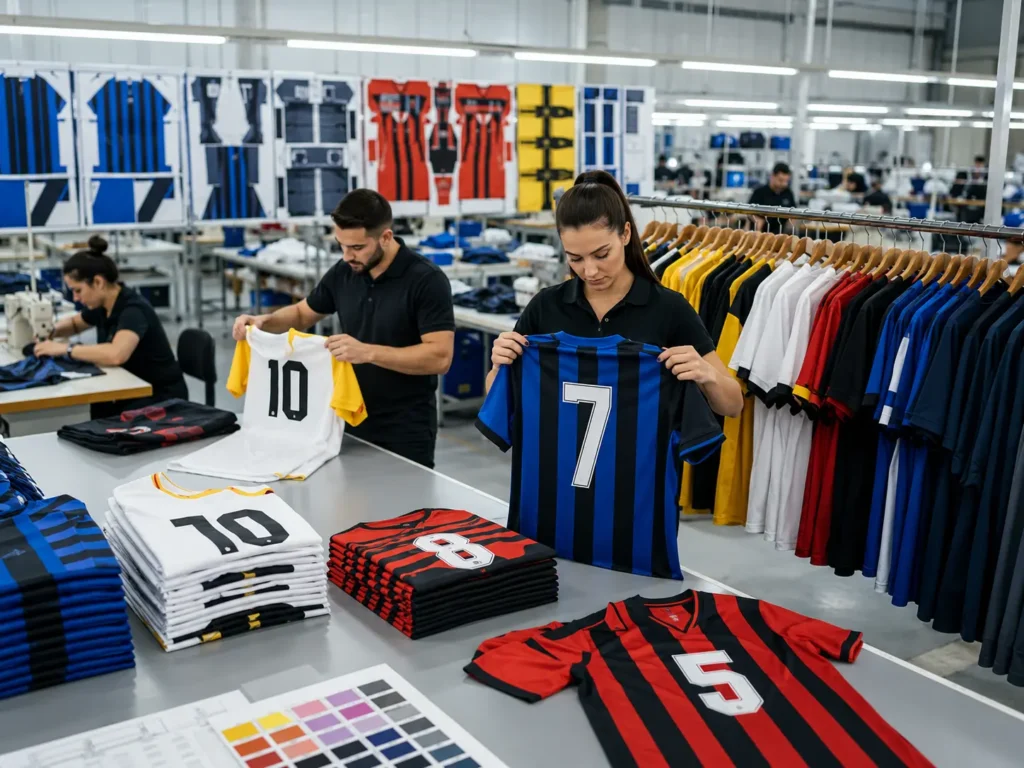
Quick Summary: 10 Production Milestones Buyers Should Monitor
For clubs and teamwear buyers, the production calendar should start before the official purchase order. The safest workflow begins with a complete project brief, clean artwork, confirmed fabric, and locked size data. A professionalem request a Custom Football Jersey production quote should include quantity, size ratio, partum deadline, destination country, fabricae preference, modum print, personalization files, and packaging requirements. Without those details, any lead time is only a hopeful estimate wearing a factory badge.
| Milestone | Typical Buyer Risk | What to Confirm | Recommended Timing |
|---|---|---|---|
| Project brief | Unclear order scope | quantitas, amplitudo range, delivery date | Day 1 |
| Artwork files | Wrong colors or missing logos | Vector files, colorum, layout | Day 1–3 |
| Fabric selection | Wrong GSM or hand feel | Polyester type, reticulum, proten | Day 2–5 |
| Magnitudo chart | Poor fit and returns | Adult, adulescens, women’s size grading | Day 3–7 |
| Sample approval | Bulk differs from expectation | Opportunus, print, color, sutura | Day 7–15 |
| Fabric weaving | Material delay | Stock or custom fabric status | Day 5–20 |
| Sublimatio excudendi | Print queue bottleneck | Print files and production capacity | Day 10–25 |
| Cutting and sewing | Size and personalization errors | Cutting marker and sewing line | Day 20–35 |
| QC inspection | Defects found too late | Measurements, summe, print, data | Day 30–40 |
| Packing and shipping | Missed event date | Cartons, pittacia, shipping mode | Day 35–50 |
Recommended Production Timeline Framework
Standard Bulk Order Timeline
A standard bulk order normally requires several production stages: design confirmation, fabric confirmation, sample production, sample approbatione, fabric preparation, sublimationem excudendi, cutting, sutura, QC, stipare, and shipping. A capable Custom Football Jersey manufacturer should explain which stages are already under control and which stages depend on buyer approval. The production clock should not begin when the buyer first sends a message. It should begin when artwork, fabricae, magnitudo chart, quantitas, payment terms, and delivery requirements are confirmed in writing.
For a typical bulk order, design confirmation may take 1–5 days, fabric confirmation 2–7 days, sample production 7–15 days, fabric preparation 7–20 days, sublimation printing 3–10 days, cutting and sewing 7–15 days, QC and packing 2–5 days, and shipping time depends on express, air, aequor, rail, or truck freight. A rush order is possible only when fabric is in stock, artwork is final, the size chart is confirmed, the printing line is available, and the buyer approves samples quickly. Rush production can save time, but it also reduces correction opportunities.
Milestone 1: Confirm the Project Brief Before Quotation
What Buyers Should Define First
Before asking for a quotation, buyers should define jersey type, quantitas, amplitudo range, adult or youth sizing, fabricae preference, GSM target, sleeve style, torquem style, modum print, clava crista, sponsor logo, ludio nomina, ludio ludius numero, packaging requirement, partum deadline, destination country, and compliance needs. A vague brief creates hidden cost and timeline uncertainty. A clear brief creates accurate pricing, stable production planning, and fewer surprises.
The rise of global tournaments, club merchandise launches, and fan-driven teamwear demand has made timeline planning more important. Buyers preparing tournament-linked orders should review the World Cup effect Custom Football Jersey sourcing guide because major football events often compress fabric supply, printing capacity, sewing line availability, and shipping space. A tournament date will not move because a fabric mill is busy. Buyers must plan backward from the match date.
| Order Factor | Why It Affects Timeline | Buyer Control |
|---|---|---|
| Total quantity | Determines line time and material demand | Confirm final order volume |
| Size range | Affects cutting marker and stock planning | Lock size chart early |
| Player names | Adds personalization risk | Use clean spreadsheet data |
| Sponsor logos | Requires artwork approval | Provide vector files |
| Delivery date | Defines urgency and freight method | Add buffer before events |
| Packaging | Affects final handling and distribution | Confirm labels and cartons |
Milestone 2: Approve Artwork Files and Color Standards
Vector Files Reduce Printing Errors
Custom Football Jersey production depends heavily on artwork quality. Blurry logos, low-resolution sponsor marks, unclear number fonts, and incomplete layout files delay sampling and increase printing risk. Buyers should provide AI, EPS, PDF, or SVG vector files whenever possible. They should also confirm color references, logo collocatione, sponsor size, sleeve badge position, back neck label design, player number font, and mockup approval.
Design trends are also becoming more detailed. Teams want gradient graphics, club-specific elements, retro patterns, sleeve details, and personalized fan editions. Buyers planning new seasonal kits can compare factory-direct Custom Football Jersey trends before final artwork approval. tamen, trend-driven design still needs production discipline. A beautiful design that arrives late is not a jersey launch. It is a very expensive apology email.
Color Matching for Sublimation Printing
Sublimation color depends on fabric structure, ink behavior, transfer temperature, heat press consistency, printer calibration, and artwork file quality. Buyers should not judge final color only from a computer screen. Printed color swatches, lab dips, or physical samples are much safer for bulk orders. If the team color is important to club identity, the buyer should confirm Pantone references or physical color standards before bulk printing.
Milestone 3: Select Fabric Before Confirming Delivery Date
Fabric Structure and Performance Requirements
Common football jersey fabrics include 100% polyester interlock, polyester mesh, bird-eye mesh, jacquard polyester, REDIVIVUS polyester, leve reticulum amet, and polyester-spandex stretch blends. Important parameters include GSM, stretch percentage, aer permeability, humorem-wicking perficiendi, colorfastness, DECREMENTUM, pilling resistance, manus sentiunt, opacitas, et lava vetustatem.
Many teams now request custom sleeve details, club slogans, player-specific elements, and coordinated training kits. Buyers can study custom soccer uniforms trends with personalized details before confirming the design package. Personalized details improve team identity, but they add artwork approval, data checking, production sorting, and QC complexity. The more customized the jersey, the earlier the buyer should lock files.
| Fabricae Type | Typical GSM Range | Optimus usus | Emptor Risk |
|---|---|---|---|
| Polyester interlock | 135-160 GSM | Match jerseys and teamwear | May feel less breathable if too dense |
| Bird-eye mesh | 140-170 GSM | Training and club jerseys | Texture can affect print appearance |
| Lightweight mesh | 120–145 GSM | Hot-weather sportswear | May be too transparent if too thin |
| Jacquard polyester | 150-180 GSM | Premium football jerseys | Longer fabric preparation |
| Polyester-spandex blend | 145–240 GSM | Athletic fit and side panels | Higher fit sensitivity |
| Polyester REDIVIVUS | 130-170 GSM | Sustainable sportswear programs | Certification and stock checks |
Milestone 4: Confirm Size Chart and Fit Sample
Size Chart Approval Prevents Returns
Football jerseys are worn by different body types. Adult men, mulieres, youth players, schola teams, amateur clubs, and professional athletes may not fit the same chart. Buyers should confirm chest width, corpus longum, humerum latitudine, sleeve longitudinem, collar opening, hem width, tolerance, fit type, youth grading, and women’s fit if needed.
A practical bulk tolerance may use around ±1 cm for chest width and body length, and ±0.5–1 cm for sleeve length depending on factory standard and product design. Printed number placement and logo position should also have a controlled tolerance. If the size chart changes after sample approval, the pattern may need revision and the sample may need to be remade.
Fit Sample vs Salesman Sample vs Pre-Production Sample
A fit sample checks size and cut. A salesman sample checks presentation, design effect, and customer-facing appearance. A pre-production sample confirms the standard for bulk production. Buyers should not confuse these samples. If only the artwork sample is approved, sizing risk remains. If only a blank size sample is approved, print risk remains. If the pre-production sample is skipped, bulk production risk increases.
Milestone 5: Review Printing Method and Decoration Plan
Sublimation vs Screen Printing vs Heat Transfer
Custom Football Jersey production often uses sublimation because it supports full-color graphics, lightweight hand feel, breathable polyester performance, and durable print integration. But not every decoration method suits every order. Screen printing may work for simple logos. Heat transfer is useful for names, numeri, and badges. Plumarium, contexta inaequaliter, silicone badges, and TPU elements can create premium branding but may add cost and approval time.
| Modus Decoration | Optimus usus | Advantage | Limitation |
|---|---|---|---|
| Sublimatio excudendi | Full-body polyester jersey graphics | Lightweight and durable print | Best on light polyester base |
| Screen printing | Simple logos and numbers | Cost-effective for simple designs | Adds hand feel and setup cost |
| Heat transfer | Nomina, numeri, velamenta | Flexible personalization | May affect breathability |
| Plumarium | Club crest or premium detail | High perceived value | Adds weight and cost |
| Woven patch | Club crest and branding | Durable and premium | Requires extra sourcing time |
| Silicone or TPU badge | Modern premium look | Strong visual texture | Higher cost and longer approval |
Factoring in Fabric Weaving and Custom Sublimation Printing Throughput
Why Fabric and Printing Are Usually Timeline Bottlenecks
Many buyers ask how many days production takes, but the real bottleneck may be fabric preparation or sublimation printing throughput. Fabric stock shortage, custom GSM weaving, recycled polyester availability, dyeing schedule, fabric inspection, sublimation paper printing, heat press capacity, printer calibration, artwork revisions, and bulk print queue can all affect delivery.
If fabric is in stock, the timeline can be shorter. If the fabric must be woven or dyed, the buyer should add preparation time. If sublimation capacity is full, printing delays cutting and sewing. If artwork changes after print approval, reprint risk appears. This is why fabric selection and artwork approval must be completed before the buyer promises a delivery date to a club, schola, or tournament organizer.
| Process Stage | Typical Time Range | Main Bottleneck | Buyer Control |
|---|---|---|---|
| Stock fabric confirmation | 1–3 days | Inventory mismatch | Confirm fabric early |
| Custom fabric weaving | 7–20 days | Yarn and machine schedule | Lock GSM and structure |
| Fabric dyeing or finishing | 3–10 days | Color and finishing queue | Approve lab dip quickly |
| Sublimation file setup | 1–3 days | Artwork corrections | Provide clean files |
| Sublimatio excudendi | 3–10 days | Printer and heat press capacity | Avoid late design changes |
| Bulk sewing | 7–15 days | Line availability | Approve sample before line booking |
| QC and packing | 2–5 days | Defect sorting | Define QC standard early |
Mitigating Seasonal Sourcing Bottlenecks Before Major Global Football Tournaments
Seasonal bottlenecks become severe before World Cup periods, European championships, continental tournaments, domestic league launches, school sports seasons, club kit renewals, holiday e-commerce peaks, and summer sports retail programs. During these periods, fabric supply tightens, printing capacity fills, sewing lines are booked, freight prices can rise, logo patch suppliers become slower, and urgent orders become more expensive.
Buyers should book production slots early, approve designs before peak season, prepare backup fabric options, confirm size charts before taking team orders, avoid last-minute sponsor logo changes, and add shipping buffer. For major tournament-linked orders, planning 60–90 days ahead is safer than relying on rush production. Rush production is possible, but it leaves less room for sample revision, color correction, size adjustment, and QC recovery.
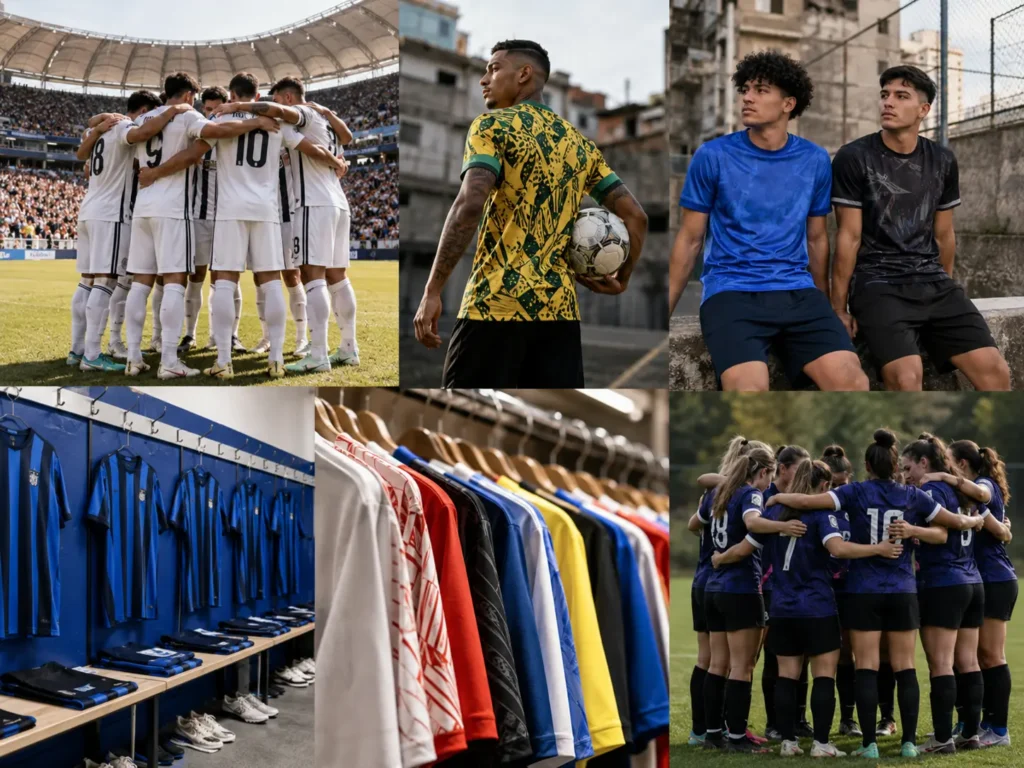
Milestone 6: Approve the Pre-Production Sample Before Bulk Cutting
What the Pre-Production Sample Must Confirm
The pre-production sample should confirm fabric, GSM, manus sentiunt, color, print sharpness, logo size, numerus collocatione, collar construction, sleeve fit, hem sewing, size measurements, label placement, cura pittacium, and packaging sample if required. Approval should be written and clear. Verbal approval creates dispute risk, especially when a buyer later compares bulk production with memory instead of a sample.
If the PP sample is approved quickly, bulk production can proceed. If the sample needs revision, the buyer should update the timeline immediately. If the buyer delays approval but keeps the same event delivery deadline, production pressure increases. Factories can sometimes compress schedules, but physics, fabricae, calor translatio, sewing lines, and freight carriers do not care about optimism.
Milestone 7: Monitor Cutting and Personalization Data
Why Names Numbers and Sizes Create Hidden Risk
Custom Football Jersey orders often include player names, squad numbers, club initials, sponsor marcas, captain badges, goalkeeper versions, and size-specific graphics. Errors happen when the personalization file is messy. A buyer may send one spreadsheet for names, one message for numbers, one image for design, and one later correction in a chat app. That is not production data. That is a treasure hunt.
Buyers should provide one final spreadsheet with player name, numerus, magnitudine, team group, goalkeeper version, and special notes. The supplier should confirm the data before printing or cutting. If names change after cutting, rework begins. If number placement changes after printing, reprint may be required. If sizes are mixed during packing, distribution becomes chaotic.
| Data Item | Error Risk | Prevention |
|---|---|---|
| Player name | Spelling mistake | Final spreadsheet approval |
| Number | Wrong player-number match | Double-check with size list |
| Magnitudo | Wrong cutting allocation | Lock size chart and ratio |
| Sponsor logo | Wrong version | Use final vector file |
| Team crest | Wrong placement | Approve mockup and sample |
| Goalkeeper kit | Mixed with player kit | Separate file and packing list |
Milestone 8: Track Sewing Line Quality
Construction Details That Affect Jersey Durability
Football jerseys face sweating, extensio, pulling, illapsum, baptismata, and repeated match use. Sewing quality matters for shoulder seams, side seams, sleeve attachment, collar seam, hem stitching, label stitching, thread tension, seam allowance, overlock quality, and loose thread control. If the jersey is for retail, appearance and finish matter. If it is for clubs, durability and wash resistance matter. If it is for youth teams, seam comfort and skin feel also matter.
Inline sewing inspection helps catch repeated defects before the full batch is finished. Common issues include skipped stitches, twisted collars, uneven hems, loose seams, Puckering, incorrect sleeve pairing, and size mixing. Small sewing issues can become large return problems when thousands of units are packed before inspection.
Milestone 9: Conduct Inline and Final QC Inspection
Quality Checks Before Packing
QC should not only happen after all jerseys are completed. Inline checks help prevent repeated defects. Final inspection should compare bulk production with the approved sample, magnitudo chart, artwork file, packing list, and order data. Buyers should define whether inspection follows internal factory standards, buyer-specific standards, AQL sampling, or full checking for personalized jerseys.
| QC Item | Inspection Method | Common Defect |
|---|---|---|
| Mensuratio | Tape measurement by size chart | Chest or length out of tolerance |
| Print color | Compare approved sample | Shade variation |
| Logo position | Placement template | Crooked or off-center logo |
| Name and number | Data list comparison | Wrong spelling or number |
| Sutura | Visual and pull check | Loose seam or skipped stitch |
| Fabrica | Visual check | Snags, stains, shade issue |
| stipare | Packing list audit | Wrong size ratio or label |
Milestone 10: Confirm Packaging Shipping and Delivery Buffer
Export Packaging for Teamwear Orders
Packaging options may include individual polybags, size stickers, player name stickers, team cartons, retail barcodes, hangtags, cura pittacia, carton marks, moisture protection, mixed-size packing, and club-specific packing. If the order is for clubs, packing by team, magnitudine, or player list prevents distribution confusion. If the order is for retail, barcode and SKU control matter. If the order is for an event, carton labels may decide whether uniforms reach the right team on time.
Logistics Planning
Shipping methods include express courier, air freight, sea freight, rail, truck, split shipment, or partial urgent shipment. If the event date is close, express or air may be needed. If quantity is large and timing is flexible, sea freight can reduce cost. If part of the order is urgent, a split shipment can reduce risk. Buyers should always separate factory production lead time from shipping lead time. They are related, but they are not the same thing.
Timeline Risk Control Scorecard
| Risk Area | Pondus | Emptor Check | Pass Standard |
|---|---|---|---|
| Artwork readiness | 15% | Vector files and colors | Final files approved |
| Fabric availability | 20% | Stock or custom weaving | Fabric schedule confirmed |
| Sample approval | 15% | PP sample and size chart | Written approval received |
| Sublimation capacity | 15% | Printing queue | Production slot confirmed |
| Personalization data | 10% | Nomina, numeri, magnitudinum | Final spreadsheet locked |
| Sewing quality | 10% | Inline inspection | Defects corrected early |
| QC and packing | 10% | Measurement and labels | Final inspection passed |
| Logistics buffer | 5% | Shipping plan | Delivery before event date |
Common Buyer Mistakes That Delay Custom Football Jersey Orders
Error 1: Confirming Delivery Date Before Artwork Is Final
Design revisions delay sampling, print setup, and bulk sublimation. Buyers should lock artwork before counting production days.
Error 2: Ignoring Fabric Availability
Fabric weaving, dyeing, or special GSM sourcing can delay the whole order. Buyers should confirm fabric stock or production schedule before promising delivery.
Error 3: Changing Size Chart After Sample Approval
Size changes after approval can require pattern adjustment and re-sampling. Buyers should approve the size chart before the pre-production sample.
Error 4: Sending Player Names in Messy Files
Wrong spelling, wrong numbers, and wrong sizes often come from messy data. Buyers should use one clean final spreadsheet.
Error 5: Ordering Too Late Before Tournament Season
Late orders before major football events face limited capacity, higher costs, and shipping pressure. Buyers should plan early and add a realistic delivery buffer.
Buyer RFQ Checklist for Custom Football Jersey Production
Before placing a Custom Football Jersey order, buyers should confirm jersey type, quantitas, amplitudo range, adult/youth/women’s sizes, fabricae type, GSM, color reference, modum print, logo files, sponsor files, ludio nomina, ludio ludius numero, torquem style, sleeve style, patch requirements, label and hangtag, packaging method, partum deadline, destination country, shipping modum, compliance requirements, sample approval process, QC standard, wholesale requirement, private label requirement, and repeat order plan.
Buyers should also ask the supplier about standard production timeline, fabric stock, custom weaving, sublimation sample approval, color constantia, size tolerance, peak-season management, urgent shipping, packaging optiones, and QC process. A serious production discussion should identify the bottleneck before production starts, not after the match date is already in danger.
Ultima Commendatio: Manage the Timeline Before the Factory Manages the Crisis
A Custom Football Jersey order should be managed by milestones, not hope. The safest buyer workflow is simple: define the project brief, approve artwork, confirm fabric, lock the size chart, approve the sample, monitor fabric preparation, control sublimation printing, check personalization data, inspect sewing quality, approve final QC, and plan shipping with buffer time.
If the order includes complex sublimation graphics, reserve more artwork approval and printing time. If the fabric is custom woven, confirm material availability before taking team orders. If the order is placed before a major tournament, book production slots early. If the order includes many names and numbers, double-check the personalization file before printing. If the buyer is importing, include export packing, customs, and freight time in the schedule.
Before placing a Custom Football Jersey order, prepare your quantity, mole naufragii, artwork files, fabricae preference, GSM target, color reference, player name list, numbering file, delivery date, packaging requirement, and shipping destination. A professionalem custom sublimated football jerseys manufacturer can help build a realistic production timeline, reduce late-season risk, and protect the buyer’s reputation with teams, fustibus, and retailers.

Frequently Asked Questions About Custom Football Jersey Production Timelines
1. How long does Custom Football Jersey production take?
Custom Football Jersey production time depends on fabric availability, artwork approval, sample confirmation, sublimation printing capacity, cutting, sutura, personalization, QC inspection, stipare, et naviculas modum. A standard bulk order often requires several weeks because the factory must confirm fabric, prepare samples, approve colors, print panels, sew garments, inspect measurements, check names and numbers, and pack the order correctly. Rush orders may be possible when fabric is in stock and artwork is final, but they leave less time for correction.
2. What delays Custom Football Jersey production the most?
The biggest delays usually come from incomplete artwork files, late sponsor logo changes, unconfirmed Pantone colors, unavailable fabric, custom fabric weaving, sample revisions, full sublimation printing queues, messy player name and number files, size chart changes, peak-season factory congestion, and underestimated shipping time. Buyers can reduce these delays by approving artwork early, confirming fabric before payment, locking size charts, using one final personalization spreadsheet, and planning production before tournament season capacity becomes tight.
3. When should I place Custom Football Jersey orders before a tournament?
Buyers should place Custom Football Jersey orders as early as possible before tournaments, league launches, school sports seasons, and club kit renewals. For large or complex orders, planning 60–90 days ahead is safer because it allows time for artwork approval, fabric preparation, sample revision, sublimationem excudendi, sutura, QC, stipare, and international shipping. If the order includes custom fabric, special badges, retail packaging, or many player names, additional buffer time should be added to protect the event deadline.
4. Is sublimation printing good for Custom Football Jersey production?
Sublimation printing is a strong option for Custom Football Jersey production when the jersey is made from suitable polyester fabric and the design includes full-color graphics, graduum, sponsor integration, club patterns, or player personalization. Sublimation creates a lightweight print feel and keeps the fabric breathable because the design becomes part of the polyester surface. tamen, buyers must approve clean artwork, color references, print samples, and fabric type before bulk production because late artwork changes can delay the printing queue.
5. Quomodo eligo custum iaculis Jersey fabrica?
Choose a Custom Football Jersey manufacturer that can control fabric sourcing, sublimationem excudendi, sample evolutionis, size chart approval, cutting, sutura, personalization, QC inspection, stipare, and shipping communication. A reliable manufacturer should ask about quantity, fabricae type, GSM, artwork format, color reference, size ratio, ludio nomina, numeri, partum deadline, packaging requirements, and destination country before confirming lead time. Avoid suppliers that promise fast delivery without checking fabric availability, artwork quality, printing capacity, and order complexity.
References
- Textile Testing and Quality Control, Author: Arindam Basu, Institutiones: Woodhead Publishing, Source: Textile Manufacturing Reference.
- AATCC Test Method 61: Colorfastness to Laundering, Author: AATCC Committee, Institutiones: American Consociationis rhoncus Chymici et Coloristae, Source: Textile Testing Standard.
- AATCC Test Method 135: Dimensional Changes of Fabrics after Home Laundering, Author: AATCC Committee, Institutiones: American Consociationis rhoncus Chymici et Coloristae, Source: Textile Testing Standard.
- ISO 3758: Textiles — Care Labelling Code Using Symbols, Author: Organization internationalis for Standardization, Institutiones: ISO, Source: Textile Care Labelling Standard.
- ASTM D5034: Standard Test Method for Breaking Strength and Elongation of Textile Fabrics, Author: ASTM International, Institutiones: ASTM International, Source: Textile Strength Testing Standard.
- Textiles and Fashion: Materiae, Design and Technology, Author: Rose Sinclair, Institutiones: Woodhead Publishing, Source: Apparel Materials Reference.
- Managing Quality in the Apparel Industry, Author: Pradip V. Mehta and Satish K. Bhardwaj, Institutiones: New Age International, Source: Apparel Quality Control Reference.
- Apparel Manufacturing: Sewn Product Analysis, Author: Ruth E. Glock and Grace I. Kunz, Institutiones: Pearson, Source: Apparel Production Reference.