Szybkie podsumowanie
When a national team walks onto the pitch during a World Cup, continental cup, or international tournament, fans often recognize the country before they even see the players’ faces. The colors, odznaka, styl liczbowy, sleeve pattern, kształt kołnierza, and cultural details tell the story first. A football jersey becomes a flag in motion. It carries pride, memory, rivalry, sponsorship, and design identity in one piece of fabric.
This is why Koszulki piłkarskie are no longer just sportswear. They are national identity systems, fan merchandise, broadcast assets, and commercial products. Dla klubów, szkoły, akademie, sportswear distributors, and tournament organizers, choosing Football Jerseys for teams is not only about picking a color and adding a logo. The better question is: what should the jersey communicate, how should it perform, and can the manufacturer deliver the same quality across bulk production and repeat orders?
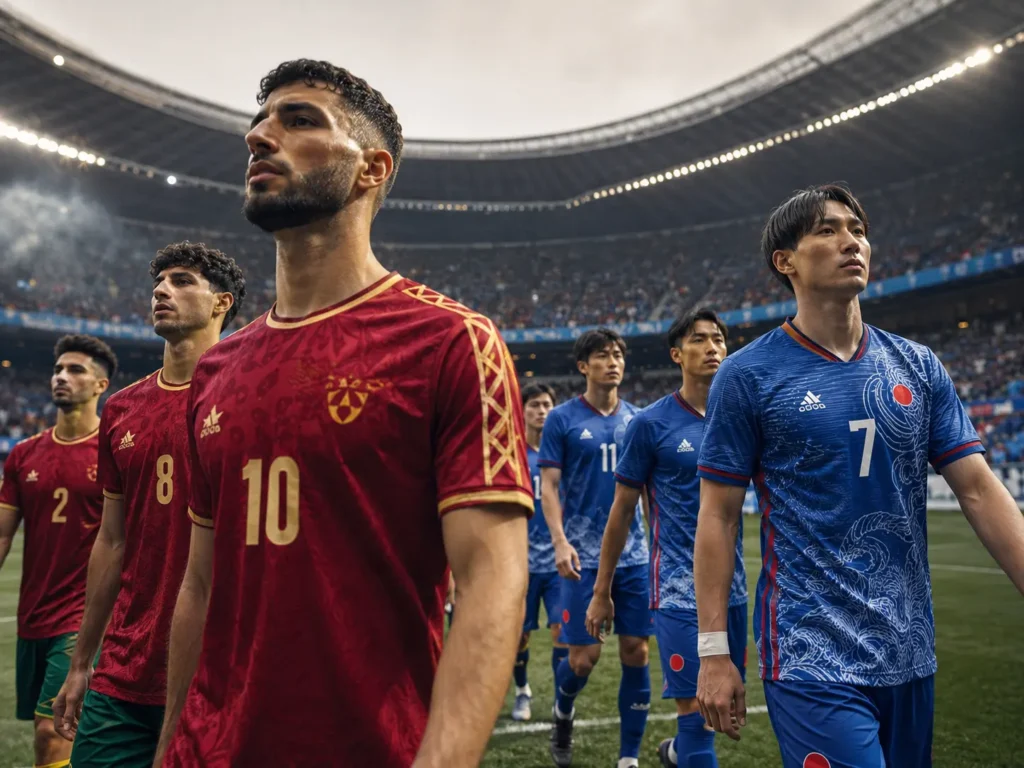
What Are Football Jerseys in the Context of National Identity?
Football Jerseys Explained Beyond Fabric and Stitching
Koszulki piłkarskie are performance sportswear worn by football players, kluby, national teams, akademie, szkoły, and fans. They are usually part of a full kit system that includes jerseys, spodenki, skarpety, stroje bramkarskie, koszulki treningowe, warm-up tops, and fan versions. In global competitions, jerseys carry much more than fabric technology. They carry national colors, federation badges, historical references, cultural patterns, nazwy graczy, takty muzyczne, and manufacturer branding.
For a player, the jersey is competition wear. For a fan, it is identity. For a sponsor or federation, it is high-visibility media space. For a manufacturer, it is a test of fabric selection, color control, printing accuracy, sewing quality, spójność rozmiarów, and delivery management. That is why a strong football jersey must balance emotion and engineering. Looking good is only half the job; the other half is surviving sweat, zajmuje się, mycie, travel, cameras, and fans who expect the shirt to mean something.
Why National Teams Treat Jerseys as Identity Assets
National teams treat jerseys as identity assets because the shirt represents the country in front of the world. A jersey can become iconic when it is connected to a historic goal, a legendary player, or a tournament-winning moment. Once fans associate a jersey with national pride, it becomes more than apparel. It becomes memory with sleeves.
For buyers and teamwear brands, this creates a major lesson: design should not be random. If a jersey is for a national-style tournament, cultural design details matter. If it is for a football academy, szkoła, or club, local identity still matters. The strongest designs use colors, odznaki, wzory, and personalization to create belonging, not just decoration.
National Colors: The Fastest Way Football Jerseys Create Recognition
Why Color Is the First Identity Signal
Color is the fastest identity signal in football. Brazil is strongly associated with yellow and green. Argentina is recognized through sky blue and white stripes. France often uses deep blue. Italy is linked with blue. Germany is remembered through white and black. Spain is connected with red. Before fans see the badge, they often recognize the color.
This is why national team Football Jerseys must protect core color identity. Modern updates can be added through tonal patterns, collar details, sleeve textures, or heritage graphics, but the main color system should remain recognizable. For global design comparison, this article on football jersey trend and custom designs shows how different countries use colors and patterns to shape visual identity in competitive football.
Common Color Mistakes in Football Jersey Design
Common color mistakes include using colors too close to opponent kits, choosing weak contrast between numbers and jersey backgrounds, overusing gradients that reduce readability, approving colors only from digital mockups, and changing national colors so aggressively that fans no longer feel connected. A jersey can be modern without becoming unrecognizable. Designers sometimes forget this. Fans do not.
| Color Strategy | Identity Effect | Najlepsze zastosowanie | Buyer Warning |
|---|---|---|---|
| Traditional national color | Strong recognition and fan trust | Home kits and official teamwear | Avoid making the design look outdated. |
| Modern tonal update | Fresh but still recognizable | New season jerseys and academy kits | Keep number contrast strong. |
| Away kit contrast color | Improves match visibility | Tournament and league use | Do not disconnect completely from identity. |
| Heritage-inspired palette | Adds history and emotion | Anniversary kits and fan merchandise | Needs clear storytelling. |
Badges, Symbols, and Heritage Details
The Badge as the Heart of Football Jerseys
The badge is often the emotional center of Football Jerseys. It may include national symbols, federation identity, shields, stars, animals, crowns, or historic references. Badge style affects how premium the jersey feels. Embroidered badges create depth and tradition. Woven patches look refined. Heat transfer badges reduce weight. Sublimated badges can work for budget-friendly or full-pattern designs.
The right badge method depends on the jersey’s purpose. If the buyer is producing professional competition jerseys, lightweight badge construction may be preferred. If the buyer is producing fan merchandise or premium retail jerseys, a woven or embroidered badge can improve perceived value. If the buyer is producing bulk teamwear for schools or academies, durability and cost control may matter more.
Cultural Patterns and Local Storytelling
Modern football jersey design increasingly includes subtle cultural storytelling. A national-style jersey may use traditional textile motifs, architectural lines, map-inspired graphics, historical symbols, regional patterns, or tone-on-tone heritage textures. A club jersey may use founding year details, mascot elements, city skyline graphics, or local symbols.
The key is restraint. Cultural detail should support identity, not suffocate the design. Subtle background patterns often look more premium than loud decoration. If a buyer needs more personalization logic for clubs and academies, this article on custom football jerseys trends explains how team-exclusive elements, player details, and identity graphics can be built into modern kit design without turning the jersey into a poster.

Names and Numbers: Function, Tożsamość, and Regulation
Why Number Readability Matters in Global Competitions
Names and numbers are not only decorative. They help referees, trenerzy, commentators, broadcasters, fans, and video review systems identify players. In global competitions, number readability is essential. A beautiful number font that disappears from 30 meters away is not creative; it is a problem wearing typography.
Buyers should check number size, contrast, placement, font thickness, and visibility under stadium lighting. Dark numbers on dark patterns, thin fonts on busy backgrounds, and low-contrast color combinations can create match-day issues. Some leagues and tournaments regulate number size, umieszczenie sponsora, nazwy graczy, and color contrast, so production should not begin before competition requirements are confirmed.
Custom Fonts and Player Personalization
Custom fonts can strengthen identity when used carefully. They can reflect national style, club heritage, or brand personality. Player names and numbers also create emotional value because fans often buy jerseys linked to specific players or tournament memories.
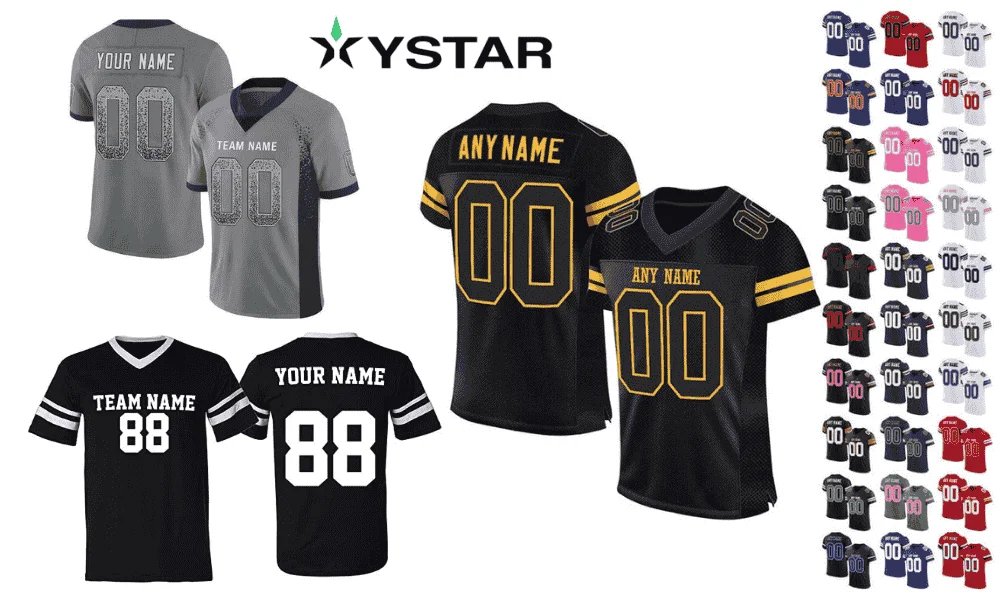
Heat transfer is common for individual names and numbers. Sublimation can integrate names and numbers into full-custom bulk designs. Screen printing may work for repeated numbers in large orders. Before production, buyers should lock spelling, number list, font style, kontrast kolorów, and size placement. A “nearly final” spreadsheet is where production chaos likes to stretch its legs.
Fabric Performance: National Identity Still Needs Match Comfort
Why Fabric Quality Matters More Than Design Alone
A jersey may look powerful during a launch campaign, but it fails if players feel overheated, restricted, or soaked during a match. Football Jerseys need lightweight, oddychający, szybkoschnący, wytrzymały, and washable fabrics. Typowe opcje obejmują blokadę poliestrową, siatka typu ptasie oko, żakardowy poliester, poliester z recyklingu, mieszanki poliestru i spandexu, and mesh panel fabrics.
Fabric GSM affects weight, nieprzezroczystość, oddychalność, i trwałość. Player-version jerseys often use lighter, more technical fabrics with a closer fit. Fan-version jerseys may prioritize comfort, trwałość, washing stability, and cost balance. Buyers comparing performance levels should understand the difference between professional soccer jerseys vs casual soccer jerseys before choosing fabric and production specifications.
Odprowadzanie wilgoci, Oddychalność, and Movement
Players sweat heavily during global competitions, especially in hot climates. Tkanina odprowadzająca wilgoć pomaga odprowadzać pot ze skóry. Mesh panels improve ventilation. Stretch improves movement around the shoulders, rękawy, i tułów. Too-thin fabric may reduce durability or become transparent under strong lighting, while heavy fabric may feel uncomfortable in intense matches.
| Rodzaj tkaniny | Typical GSM Range | Performance Feature | Najlepsze zastosowanie |
|---|---|---|---|
| Blokada poliestrowa | 130–180GSM | Smooth surface and stable print effect | General Football Jerseys and team kits |
| Siatka typu ptasie oko | 140–170 GSM | Breathability and moisture movement | Hot climates and training jerseys |
| Żakardowy poliester | 150–190 GSM | Textured premium appearance | Club kits and retail-style jerseys |
| Polyester-spandex blend | 160–220 GSM | Stretch and movement comfort | Premium player-fit jerseys |
Sublimation and Printing Technology in Modern Football Jerseys
Why Sublimated Football Jerseys Are Popular
Sublimation is popular because it allows full-body graphics, gradienty, cultural patterns, shadow textures, układy sponsorskie, and integrated color effects. The ink becomes part of polyester fabric, so the jersey stays smooth and lightweight. This makes sublimation useful for national-style designs, club kits, mundurki akademickie, Zespoły szkolne, and tournament jerseys.
If the jersey includes complex heritage graphics or all-over design, sublimation is often the best method. If the jersey only needs a badge and numbers, heat transfer may be easier. If the jersey is designed as premium merchandise, badge method, etykiety, pasować, opakowanie, and retail details also matter.
Sublimation vs. Heat Transfer vs. Haft
| Production Method | Najlepsze zastosowanie | Design Freedom | Zalecenie kupującego |
|---|---|---|---|
| Sublimacja | Full-body graphics and cultural patterns | Very high | Choose for complex polyester jerseys. |
| Heat transfer | Imiona, takty muzyczne, loga sponsorów | Średni | Choose for flexible personalization. |
| Haft | Premium badges | Low for large graphics | Use for badge value, not full designs. |
| Sitodruk | Simple repeated logos | Średni | Best for simple bulk graphics. |
Dom, Away, and Goalkeeper Kits as a National Identity System
Home Jerseys: Protecting the Core National Image
Home jerseys usually protect the strongest national colors. They should be instantly recognizable and emotionally familiar. Fans often prefer continuity because the home kit feels closest to national tradition. Designers can modernize details, but the core identity should remain stable.
Away Jerseys: Creative Space and Contrast
Away jerseys provide contrast against opponents and allow more creativity. They can use secondary colors, cultural graphics, or modern design experiments. Jednakże, they should still connect to national identity. If an away jersey becomes too random, fans may ask the cruel but fair question: “Which country is this again?”
Goalkeeper Kits: Function and Visibility
Goalkeeper jerseys must be visually distinct from field players, opponents, and referees. They may use bolder colors, długie rękawy, or slightly different fits. Goalkeeper kits still contribute to the full identity system, especially in retail sets and team photos.
| Kit Type | Identity Role | Design Freedom | Buyer Warning |
|---|---|---|---|
| Home jersey | Core national recognition | Średni | Do not weaken core colors. |
| Away jersey | Contrast and creativity | Wysoki | Keep a link to identity. |
| Goalkeeper jersey | Visibility and team system | Wysoki | Must be distinct from other players. |
Football Jerseys and Fan Culture
Why Fans Buy Jerseys as Identity Symbols
Fans buy Football Jerseys because they represent belonging. A jersey connects fans to a country, a player, a tournament, a memory, or a community. Global competitions create emotional moments that drive retail demand. A jersey worn during a historic victory can become collectible for years.
Fan versions should balance authenticity, komfort, trwałość, i cena. A fan may not need the same lightweight fabric as a professional player, but they still expect the jersey to look official, wash well, fit comfortably, and carry emotional value.
Replika vs. Player Version Football Jerseys
Player version jerseys are usually lighter, more fitted, and performance-focused. Replica jerseys are usually more durable, wygodny, and cost-friendly for fans. Training versions may use simpler fabrics and less complex decoration. Budget teamwear versions prioritize bulk affordability and practical durability.
| Version Type | Fabric Feel | Pasować | Najlepszy Kupujący |
|---|---|---|---|
| Player version | Lightweight and technical | Slim or athletic | Professional teams and premium buyers |
| Replica version | Comfortable and durable | Regular | Fans and retail sellers |
| Budżetowa odzież zespołowa | Practical and washable | Regular | Szkoły, kluby, and bulk team orders |
Commercial Value: Sponsorzy, Producenci, and Global Visibility
Football Jerseys as Advertising Space
In club competitions, sponsor placement is a major commercial asset. In national team contexts, federation rules and competition regulations may limit sponsor use, but manufacturer branding, federation badge, and retail presentation still matter. Logo position, rozmiar, contrast, and durability must be controlled carefully.
Poor logo placement can damage the entire design. A sponsor logo that fights with the pattern, disappears on a dark background, or peels after washing turns a jersey from identity asset into complaint magnet. Buyers should test sponsor visibility in mockups and physical samples before bulk production.
Manufacturer Branding and Quality Perception
A jersey’s quality reflects the team and the manufacturer. Fabric hand feel, szycie, trwałość druku, dokładność wymiarowania, opakowanie, and delivery performance all influence buyer trust. For distributors, repeatable quality supports long-term orders. For private label brands, label design and packaging also affect retail value.
Regulations and Competition Requirements
What Teams Must Check Before Production
Competitions may regulate number size, player name placement, sponsor areas, badge size, kontrast kolorów, and goalkeeper distinction. Federations or leagues may require approval before match use. Youth teams and schools may require safe materials, readable care labels, and durable washing performance.
For buyers preparing tournament or international-style orders, this przewodnik po zaopatrzeniu w koszulki piłkarskie is useful for understanding sourcing logic, fabric planning, customization choices, and production preparation before high-demand football seasons.
Textile and Quality Testing for Football Jerseys
| Przedmiot testowy | Dlaczego to ma znaczenie | Kontrola kupującego | Risk if Ignored |
|---|---|---|---|
| Colorfastness to washing | Protects color identity | Ask for wash testing or sample wash review | Fading and color complaints |
| Skurcz | Controls fit after washing | Review fabric and garment stability | Size disputes and returns |
| Print adhesion | Protects names, takty muzyczne, and logos | Test after washing and stretching | Peeling and sponsor complaints |
| Seam strength | Supports match durability | Check stitching and stress points | Tearing during play |
Global Football Jersey Design Trends
Heritage Revival
Many teams are bringing back retro collars, vintage stripes, classic color palettes, and historic badge references. Heritage designs work because fans enjoy emotional connection to past eras. The best heritage jerseys update old identity with modern fabrics, not old comfort levels. Nostalgia is lovely; sweaty polyester from the 1980s is less lovely.
Minimalist National Symbols
Subtle national patterns, tone-on-tone graphics, and clean color blocking are becoming more popular. Minimalism helps jerseys look premium, camera-friendly, and easier to wear as lifestyle apparel. This trend works well for national teams, modern clubs, and private label sportswear brands.
Bold Away Kits and Limited Editions
Away and third kits allow stronger creativity. Limited editions can increase retail demand and fan excitement. Jednakże, too much creativity can weaken recognition. If the design does not connect back to the team identity, it may look interesting but fail emotionally.
Ekologiczne koszulki piłkarskie
Recycled polyester and eco-conscious materials are increasingly used in sportswear. Sustainability claims must be supported by documentation. Buyers should still test fabric feel, stabilność koloru, oddychalność, i trwałość. A sustainable jersey that performs poorly will not win fans; it will just lose politely.
Common Mistakes When Ordering Football Jerseys
Błąd 1: Designing for Appearance Only
A jersey may look good in mockups but perform poorly during matches. Buyers should confirm fabric weight, oddychalność, washing stability, tolerancja rozmiaru, and print durability before final production.
Błąd 2: Ignoring Number Readability
Players may be hard to identify during matches or broadcasts if numbers lack contrast. Use clear fonts, strong background contrast, and realistic viewing checks.
Błąd 3: Overloading Cultural Elements
Too many symbols, wzory, and gradients can make the jersey visually busy. Use cultural details as design support, not decoration overload.
Błąd 4: Sending Incomplete Name and Size Lists
Wrong names, wrong numbers, and size errors often start with unfinished spreadsheets. Use a locked final name-number-size list before production.
Błąd 5: Choosing Supplier by Price Only
Low price can hide poor fabric, weak stitching, inaccurate colors, low print durability, and delivery problems. Choose a supplier with sample support, artwork checking, kontrola jakości, and repeat-order capability.
How to Choose a Reliable Football Jerseys Manufacturer
What a Professional Manufacturer Should Provide
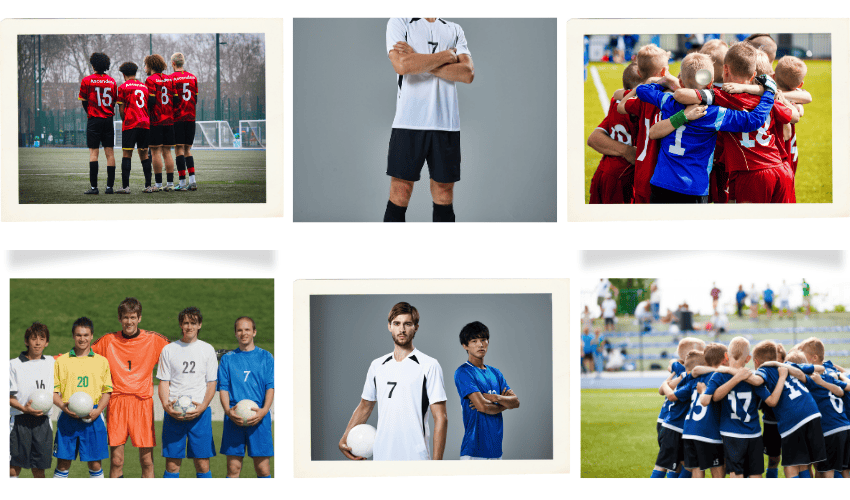
Profesjonalista Producent koszulek piłkarskich should provide fabric options, Dane GSM, tabele rozmiarów, design mockups, color reference support, sublimacja, przenikanie ciepła, sitodruk, opcje haftu, badge choices, name-number checking, zatwierdzenie próbki, bulk production control, kontrola jakości, private label support, packaging support, export documentation, lead time confirmation, Zmień kolejność wsparcia, and after-sales communication.
Supplier background matters because teamwear orders are detail-heavy. Kupujący mogą recenzować Ystar Wear football jersey manufacturer capability when evaluating product scope, production experience, wsparcie dostosowywania, and B2B communication before placing bulk orders.
Manufacturer vs. Supplier vs. Wholesale Buyer Logic
If you need custom national-style jerseys, choose a Football Jerseys manufacturer with design and sublimation capability. If you need broader product sourcing, choose a supplier with multiple sportswear categories. If you need distributor-level bulk orders, compare Football Jerseys wholesale options but verify fabric consistency and color control. If you need private label teamwear, choose an OEM factory with label, opakowanie, and repeat-order support.
For project discussion, buyers can contact Ystar Wear with team identity, zabarwienie, badge files, player list, preferencje dotyczące tkaniny, metoda drukowania, zakres rozmiarów, and delivery schedule. A clear brief helps the manufacturer recommend suitable Football Jerseys instead of guessing. Guessing is not sourcing. It is just optimism with a deadline.
Recommended Buyer Checklist Before Ordering
| Checklist Item | Dlaczego to ma znaczenie | Buyer Action |
|---|---|---|
| Tożsamość zespołu | Guides color, odznaka, and pattern direction | Provide brand colors, logo files, and style references. |
| Fabric type | Affects comfort and performance | Confirm GSM, oddychalność, rozciągać się, and washing behavior. |
| Name-number list | Prevents personalization errors | Use a locked final spreadsheet before production. |
| Competition rules | Avoids number, logo, and color compliance issues | Confirm rules before artwork approval. |
Często zadawane pytania: Koszulki piłkarskie a tożsamość narodowa
1. How do Football Jerseys represent national identity?
Football Jerseys represent national identity through colors, odznaki, cultural patterns, historical references, nazwy graczy, takty muzyczne, and design details that connect players and fans to a country’s football heritage. In global competitions, the jersey becomes a visual symbol that communicates pride, jedność, and recognition before the match even begins.
2. Why are national team Football Jerseys so important?
National team Football Jerseys are important because they act as wearable symbols during global competitions. They help fans recognize the team instantly, express national pride, and connect emotionally with tournament moments. A strong jersey can become iconic when linked with legendary players, historic goals, or major international victories.
3. What fabric is best for Football Jerseys?
Polyester performance fabrics are widely used for Football Jerseys because they are lightweight, oddychający, szybkoschnacy, wytrzymały, and suitable for sublimation printing. Siatka typu ptasie oko, polyester interlock, żakardowy poliester, poliester z recyklingu, and polyester-spandex blends may be selected depending on match intensity, klimat, budżet, fit style, and buyer requirements.
4. Are sublimated Football Jerseys good for custom designs?
Tak, sublimated Football Jerseys are good for custom designs because sublimation supports full-body graphics, gradienty, national symbols, cultural patterns, and integrated design details. The print becomes part of the polyester fabric, helping the jersey remain lightweight and smooth. It is especially useful for custom football kits, mundurki akademickie, koszulki turniejowe, and teamwear bulk orders.
5. What should buyers check before ordering Football Jerseys?
Buyers should check fabric type, GSM, tabela rozmiarów, color references, badge method, metoda drukowania, name-number list, competition rules, zatwierdzenie próbki, stitching quality, trwałość druku, opakowanie, czas dostawy, i zmień kolejność wsparcia. W przypadku zamówień masowych, buyers should also confirm colorfastness, skurcz, wytrzymałość szwu, and supplier production consistency before approving mass production.
Referencje
1. Football and National Identity — Richard Giulianotti — International Review for the Sociology of Sport.
2. Soccer and Society: Politics, Kultura, and the World’s Most Popular Sport — David Goldblatt — Global Sports History Reference.
3. The Ball is Round: A Global History of Football — David Goldblatt — Penguin Books.
4. Sportswear Design: Wydajność, Technology and Fashion — Joanne Yip and Winnie Yu — Woodhead Publishing.
5. Textile Testing and Analysis — Billie J. Colliera i Helen H. Epps — Pearson Education.
6. FIFA Equipment Regulations — FIFA — Football Match Equipment Guidance.
7. Tekstylia: Tests for Colour Fastness — International Organization for Standardization — ISO 105 Szereg.
8. Standard Test Methods for Colorfastness to Laundering — AATCC — Textile Testing Standards.
How Football Jerseys Build National Identity and Buyer Value
How should buyers understand Football Jerseys?
Koszulki piłkarskie are not only matchwear. They are national identity carriers, team branding tools, fan merchandise products, and performance garments. In global competitions, a jersey communicates country, kultura, duma, and team unity before the match even begins. The strongest football jerseys combine visual recognition with fabric comfort, trwałość druku, dokładność wymiarowania, and manufacturing consistency.
Why do Football Jerseys shape national identity?
Football Jerseys shape national identity because they turn colors, odznaki, cultural graphics, historical references, nazwy graczy, and numbers into a wearable visual system. Fans recognize teams through these design signals instantly, whether they are watching inside a stadium, on television, or through social media. A well-designed jersey can become linked to historic goals, legendary players, and unforgettable tournament moments.
What option should different teams or buyers choose?
If the goal is strong national recognition, choose traditional colors, clear badges, czytelne cyfry, and subtle cultural details. If the goal is modern retail appeal, use creative away kits, limited-edition graphics, or heritage-inspired patterns. Jeżeli zamówienie dotyczy szkół, akademie, kluby, or distributors, choose breathable polyester fabrics, durable stitching, stable sizing, and reliable print methods. If delivery time is tight, use proven templates and stock fabrics instead of over-customizing every panel.
What should buyers consider before production?
Buyers should confirm team identity, home color, away color, goalkeeper color, badge file, sponsor file, player name-number list, number font, rodzaj tkaniny, GSM, fit style, tabela rozmiarów, styl kołnierzyka, styl rękawa, metoda drukowania, badge method, zatwierdzenie próbki, competition rules, color reference, opakowanie, termin dostawy, reorder plan, and supplier capability. These details reduce production risk and prevent common problems such as wrong colors, unreadable numbers, weak stitching, print peeling, and size disputes.
What is the practical recommendation?
Do not choose Football Jerseys only by appearance. Choose by identity value, match performance, fan appeal, regulation compliance, and production stability. A strong football jersey should look recognizable on the pitch, feel comfortable during play, photograph well under stadium lighting, satisfy fans, and remain consistent across bulk orders and reorders.
What is the next step for buyers?
Before asking for a quote, prepare team colors, badge files, loga sponsorów, player name-number lists, size requirements, fabric preferences, design references, i harmonogramy dostaw. With clear project information, a professional football jersey manufacturer can recommend the right fabric, metoda drukowania, badge solution, and production plan for national-style, club-level, or wholesale teamwear projects.