Résumé rapide
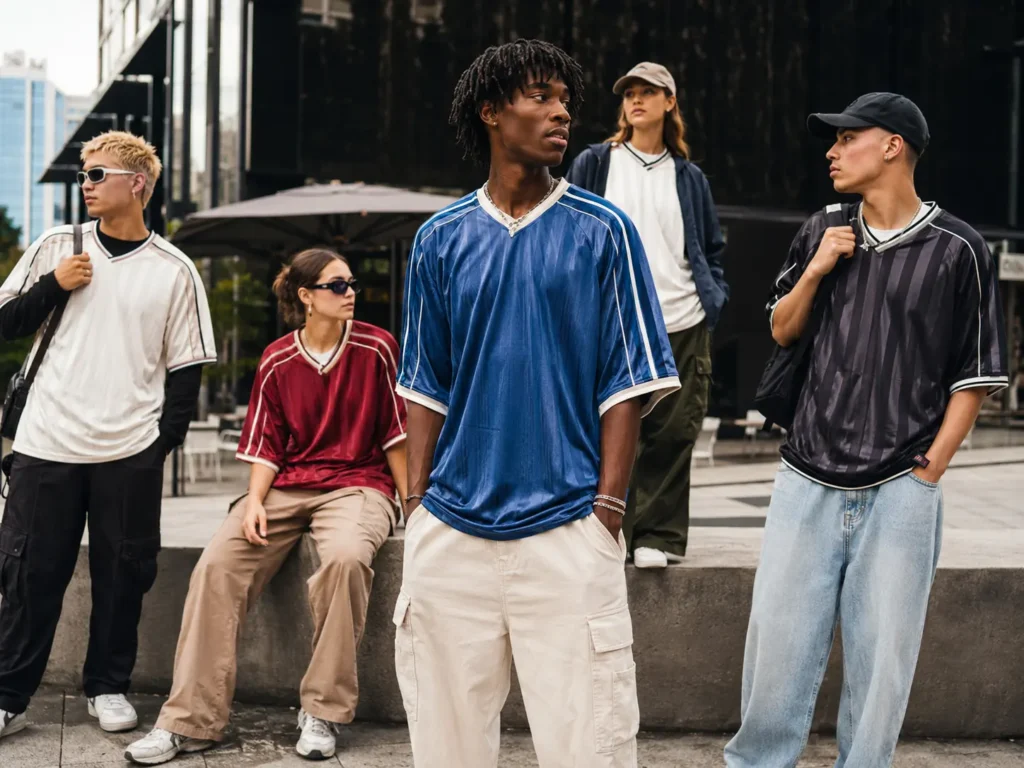
Résumé rapide: The Football Jersey is becoming a major 2026 streetwear category because it combines football culture, silhouettes surdimensionnées, retro aesthetics, tissus respirants, and retail-ready customization. For brands, clubs, and apparel buyers, the best sourcing decision depends on fit, tissu GSM, méthode d'impression, durabilité au lavage, logique de dimensionnement, MOQ, and whether the product is designed for performance, lifestyle retail, or pitch-to-street use.A young customer walks into a concept store in London, Tokyo, Seoul, Paris, or São Paulo. On the rack, oversized football jerseys sit beside cargo pants, jean, baskets, casquettes, and layered long sleeves. These jerseys are not being sold only as match-day kit. They have retro collars, sponsor-style graphics, tonal stripes, panneaux en mesh respirant, écussons brodés, relaxed shoulders, and streetwear-friendly proportions. That is the new commercial reality: le Maillot de football has moved from the pitch into everyday fashion.
Dans 2026, football jerseys are no longer only team uniforms. They are cultural products. They carry identity, nostalgia, club energy, national pride, street styling, and social media visibility. For apparel brands, sports clubs, fanwear companies, équipes scolaires, e-commerce sellers, and private-label retailers, this shift creates a bigger opportunity than traditional teamwear alone. The winning product is not just “a jersey with a logo.” It is a carefully designed lifestyle item with football DNA.
For buyers looking at complete teamwear and retail-ready product categories, le Maillot de football category provides a useful starting point for understanding how soccer uniforms, maillots personnalisés, and performance-style apparel can support both sports and lifestyle markets.
This guide explains why football jerseys are dominating 2026 streetwear, how to design them for lifestyle retail, why retro-inspired aesthetics are selling, how the pitch-to-street strategy expands brand reach, what materials and customization methods matter, and which sourcing mistakes buyers should avoid before placing bulk orders.
Why the Football Jersey Became a 2026 Streetwear Essential
Football Culture Is Now Global Fashion Language
Football is one of the strongest cultural languages in the world. A jersey is not just a piece of sportswear; it signals loyalty, place, mémoire, émotion, et style. A classic club color, a national team pattern, or a retro-inspired graphic can instantly connect with a fan community. This gives the football jersey streetwear category an advantage that basic T-shirts rarely have: built-in storytelling.
Streetwear brands love football jerseys because they combine graphics, oversized styling, sports identity, and collectability. Retail buyers love them because one product can serve multiple audiences: football fans, sneaker culture consumers, music festival crowds, équipes scolaires, académies de jeunesse, influencer merch buyers, and casual fashion shoppers.
Oversized Fits and Relaxed Styling Changed the Category
Traditional match jerseys are often designed with athletic or regular fit logic. Streetwear jerseys work differently. Buyers often want dropped shoulders, wider body width, longer sleeves, cropped boxy proportions, or relaxed layering space. A jersey that performs well during training may feel too slim for casual retail styling. That is why streetwear-focused jersey development should start with fit strategy, not only fabric and print.
For buyers comparing performance and casual use, ce guide sur Professional Soccer Jerseys vs Casual Soccer Jerseys helps clarify how usage differences influence fit, tissu, personnalisation, and buyer expectations.
2026 Demand Drivers
The rise of football jersey fashion is supported by several trends: global football events, retro sportswear revival, TikTok and Instagram styling, sneaker culture, club merchandise expansion, silhouettes surdimensionnées, and Gen Z interest in identity-based apparel. The jersey gives consumers something that feels sporty, nostalgic, expressive, and easy to style.
| Trend Driver | What It Means for Football Jersey Buyers | Commercial Opportunity |
|---|---|---|
| Retro Sportswear | Collars, rayures, correctifs, old-school logos | Vintage-inspired retail collections |
| Oversized Streetwear | Relaxed fit and layering | Casual lifestyle jersey line |
| Club Identity | Fans want wearable culture | Merch and fanwear expansion |
| Social Media Styling | Jerseys styled beyond sports | Wider fashion audience |
Designing a Football Jersey for Lifestyle and Casual Retail Segments
Match Jersey vs Lifestyle Jersey: Different Buying Logic
A match jersey focuses on performance. It must support sweat control, respirabilité, mouvement, séchage rapide, and repeated washing. A lifestyle jersey focuses more on styling, confort, visual identity, easy sizing, and retail appeal. A pitch-to-street jersey sits between the two: it keeps football authenticity but feels natural in daily outfits.
This distinction matters because the wrong product logic leads to poor sales. If a retail buyer orders a tight athletic jersey for streetwear shelves, customers may find it hard to style. If a club orders a heavy lifestyle jersey for summer training, players may feel hot and uncomfortable. The jersey did not fail; the brief did.
| Fonctionnalité | Match Football Jersey | Lifestyle Football Jersey |
|---|---|---|
| Main Purpose | Performance and team play | Mode, vêtements de supporters, vente au détail |
| Ajuster | Athlétique / régulier | Surdimensionné / relaxed / carré |
| Tissu | Lightweight breathable polyester | Polyester, engrener, jacquard, piquer, double-knit |
| Design Focus | Function and club identity | Stylisme, retro look, brand story |
Fabric Selection for Streetwear Football Jerseys
Polyester remains the dominant material for maillot de football personnalisé production because it supports sublimation printing, construction légère, shape stability, et durabilité au lavage. Cependant, not all polyester jerseys feel the same. Mesh polyester improves ventilation. Jacquard polyester adds texture and premium depth. Pique polyester creates a retro polo-like hand feel. Double-knit polyester gives a heavier streetwear structure.
For summer-focused jersey collections, breathable structure and moisture control become even more important. Buyers planning warm-weather collections can review soccer uniforms for summer games to better understand how fabric breathability, construction légère, and comfort affect sportswear performance in hot conditions.
| Type de tissu | Typical Feel | Meilleure utilisation | Buyer Consideration |
|---|---|---|---|
| Interlock Polyester | Smooth, poids léger | Performance and retail basics | Check opacity and snagging |
| Maille Polyester | Respirant, sportif | Summer streetwear and training look | May be too transparent |
| Polyester Jacquard | Texturé, prime | Retro and fashion jerseys | Higher cost and MOQ |
| Double-Knit Polyester | Heavier, structured | Premium streetwear | Check breathability |
Retro-Inspired Aesthetics in Modern Football Jersey Manufacturing
Why Retro Football Jerseys Are Selling
Retro football jersey designs are popular because nostalgia feels collectible. Old-school collars, vertical stripes, contrast sleeve cuffs, vintage number fonts, muted color palettes, sponsor-style chest graphics, patchs tissés, and embroidered crests make the product feel more like fashion than training gear.
Retro style also helps brands create a story. A jersey can reference a city, a club era, a tournament memory, a fictional sponsor, or a local cultural identity. This makes the product more emotionally valuable than a blank performance top. Streetwear thrives on story, and football jerseys are story machines with sleeves.
Manufacturing Techniques for Retro Looks
Sublimation printing works well for full-body graphics, dégradés, rayures, and complex color layouts. Heat transfer printing is practical for names, Nombres, sponsor-style graphics, and personalization. Embroidery and woven patches create premium crest effects but add cost and weight. Jacquard knitting adds subtle texture and higher-end retail appeal. Cut-and-sew panel construction can create authentic retro blocking, but it requires better production control.
| Retro Element | Manufacturing Method | Meilleure utilisation | Risque acheteur |
|---|---|---|---|
| Fold-Over Collar | Rib collar / cut-and-sew | Vintage club style | Poor collar shape if fabric is weak |
| Vertical Stripes | Sublimation or cut panels | Classic football look | Color matching issue |
| Embroidered Crest | Broderie / correctif | Premium retail | Adds cost and weight |
| Vintage Number Font | Transfert de chaleur / sublimation | Fanwear and merch | Must check wash durability |
Expanding Your Brand Reach with the Pitch-to-Street Football Jersey
What “Pitch-to-Street” Really Means
A pitch-to-street jersey is designed to work across training, fan events, casual travel, streetwear outfits, festivals, school clubs, and weekend styling. It keeps football identity but softens the performance-only feeling. It can be worn with shorts on the pitch, cargo pants on the street, or layered over a long-sleeve tee for retail styling.
This strategy is attractive because it expands the selling occasion. A club jersey is not only worn during matches. A streetwear jersey is not only worn by players. Un bien conçu streetwear football jersey becomes a product that buyers can sell across sports, mode, vêtements de supporters, and lifestyle channels.
Why This Strategy Works for Brands
Pitch-to-street design helps football clubs sell beyond game day, streetwear labels borrow football culture without becoming purely technical sportswear, and e-commerce sellers target both sports and fashion search intent. It also supports seasonal drops around international tournaments, local club events, school campaigns, city culture collections, and influencer merch.
For youth-focused product development, especially where comfort and safety matter, cet article sur the perfect Football Jersey for youth academies gives useful context on engineering comfort, durabilité, and wearability for younger players and academy buyers.
| Segment | Product Direction | Best Design Logic |
|---|---|---|
| Football Clubs | Fanwear and merch | Club identity, crête, color control |
| Streetwear Brands | Oversized lifestyle jersey | Bold graphics, coupe décontractée |
| Retail Stores | Seasonal fashion drops | Retro style and easy sizing |
| E-commerce Sellers | Trend-driven jerseys | Low MOQ and fast sampling |
Impression, Image de marque, and Customization Methods
Impression par sublimation
Sublimation printing is one of the most common methods for maillot de football personnalisé production. It works well for full-body patterns, dégradés, rayures, sponsor-style layouts, and complex graphics. Because the design becomes part of the polyester fabric, sublimated jerseys can remain lightweight and breathable.
Impression par transfert thermique
Heat transfer printing is often used for names, Nombres, logos des sponsors, and small design elements. It is flexible for personalization and team orders. Cependant, buyers must check wash durability, peeling resistance, stretch behavior, and edge adhesion.
Embroidery and Woven Patches
Embroidery and woven patches add premium retail value. They are ideal for club crests, limited-edition badges, heritage logos, and private-label branding. The downside is added cost and weight, so buyers should decide whether the product is performance-first or lifestyle-first.
Logique de décision de l'acheteur
If the design requires full patterns and color gradients, choisissez la sublimation. If individual names and numbers are needed, use heat transfer. If premium identity matters, add embroidery or woven patches. If the product is low-cost event merch, keep the print structure simple. If the product targets streetwear retail, combine relaxed fit, sublimation, patch details, and strong packaging.
Material Parameters Buyers Should Check Before Bulk Orders
Fabric GSM
Le GSM affecte le poids, opacité, draper, durabilité, and perceived retail value. A very low GSM jersey may feel cheap or transparent. A very high GSM jersey may feel hot during summer wear. Performance jerseys often require lightweight comfort, while lifestyle jerseys may use slightly heavier structure for a premium streetwear feel.
Breathability and Moisture Control
Even casual jerseys should feel breathable. Mesh structures, yarn quality, knitting method, and moisture-wicking finishes can improve comfort. If buyers expect the product to be worn in warm climates or summer retail seasons, breathability should not be sacrificed for appearance.
Color Fastness and Wash Durability
Streetwear jerseys are washed repeatedly. Poor printing will fade, fissure, peel, or lose sharpness. Buyers should request wash tests, rubbing tests, stretch tests, and pre-production samples before bulk production. A great design that dies after three washes is not a product; it is a complaint wearing a collar.
| Paramètre | Pourquoi c'est important | Recommended Buyer Check |
|---|---|---|
| GSM | Controls weight and quality feel | Match retail position |
| Respirabilité | Affects comfort | Test fabric structure and mesh |
| Évacuation de l'humidité | Improves wearing experience | Check finish performance |
| Solidité des couleurs | Prevents fading | Wash test and rubbing test |
| Size Tolerance | Reduces returns | Confirm measurement standard |
Streetwear Football Jersey Design Trends for 2026
Oversized Silhouettes
Oversized jerseys are one of the strongest 2026 styling directions. Dropped shoulders, wider bodies, longer sleeves, and boxy cuts make the jersey easier to wear with cargo pants, jean, shorts, and sneakers. Cependant, oversized does not mean shapeless. Good pattern grading is still needed.
Heritage Color Blocking
Retro team colors, contrast panels, diagonal blocks, garnitures de manches, and old-school collars create instant football identity. This works well for retail drops and fanwear brands that want to feel classic without copying an existing club design.
Minimalist Club-Inspired Jerseys
Premium fashion buyers may prefer tonal logos, muted palettes, clean stripes, and understated patches. This style works well in Europe, Japon, Korea, and higher-end urban retail because it feels wearable beyond football occasions.
Regional Styling Differences
Football jersey styling differs by market. European buyers often respond to club heritage, clean stripes, and classic football details. South American consumers may favor stronger color expression and emotional football identity. Asian streetwear markets often embrace oversized styling, superposition, and graphic experimentation. Buyers planning international retail collections can review how Football Jerseys differ across countries to better align design decisions with regional buyer behavior.
| 2026 S'orienter | Design Feature | Type de meilleur acheteur |
|---|---|---|
| Oversized Jersey | Relaxed body, dropped shoulder | Streetwear brands |
| Retro Club Look | Collars, rayures, correctifs | Retail and fanwear |
| Minimalist Jersey | Tonal logo, muted colors | Premium fashion brands |
| Hybrid Fabric | Mesh and jacquard panels | Higher-end collections |
Conformité, Labeling, and Export Considerations
Textile Labeling
Football jersey buyers should confirm fiber content labels, étiquettes d'entretien, country of origin, étiquettes de taille, brand labels, washing instructions, barcode requirements, and retail packaging needs. Labeling is not the glamorous part of fashion, but customs and retailers care deeply about it. Ignore it and the jersey may dominate the warehouse instead of the street.
Safety and Chemical Requirements
For skin-contact apparel, buyers should consider azo dye restrictions, formaldehyde limits, color fastness, pH value, rubbing fastness, and children’s apparel requirements if the product targets youth markets. EU and US buyers may request testing based on their retail channel and product category.
Packaging and Retail Presentation
Packaging can include polybags, étiquettes volantes, barcode stickers, carton markings, size-ratio packing, e-commerce packaging, retail folding, and private-label branding. A lifestyle jersey should not arrive like a spare training shirt unless the buyer wants it to sell like one.
Common Buyer Mistakes When Sourcing Football Jerseys for Streetwear
Copying Match Jersey Fit for Casual Retail
Performance fit is often too slim for streetwear. Lifestyle customers usually want relaxed styling, easier layering, and more visual attitude. Buyers should develop lifestyle patterns separately instead of simply enlarging match jersey sizes.
Choisir le tissu uniquement en fonction du prix
Low-cost fabric may look transparent, snag easily, feel rough, or lose shape after washing. A jersey for retail must look good on the rack and feel good after repeated wear.
Ignoring Wash Durability
Noms, Nombres, graphiques des sponsors, correctifs, and colors must survive washing. Poor durability leads to complaints, returns, et dommages à la marque.
Overdesigning the Jersey
Too many graphics, insignes, couleurs, and panels can make a jersey hard to style. Streetwear needs personality, but it also needs wearability.
Not Testing Size Grading
L'Europe , Amérique du Nord, Asie, and South America often require different fit expectations. Poor grading causes return rates and buyer frustration.
Choosing a Factory Without Sampling Support
Without sample correction, bulk production may miss collar shape, emplacement du logo, color matching, tolérance de taille, or fabric hand feel. Sampling is not delay; it is risk control.
How to Choose a Football Jersey Manufacturer
Ce qu'un fabricant fiable devrait fournir
Un fiable fabricant de maillots de football devrait fournir des échantillons de tissu, Options GSM, polyester respirant, engrener, jacquard, pique options, impression par sublimation, impression par transfert thermique, broderie, woven patch support, size chart development, pattern adjustment, échantillons de pré-production, support de test de lavage, color matching, CQ en vrac, options d'emballage, Service OEM/ODM, expérience à l'exportation, et réorganiser le support.
For factory background, brand capability, and production support review, buyers can check the fabricant de maillots de football page before starting OEM/ODM sampling or private-label product development.
For sourcing conversations, conceptions personnalisées, sample requests, size chart development, or bulk quotation support, buyers can also reach out through the fournisseur de maillots de football contact page with target market, quantité, préférence de tissu, logo method, and delivery requirements.
Supplier Evaluation Scorecard
| Facteur d'évaluation | Poids | Que vérifier |
|---|---|---|
| Options de tissu | 15% | Polyester, engrener, jacquard, piquer |
| Printing Capability | 15% | Sublimation, transfert de chaleur, durabilité |
| Fit Development | 15% | Surdimensionné, régulier, athletic patterns |
| Branding Details | 10% | Broderie, correctifs, Étiquettes, étiquettes volantes |
| Contrôle de qualité | 15% | Size tolerance, coutures, essais de lavage |
| OEM/ODM Support | 10% | Private label and custom design |
Recommandation pratique: How Brands Should Use Football Jerseys in 2026
Choose Performance Football Jerseys If
Choose performance jerseys if the buyer is a club, académie, école, or team, and match play or training is the main purpose. Respirabilité, évacuation de l'humidité, lightweight fabric, confort de mouvement, and wash durability should be the priority.
Choose Lifestyle Football Jerseys If
Choose lifestyle jerseys if the buyer is a streetwear brand, retail store, influencer label, or e-commerce seller. Oversized fit, retro styling, correctifs, color story, collar design, and packaging may matter more than ultra-light performance.
Choose Pitch-to-Street Jerseys If
Choose pitch-to-street jerseys if the brand wants both sports and fashion audiences. The product should balance breathable comfort, football authenticity, relaxed styling, and strong graphics. This is often the best commercial direction for 2026 vente au détail.
Choose OEM/ODM Manufacturing If
Choose OEM/ODM manufacturing if custom colors, private-label logos, market-specific sizing, seasonal drops, and repeat orders are planned. For tournament-driven sourcing, ce 2026 World Cup Football Jersey sourcing guide can help buyers prepare for event-based demand, design planning, and bulk order timing.
Recommandation finale: The Football Jersey Is No Longer Just Sportswear
The Football Jersey is dominating 2026 streetwear because it offers something rare: cultural meaning, graphic impact, flexibilité de style, and commercial scalability in one product. Pour les acheteurs B2B, the opportunity is not just selling team uniforms. It is building collections for clubs, écoles, académies, étiquettes streetwear, fanwear stores, e-commerce shops, and private-label fashion brands.
The winning formula is clear. If the product is for matches, prioritize performance fabric and athletic function. If it is for retail streetwear, prioritize relaxed fit, retro aesthetics, premium details, et durabilité au lavage. If it is pitch-to-street, balance both worlds. A jersey that looks good only on the field misses the streetwear opportunity. A jersey that looks good only in photos but fails after washing misses the business opportunity. The best product does both—without behaving like a drama queen in production.

FAQ About Football Jersey Streetwear
1. Why are Football Jerseys popular in streetwear?
Football Jerseys are popular in streetwear because they combine sports culture, fan identity, retro aesthetics, bold graphics, oversized styling, and everyday wearability. A jersey can represent a club, city, country, tournament memory, or fashion statement. Dans 2026, many buyers are treating Football Jerseys as lifestyle apparel rather than only match-day kit, making them suitable for streetwear brands, collections de vêtements de supporters, baisses de vente au détail, produits d'influence, and private-label fashion projects.
2. What makes a Football Jersey suitable for casual wear?
A Football Jersey becomes suitable for casual wear when it has a comfortable fit, tissu respirant, good drape, strong visual design, reliable wash durability, and easy styling potential. Lifestyle jerseys often use relaxed or oversized silhouettes, colliers rétro, correctifs, motifs toniques, or sponsor-style graphics. Unlike professional match jerseys, casual football jerseys do not need to be ultra-tight or performance-only; they should feel comfortable with denim, pantalon cargo, shorts, baskets, et des tenues superposées.
3. Quel tissu convient le mieux aux maillots de football?
Le polyester est le tissu le plus courant pour les maillots de football car il prend en charge l'impression par sublimation., construction légère, contrôle de l'humidité, et durabilité au lavage. Mesh polyester improves breathability, jacquard polyester adds premium texture, pique polyester creates a retro casual look, and double-knit polyester gives a heavier streetwear feel. The best fabric depends on whether the jersey is designed for match play, summer training, vêtements de supporters, casual retail, or premium streetwear.
4. What is the difference between match jerseys and lifestyle jerseys?
Match jerseys are designed for performance, y compris la respirabilité, contrôle de la transpiration, lightweight fabric, athletic movement, and repeated washing. Lifestyle jerseys are designed for casual wear, fashion styling, vêtements de supporters, and retail appeal. They may use oversized fits, colliers rétro, thicker fabrics, embroidered patches, or stronger graphic storytelling. A pitch-to-street jersey combines both directions by keeping football authenticity while making the product easy to wear outside the field.
5. How do I choose a Football Jersey manufacturer?
To choose a Football Jersey manufacturer, vérifier si le fournisseur peut fournir des échantillons de tissu, Options GSM, polyester respirant, mesh or jacquard fabrics, impression par sublimation, impression par transfert thermique, broderie, patchs tissés, size chart development, pattern adjustment, échantillons de pré-production, color matching, support de test de lavage, contrôle de qualité en vrac, options d'emballage, Service OEM/ODM, expérience à l'exportation, et réorganiser le support. For streetwear projects, sampling and fit correction are especially important before bulk production.
Références
1. The State of Fashion 2026, Business of Fashion and McKinsey & Company, Global Fashion Industry Report.
2. Sportswear and Athleisure Market Outlook, Euromonitor International, Apparel and Footwear Analysis.
3. Tests textiles et contrôle qualité, ASTM International, Textile Performance Standards Reference.
4. Apparel Quality: A Guide to Evaluating Sewn Products, Janace E. Bubonia, Fairchild Books.
5. Fashion Marketing and Merchandising, Mary G. Wolfe, Goodheart-Willcox.
6. Textile Labeling and Fiber Content Requirements, Federal Trade Commission, Apparel Labeling Guidance.
7. REACH Regulation Textile Chemical Safety Guidance, European Chemicals Agency, EU Chemical Compliance Reference.
8. Sports Apparel Design and Performance Materials, Textile Institute, Technical Apparel Resource.
Aperçu stratégique: How Buyers Should Build a 2026 Football Jersey Line
What is driving the trend? The Football Jersey is growing as a streetwear product because it combines football culture, retro sportswear, silhouettes surdimensionnées, social media styling, identité du club, and lifestyle wearability. It is no longer limited to match-day use; it now works as fanwear, casual apparel, mode de marque privée, produits d'influence, and retail-ready sports lifestyle product.
Why does product positioning matter? A match jersey, lifestyle jersey, and pitch-to-street jersey require different fabric, ajuster, l'image de marque, and customization decisions. Buyers should define the end use before choosing GSM, pattern structure, méthode d'impression, style de col, patch details, emballage, and size grading. A performance-fit jersey may fail in casual retail, while an oversized fashion jersey may not suit serious training.
How should brands choose the right option? If the buyer targets teams, académies, or schools, choose breathable performance jerseys with moisture-wicking polyester and reliable wash durability. If the buyer targets streetwear retail, choisissez une coupe décontractée, retro design, premium branding details, and stronger visual storytelling. If the buyer wants both sports and fashion audiences, choose a pitch-to-street design that balances comfort, football authenticity, and everyday styling.
What options should buyers compare? Sublimation printing is better for full-body graphics and colorful patterns. Heat transfer works well for names, Nombres, and sponsor-style details. Embroidery and woven patches create stronger premium identity but add cost and weight. Mesh polyester improves breathability, jacquard fabric adds texture, and double-knit polyester gives a heavier streetwear hand feel. The right choice depends on market positioning, quantité commandée, target retail price, and expected wearing scenario.
Quels risques les acheteurs doivent-ils éviter? Avoid copying match-fit sizing for streetwear collections, choisir le tissu uniquement par prix, sauter les tests de lavage, overdesigning the jersey, ignoring regional sizing differences, and placing bulk orders without corrected samples. These mistakes can lead to poor fit, weak retail appeal, color fading, logo peeling, high return rates, and buyer complaints after launch.
Considération de l'acheteur: A reliable football jersey supplier should provide fabric swatches, GSM choices, sublimation, transfert de chaleur, broderie, correctifs, prise en charge du tableau des tailles, échantillons de pré-production, test de lavage, CQ en vrac, options d'emballage, Service OEM/ODM, and export-ready communication. For brands planning 2026 streetwear or fanwear collections, the safest next step is to start with a clear product position, confirm the target market, and test one corrected sample before scaling the bulk order.