When “Looking Pro” Isn’t the Same as Playing Pro
“Coach,” the winger said, tugging his shirt away from his chest, “why does my Soccer Jersey feel like a wet blanket five minutes into the match?”
The coach didn’t even look up. “Because you bought a jersey that looks like performance gear… but behaves like a sponge.”
The winger frowned. “So what should I be wearing?”
“Fabric that works for sweat, fluxo de ar, and friction—especially when the tempo spikes.”
That’s the entire game right there. Most players judge a Soccer Jersey by design, cores, and how it photographs. Pros judge it by what happens in minute 72: heat, umidade, repeated sprints, shoulder contact, and whether the shirt still feels light enough to keep decision-making sharp.
This guide breaks down how to choose Soccer Jersey fabric using a performance-first lens, with YSTAR’s product logic and real-world kit-making experience as the reference standard. If you want to explore YSTAR’s full performance approach and kit ecosystem before we go deep, start here: YSTAR.
Why Fabric Choice Is the Real “Performance Upgrade” (Not Another New Design)
A pro-level Soccer Jersey fabric does three jobs at once:
- Moves sweat off the skin quickly (absorvente de umidade)
- Lets heat escape (respirabilidade / air permeability)
- Reduces skin irritation during repeated motion (low-friction comfort)
Sports textile research consistently points to the same practical truth: when athletes stay cooler and drier, perceived exertion drops, comfort improves, and players maintain focus longer under stress. Even if you’re not playing professional leagues, your body responds the same way.
In 2025–2026, there’s also a bigger industry shift that organisations like ESTA have been highlighting: higher-quality, longer-lasting textiles that reduce waste and improve garment lifecycle performance. In plain terms: better fabric + better care = fewer replacement cycles, more consistent comfort, and a kit that keeps its “match feel” longer.
If you’re specifying jerseys for a team and want fabric advice tailored to your climate, league tempo, and usage frequency, the fastest route is to talk directly with the people building them: contact YSTAR.
The Top 3 Respirável & Moisture-Wicking Materials for Soccer Jersey Fabric
Before we name the materials, here’s the rule: the fibre name alone isn’t enough. Two jerseys can both say “polyester” and still perform wildly differently depending on yarn type, knit structure, finishing, and panel engineering.
That said, these are the top three material categories that consistently show up in high-performing Soccer Jersey fabric systems.
1) Performance Polyester Microfiber (The Modern Standard)
Polyester gets a bad reputation when people only experience cheap versions. In professional adult jerseys, microfiber polyester is popular because it can be engineered for:
- Fast sweat transport (capillary action through fine filaments)
- Secagem rápida
- Lightweight feel even under heavy exertion
- Colour stability for sublimation printing
What to look for:
- A knit that feels smooth (not stiff or plasticky)
- A structure that “breathes” (you can often feel airflow when you lift the fabric)
- Zoned panels or mesh integration in high-sweat areas
YSTAR’s fabric development philosophy is built around performance-first textile choices and real wear feedback. If you want the brand background and how they think about kit engineering and buyer needs, read: about YSTAR.
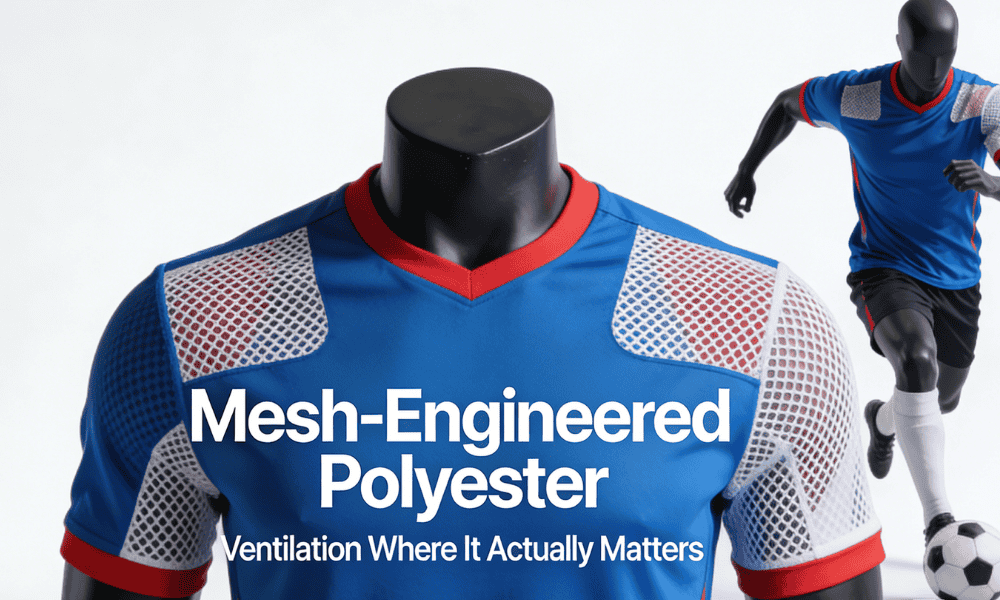
2) Mesh-Engineered Polyester (Ventilation Where It Actually Matters)
If standard microfiber polyester is the base, mesh-engineered polyester is the upgrade that separates “good” from “built for hard minutes.”
Instead of making the entire jersey one uniform fabric, advanced builds use targeted mesh zones para:
- Upper back ventilation
- Underarm airflow
- Side panel heat release
This matters because sweat isn’t evenly distributed across the torso. A well-placed mesh panel reduces that trapped-heat feeling and helps the jersey feel lighter later in the match.
What to look for:
- Mesh that doesn’t feel scratchy
- Stitching or bonding that doesn’t rub at the edges
- Panels positioned where your body actually overheats, not where it looks cool
If you’re choosing from a broad lineup and want to compare how different kits are built (match sets, training kits, club/team solutions), browse the category here: uniformes de futebol.
3) Polyester-Spandex (Elastano) Performance Blends (Mobility + Shape Retention)
The third category is the blend option—especially useful for adult players who want:
- Better stretch recovery (jersey doesn’t get baggy)
- Improved mobility during shoulder turns and arm drive
- A “locked-in” fit without feeling restrictive
A small percentage of elastane can change the feel dramatically. The wrong blend can trap heat or feel clingy; the right blend keeps the jersey stable and comfortable under movement load.
What to look for:
- Stretch that snaps back (not “loose” after one wash)
- A fit that doesn’t bind at the shoulders
- Fabric that stays breathable even when it’s snugger
If you’re buying for a club or serious adult team and want a full, structured approach to selecting professional-grade kits, use this as your checklist reference: 2026 Ultimate Guide to Buying Professional Adult Soccer Jerseys.
How to Tell If a Soccer Jersey Fabric Will Perform Before You Buy
Here’s a practical buyer checklist you can use even if you’re not a textile expert.
Sweat & Dry-Down Test (Performance Reality Check)
Ask the supplier:
- How fast does the fabric dry after saturation?
- Does it feel heavier when wet?
- Is the knit engineered for capillary wicking or just “basic polyester”?
Airflow & Heat Management (Breathability Check)
Look for:
- Mesh zones or engineered ventilation
- Lightweight knit density that still feels durable
- Fabric that doesn’t feel like it seals heat against the chest
Friction & Conforto (Chafe Prevention Check)
Ask:
- Are seams flatlocked or bonded in high-friction zones?
- Are labels printed or stitched (stitched labels can irritate)?
- Is the fabric surface smooth enough for repeated arm swing and torso rotation?
For a deeper breakdown of fabric options and what they’re best at—especially if you’re specifying jerseys for different climates—use this resource as a fabric “menu”: top 10 recommended fabrics for soccer uniforms.
Quick Comparison Table: Choosing the Right Soccer Jersey Fabric
| Fabric Type | Best For | Strengths | Watch-Outs |
|---|---|---|---|
| Performance polyester microfiber | Most adult match & training needs | Leve, secagem rápido, strong printing compatibility | Cheap polyester can feel hot/stiff—ask for performance knit details |
| Mesh-engineered polyester | Hot weather, high-tempo matches | Better ventilation, reduced heat trap, improved comfort late game | Poor mesh placement can cause friction or weak durability zones |
| Poliéster + elastane blend | Players who want mobility + stable fit | Stretch recovery, movement comfort, retenção de forma | Too much elastane can feel clingy or reduce airflow if not engineered well |
Care Matters: Great Fabric Dies Fast With Bad Washing
Even the best Soccer Jersey fabric can lose performance if it’s washed like a towel. Poor care can clog the fabric’s moisture pathways, reduce softness, and accelerate breakdown.
Best practice essentials:
- Cold wash or mild wash (avoid harsh cycles)
- No fabric softener (softeners can interfere with moisture-wicking performance)
- Air dry or low-heat dry (high heat accelerates fibre fatigue)
YSTAR lays out a clear, repeatable approach for keeping kit performance stable across a season here: how to keep your soccer uniform in top shape.
This is also where the ESTA-style “textile longevity” mindset shows up again: better materials plus correct care reduces waste and keeps performance consistent—something teams feel immediately when jerseys still fit and breathe properly months later.
How to Choose Fabric Based on Your Playing Environment
Different players need different fabric priorities. Use this as a quick decision guide:
Hot & Humid Climate
- Prioritise mesh-engineered ventilation
- Choose lightweight microfiber polyester
- Avoid heavy, dense knits that trap heat
High-Contact / Rough Play
- Prioritise durability and seam reinforcement
- Choose stronger polyester structures
- Avoid overly delicate mesh layouts
Adult Amateur Leagues With Frequent Washing
- Prioritise colour stability + retenção de forma
- Choose fabrics that tolerate repeat care cycles
- Follow a strict wash protocol to preserve wicking

Perguntas frequentes: Common Questions About Choosing Soccer Jersey Fabric
1) What is the most breathable fabric for Soccer Jerseys?
For most players, mesh-engineered polyester systems are the most breathable because they combine moisture-wicking with ventilation zones that let heat escape where it builds up fastest.
2) Is 100% polyester always good for a Soccer Jersey?
Not always. Performance depends on the polyester type and knit structure. Microfiber performance polyester is excellent, but cheap polyester can feel hot, stiff, and slow to dry.
3) What fabric is best for adult players who sweat heavily?
Look for fast-drying microfiber polyester with mesh ventilation zones. The goal is to move sweat off the skin and reduce that heavy “wet jersey” feeling late in the match.
4) Does adding elastane (spandex) make Soccer Jerseys better?
It can—especially for mobility and fit stability. A small percentage helps the jersey move and recover shape, but too much can reduce airflow if the fabric isn’t engineered correctly.
5) How do I keep a Soccer Jersey moisture-wicking over time?
Avoid fabric softeners, wash in cooler water, and skip high-heat drying. These simple steps help preserve the fabric’s moisture pathways so wicking performance doesn’t fade.
The Right Soccer Jersey Fabric Keeps You Sharp When the Match Gets Ugly
A Soccer Jersey isn’t just a team identity piece—it’s a performance tool. When the fabric is wrong, it steals energy: it traps heat, holds sweat, and turns friction into distraction. When the fabric is right, it disappears. You stay cooler, seco, and more focused—especially when legs are heavy and the match turns chaotic.
Em 2026, the buying standard for professional adult kits is clear: choose engineered polyester microfiber as the foundation, upgrade with mesh where heat builds up, and use smart blends when mobility and shape retention matter. Pair that with proper care, and you don’t just get a better-looking jersey—you get a kit that keeps its match feel deep into the season.
If you want to spec the right fabric system for your team’s climate, league tempo, and training volume, start from the brand hub, then work forward into the category and guides. You’ve already got the roadmap—now you just need to choose the fabric like it’s part of your game plan, not an afterthought.