Expert Insights: Apparel Manufacturing & Streetwear Trends
The global apparel landscape has undergone a massive transformation over the past few years, transitioning from rigid, structured garments to comfort-driven, versatile streetwear. At the absolute forefront of this sartorial shift in 2026 is a garment that was once confined to the gym: the mesh short. Today, independent clothing brands, luxury fashion houses, and lifestyle labels are scaling their summer and transitional collections around this highly profitable, effortlessly stylish piece. derimot, sourcing and producing premium quality garments at scale is a complex endeavor.
For brand owners and procurement officers navigating the complexities of offshore apparel production, deciding to contact us is often the most critical first step toward securing a reliable, high-quality supply chain. Manufacturing a product that stands out in a saturated market requires more than just picking a color and a size. It demands a rigorous understanding of textile science, fabric weights, embellishment techniques, and shifting consumer fit preferences.
Why Streetwear Brands are Dominating with Mesh
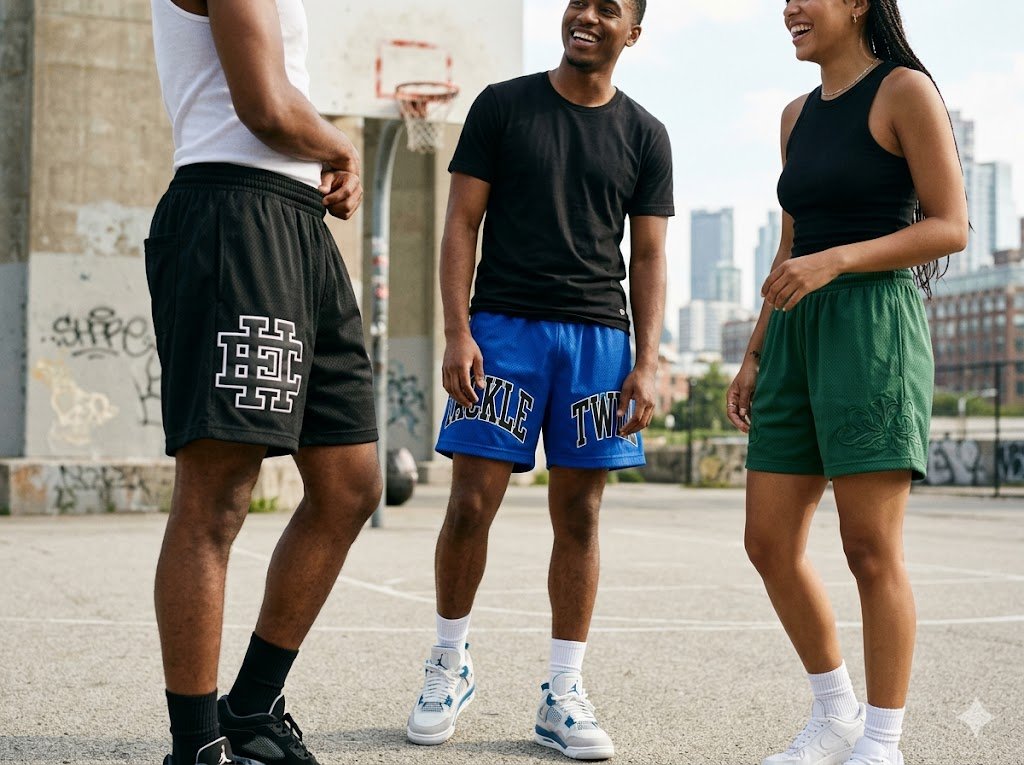
The intersection of athleisure and high fashion has completely redefined how consumers dress. Post-2020, the demand for “elevated comfort” skyrocketed, and luxury brands responded by taking basic athletic silhouettes and applying premium textiles and bespoke tailoring. Developing a line of Custom Mesh Shorts that transcends basic activewear requires a deep understanding of this market shift. It is no longer acceptable to offer a thin, transparent garment; modern consumers expect a product that features structural integrity, hardware detailing (like metal aglets and heavyweight drawcords), and meticulous stitching.
From a business perspective, the ROI on these garments is exceptionally high. Cut-and-sew lead times for shorts are significantly shorter than complex outerwear or tailored denim. This allows independent labels to remain agile, reacting quickly to seasonal color trends and dropping limited-edition capsules that generate high hype and rapid sell-through rates. By partnering with a verified custom mesh shorts manufacturer, brands can achieve luxury-level finishing at a wholesale cost that allows for healthy retail margins.
The Intersection of Performance and Lifestyle
Historically, mesh was engineered specifically for ventilation during high-exertion sports. The iconic 1990s basketball era popularized the baggy, knee-length mesh short, which was designed to allow maximum airflow and unrestrictive movement on the hardwood. Today, as these shorts transition into everyday lifestyle wear, many performance-focused buyers still ask, is mesh short good for basketball when designed under modern streetwear specifications? The answer is yes, provided the garment is constructed with high-tensile polyester that can withstand physical abrasion while maintaining its moisture-wicking properties.
derimot, to justify a premium retail price point (often exceeding $60 til $100+ per pair in the boutique streetwear market), brand owners must clearly define the differences between mens mesh shorts and regular athletic shorts. Regular athletic shorts are typically single-layered, made from thin tricot or cheap nylon, and feature basic elastic waistbands. Premium streetwear shorts, på den andre siden, utilize a heavy, double-layered construction, deep zippered pockets to secure valuables, encased waistbands with elongated cotton drawcords, and sophisticated surface embellishments like tackle twill or high-density screen printing.
Stoffvalg: Single Layer vs. Double Layer Mesh
The most critical decision in your tech pack is the fabric construction. The physical drape, opacity, and perceived value of the garment rely entirely on whether you choose a single or double-layer knit.
Single Layer Mesh: Performance and Utility
Single-layer mesh is highly breathable, lett, and excels at moisture management. It is typically constructed from a polyester-spandex blend that offers mechanical stretch. While excellent for high-performance gym wear or budget-friendly promotional merchandise, single-layer mesh often lacks the structural rigidity required for streetwear. Dessuten, lighter colors (like white, cream, or pastel yellow) can be semi-transparent, which is a major deterrent for lifestyle consumers.
Double Layer Mesh: The Streetwear Standard
To achieve the heavy, luxurious drape that modern consumers demand, brands must source from a dedicated double layer mesh shorts factory. This construction involves an outer layer of porous “birdseye” eller “hole” mesh, fully lined with a smoother, tighter-knit tricot or micro-mesh interior. This completely eliminates transparency issues, adds significant weight to the garment, and provides a smooth, comfortable surface against the skin. This dual-layer approach is especially critical when exporting heavyweight mesh shorts wholesale to European and North American luxury markets where garment weight is directly associated with quality.
Environmental Versatility
Because modern mesh is almost exclusively woven from hydrophobic polyester fibers, it possesses unique properties that extend beyond the basketball court or the city streets. As summer lifestyle garments, consumers frequently ask are mesh shorts good for swimming? Because high-grade polyester does not absorb water like cotton does, double-layer mesh shorts dry exceptionally fast and do not become heavy or restrictive when wet, making them a highly versatile crossover item for beach and resort wear.
Comparative Material Analysis
To assist procurement teams in making data-driven decisions, the following table breaks down the quantitative and qualitative differences between fabric structures:
| Textile Feature | Single-Layer Micro-Mesh | Double-Layer Heavyweight Mesh |
| Average Thickness | 0.45 mm | 0.95 mm – 1.20 mm |
| Opacity Rating | Low to Medium (Color dependent) | 100% Opaque (Fully Lined) |
| Thermal Retention | Very Low (Maximum cooling) | Moderate (Better structural drape) |
| Printability | Flink (Sublimation preferred) | Excellent (Supports heavy embroidery) |
| Target Retail Market | Aktivt tøy, Budget Athletics | Premium Streetwear, Luxury Leisure |
Understanding GSM and Weight for Heavyweight Mesh Shorts
In the textile manufacturing industry, GSM (Grams per Square Meter) is the standard measurement for fabric weight. Understanding GSM is non-negotiable when communicating with overseas suppliers; it is the mathematical metric that dictates how “heavy” eller “premium” your shorts will feel.
What is GSM in Textile Manufacturing?
GSM measures the density of the warp and weft yarns in the knitting process. A higher GSM means more raw material (polyester yarn) was used to knit that specific square meter of fabric. When purchasing blank mesh shorts bulk for a private label, failing to specify a GSM in your tech pack will almost always result in the factory defaulting to the cheapest, thinnest fabric available.
Defining the “Heavyweight” Standard
I 2026, the streetwear market has aggressively pivoted toward heavyweight garments. A standard, cheap gym short typically hovers around 120 til 140 GSM. This feels flimsy and clings statically to the legs.
For a premium double-layer short, you should be targeting an outer mesh layer of at least 200 GSM, paired with an inner lining of 120 GSM. This results in a combined, substantial weight that falls beautifully, doesn’t ride up during movement, and provides a rigid canvas for heavy embroidery.
| GSM Range | Industry Classification | Ideal Application |
| 100 – 150 GSM | Lett / Active | Løping, High-intensity training |
| 160 – 200 GSM | Midweight / Standard | Everyday lifestyle, Fan merchandise |
| 220 – 280+ GSM | Heavyweight / Luxury | High-end streetwear, Winter transition wear |
Advanced Customization: Silketrykk, Embroidery, and Tackle Twill
The blank garment is merely the canvas; the embellishment is what brand identity is built upon. derimot, applying artwork to a porous, hole-filled fabric presents unique chemical and mechanical challenges that require an experienced manufacturing partner to overcome.
Screen Printing on Porous Mesh Fabric
Printing liquid ink onto a fabric filled with holes is inherently difficult. If done incorrectly, the ink will push through the outer holes and glue the outer layer to the inner lining, destroying the drape of the double-layer short. Dessuten, as the shorts stretch, standard plastisol ink will crack.
To mitigate this, high-end factories use a combination of high-tension screens and silicone-infused plastisol inks. The silicone additive gives the ink extreme elasticity, allowing the logo to stretch and rebound with the polyester without fracturing. I tillegg, en “flash cure” technique is used between layers of ink to build a thick, raised graphic that sits entirely on the surface of the mesh, bridging the gaps in the holes rather than sinking into them.
Premium Embellishments: 3D Embroidery and Tackle Twill
For brands looking to capture the nostalgic, retro 90s aesthetic, tackle twill and heavy embroidery are the ultimate customization choices. Tackle twill involves laser-cutting pieces of polyester twill fabric (often letters or numbers) and zig-zag stitching them onto the shorts.
When executing 3D puff embroidery on mesh, the digitizing of the logo must be mathematically perfect. Because mesh is a loose, warp-knitted fabric, a high-density embroidery needle can easily “pucker” or pull the surrounding fabric, creating ugly wrinkles around the logo. A premium factory will use heavy tear-away backing stabilizers on the inside of the garment during the embroidery process to ensure the mesh remains completely flat and taut while the high-speed needles apply the threading.
All-Over Sublimation Printing
If your design features complex, multi-colored photographic patterns, gradients, or all-over prints (AOP), dye-sublimation is the required method. Sublimation uses heat to convert liquid ink into a gas, which then chemically bonds with the polyester fibers at a molecular level. This means the print can never crack, peel, or fade, and the fabric remains 100% breathable because the holes are not clogged with thick ink. Note that sublimation only works effectively on light-colored, 100% polyester fabrics.
Sizing and Fit Guide: The 5-Inch Inseam Era
The silhouette of men’s shorts has undergone a drastic contraction over the last two decades. The baggy, below-the-knee cuts of the early 2000s have been entirely replaced by tailored, vintage-inspired cuts. I 2026, the undisputed king of the streetwear silhouette is the 5-inch inseam.
The Evolution of the Inseam Length
The modern consumer prefers a short that rests a few inches above the knee, showcasing the quadriceps and providing a more tailored, athletic aesthetic. This shorter inseam naturally elongates the appearance of the legs and pairs perfectly with chunky streetwear sneakers and high-cut crew socks. For brands looking to capture the current zeitgeist, partnering with a dedicated 5-inch inseam mesh shorts supplier who already possesses the correct graded grading rules and cutting dies is essential.
Engineering the Perfect Tech Pack
When moving into production, you cannot simply ask a factory for a “Size Medium.” You must provide a highly detailed Tech Pack featuring exact grading measurements.
A professional sizing chart for a modern 5-inch inseam short should detail:
- Linje: Must specify the relaxed and fully stretched dimensions. Streetwear shorts typically utilize a thick, 2-inch encased elastic waistband.
- Front Rise and Back Rise: Crucial for ensuring the shorts do not restrict movement in the groin area, despite the shorter inseam.
- Leg Opening: The leg opening must be wide enough to provide a slight “flare” or relaxed drape, avoiding a tight, restrictive fit around the thigh.
- Drawcords: Specify elongated, flat-woven cotton drawcords (often 50-60 inches in length) finished with custom-engraved metal aglets.
Sample Grading Data (Standard Modern Fit)
| Measurement Point | Size Small | Size Medium | Size Large | Size X-Large |
| Liv (Relaxed) | 28″ | 30″ | 32″ | 34″ |
| Inseam | 5.0″ | 5.25″ | 5.5″ | 5.75″ |
| Outseam | 15.5″ | 16.25″ | 17.0″ | 17.75″ |
| Leg Opening | 11.5″ | 12.0″ | 12.5″ | 13.0″ |
Global Manufacturing, Regulations, and Quality Control
Producing apparel offshore is not without its risks. To protect your brand’s reputation, strict Quality Assurance (QA) and regulatory compliance protocols must be established before a single yard of fabric is cut.
Navigating Textile Compliance and ASTM Standards
Before mass production begins, premium factories will subject the raw mesh fabric to a battery of chemical and mechanical tests.
- Pilling Resistance (ASTM D3512): This test ensures that the friction of daily wear does not cause the polyester fibers to break and form unsightly “fuzz balls” on the surface of the shorts.
- Colorfastness to Laundering (AATCC 61): Because streetwear shorts are often dyed in vibrant, highly saturated colors (like neon green, deep crimson, or royal blue), it is imperative that the dye is chemically locked into the polyester. This test guarantees that the shorts will not bleed color onto other garments in the washing machine or fade prematurely under UV exposure.
AQL (Acceptable Quality Limit) Inspections
Prior to the garments being packed into polybags and loaded onto cargo ships, a third-party or in-house inspection using the AQL 2.5 standard should be executed. Inspectors pull a randomized statistical sample of the bulk order and check for major and minor defects.
This includes checking for dropped stitches in the hem, verifying that the metal eyelets for the drawcords are punched cleanly without fraying the mesh, and ensuring that the placement of the screen print is perfectly centered according to the tech pack dimensions.
Direct Sourcing vs. Trading Companies
When scaling a brand, margins are everything. Many independent brands mistakenly purchase their inventory from trading companies or middlemen on B2B directory sites, leading to inflated per-unit costs and convoluted communication. Sourcing directly from an audited, vertically integrated apparel factory ensures that you are communicating directly with the production floor. This cuts down on sampling lead times, allows for more complex custom cut-and-sew requests (like adding hidden zipper pockets or custom woven labels), and drastically improves your bottom-line profitability.
Frequently Asked Questions (FAQ)
1. What is the best GSM for heavyweight custom mesh shorts?
For premium streetwear, the ideal fabric weight for heavyweight custom mesh shorts is a combined 250+ GSM. This is typically achieved by using a 150-180 GSM outer “birdseye” mesh layer paired with a 100-120 GSM smooth tricot inner lining. This combination ensures 100% opacity, a luxurious drape, and prevents the garment from clinging statically to the body.
2. How do you screen print logos on double layer mesh shorts?
Screen printing on porous mesh requires a specialized approach to prevent the ink from pushing through the holes and gluing the layers together. Professional manufacturers use high-tension screens, thick white underbases, and silicone-infused plastisol inks. The silicone additive gives the ink extreme elasticity, allowing the logo to stretch and rebound with the polyester fabric without cracking.
3. What is the difference between single layer and double layer mesh shorts?
Single-layer mesh shorts are thin, lett, and highly breathable, making them ideal for high-intensity activewear but often slightly transparent. Double-layer mesh shorts feature an outer porous layer and a tightly knit inner lining. This dual construction adds structural weight, eliminates transparency, and is the industry standard for premium streetwear and lifestyle apparel.
4. Why are 5-inch inseam mesh shorts so popular in streetwear?
The 5-inch inseam has become the definitive streetwear silhouette because it offers a tailored, vintage-inspired athletic fit that rests a few inches above the knee. This shorter cut elongates the appearance of the legs, provides unrestrictive movement, and pairs perfectly with modern streetwear aesthetics, including chunky sneakers and high-cut crew socks.
5. Can 100% polyester mesh shorts be used for swimming?
Ja, 100% polyester mesh shorts are excellent for swimming and beachwear. Because high-grade polyester is naturally hydrophobic, it does not absorb water like cotton. Følgelig, double-layer mesh shorts dry exceptionally fast, do not become heavy or restrictive when wet, and resist degradation from chlorine and saltwater, making them highly versatile crossover garments.
Mastering the Market in 2026
The trajectory of streetwear in 2026 is clear: consumers are rejecting rigid, uncomfortable fashion in favor of premium, luxury-grade athleisure. The heavy, double-layered mesh short with a tailored 5-inch inseam has cemented itself as the definitive uniform of the summer season.
For brand owners, the opportunity for scale and profitability is immense, provided the procurement strategy is executed flawlessly. By mastering the nuances of GSM weights, demanding high-tensile silicone inks for embellishments, and adhering to strict dimensional grading rules, brands can elevate a simple athletic garment into a highly coveted luxury item. The key to unlocking this potential lies in establishing a direct, transparent relationship with a manufacturing partner capable of translating your artistic vision into precise, high-quality physical reality.
References
- “ASTM D3512 / D3512M-22: Standard Test Method for Pilling Resistance and Other Related Surface Changes of Textile Fabrics.” ASTM International.
- “AATCC TM61: Colorfastness to Laundering: Accelerated.” American Association of Textile Chemists and Colorists (AATCC).
- “The Evolution of Streetwear: From Niche Subculture to Global Luxury.” Dr. S. Jenkins, Journal of Fashion Marketing and Management.
- “Performance Textiles: Moisture Management and Thermal Regulation in Polyester Knits.” Textile Research Journal.
- “Screen Printing on Synthetic Substrates: Silicone Inks and Elasticity.” Screen Printing Magazine.
- “The Economics of Offshore Apparel Manufacturing and Supply Chain Resilience.” International Journal of Production Economics.
- “Apparel Sizing and Fit: The Psychological Shift in Menswear Silhouettes.” Fashion Theory: The Journal of Dress, Body and Culture.
- “AQL 2.5 Standards in Garment Quality Control and Final Inspection.” American Society for Quality (ASQ).
✦ AI-Powered Market Insight: The Streetwear Silhouette Shift
In the 2026 apparel landscape, Custom Mesh Shorts have officially transitioned from basic gym wear to high-margin luxury streetwear. This shift demands a radical upgrade in textile engineering. Modern consumers reject thin, translucent activewear; i stedet, the market standard now requires heavyweight (200+ GSM), fully lined garments featuring tailored 5-inch inseams and premium hardware, bridging the gap between athletic performance and lifestyle aesthetics.
How to Specify Fabric & GSM
Textile specification dictates perceived value. To prevent transparency and support 3D puff embroidery without puckering, procurement tech packs must specify a dual-layer construction. Sourcing from a double layer mesh shorts factory ensures an outer “birdseye” porous layer (150 GSM) paired with a smooth tricot inner lining (100 GSM), resulting in a substantial, luxury drape.
Considerations for Embellishment
Printing on porous fabrics requires advanced chemical solutions. Standard plastisol will crack as the polyester stretches. Production lines must utilize high-tension screens and silicone-infused inks for supreme elasticity. Dessuten, applying an underbase layer is critical to prevent the ink from gluing the inner and outer mesh layers together.
2026 Kvalitetskontroll & Compliance Standards:
Offshore manufacturing requires strict adherence to international textile standards. Before shipping heavyweight mesh shorts wholesale orders, fabrics must pass ASTM D3512 to guarantee pilling resistance against abrasive wear, og AATCC 61 to ensure high-saturation dyes (like neon or deep black) exhibit perfect colorfastness and will not bleed during rigorous laundering.