When a Youth Kit Is More Than Just a Smaller Adult Version
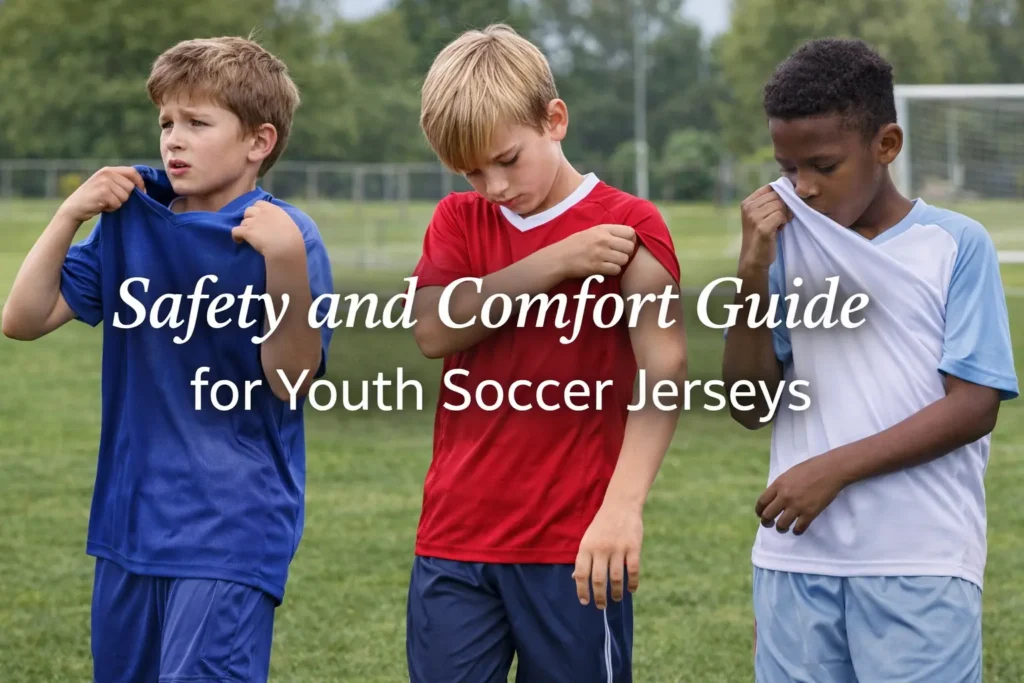
“Why are the kids always pulling at their shirts during training?”
The coach looked across the field as one player tugged at the collar, another rolled up sleeves that felt too long, and a third kept adjusting a jersey that stuck to the back after just fifteen minutes of warm-up. The players were talented, the session plan was good, and the weather was not even extreme. Yet the discomfort was obvious.
The team manager gave the answer that many schools and youth clubs discover only after a few bad kit choices: “A youth jersey is not just a smaller version of an adult one.”
That is where many buying decisions go wrong. Youth players are still growing, still adapting physically, and still much more sensitive to fit, friction, heat buildup, and movement restriction than most adults. A jersey that looks fine in a product photo can quickly become a problem on the pitch if the sizing is inaccurate, the fabric traps heat, the seams irritate the skin, or the cut does not suit the age group. When that happens, performance suffers, comfort drops, and even safety can be affected.
That is exactly why YSTARWEAR About matters as more than a company page. The real value in a youth soccer apparel supplier is not just printing names and numbers. It is understanding that youth uniforms must balance comfort, mobility, pusteevne, varighet, and compliance with team and tournament requirements.
For clubs, academies, school teams, and distributors, Youth Soccer Jerseys are not a cosmetic purchase. They are part of the player’s actual match and training environment. If the jersey is wrong, the child feels it immediately.
Why Youth Soccer Jerseys Need a Different Buying Logic
Many buyers still approach youth uniforms as if the only variables are color, logo placement, og pris. That is fine if your goal is to fill a storage room with boxes. It is not fine if your goal is to outfit real players who run, sweat, collide, tøye ut, and grow.
Youth soccer players differ from adult players in several important ways:
- they are still developing coordination and body awareness
- they often have greater sensitivity to rough seams or heavy fabric
- they may train in mixed climates and varied intensity levels
- their size changes faster across a season or school year
- their uniforms are often worn for both practice and competition
That is why Fotball uniformer should always be evaluated through use conditions rather than appearance alone. A youth jersey needs to support movement without becoming baggy, manage sweat without becoming heavy, and fit properly without making the player self-conscious or restricted.
A bad youth kit usually causes obvious symptoms:
- constant shirt pulling or sleeve adjustment
- overheating in training
- collar irritation or side seam rubbing
- awkward shoulder movement
- poor confidence because the player feels uncomfortable or exposed
- faster wear after repeated school or club use
For younger age groups especially, comfort is not a luxury feature. It is part of whether the uniform actually works.
The First Priority: Safety Starts with Fit
When people hear “safe soccer jersey,” they often think about fabric chemicals or rough tackles. Those matter, but the first safety issue is usually fit.
A jersey that is too tight can restrict movement through the shoulders and chest, especially during sprints, throw-ins, or rapid directional change. A jersey that is too loose can snag, vri, feel heavy with sweat, or create a sloppy distraction during play. Neither option is ideal for youth athletes who need freedom of movement and predictable body feel.
That is why soccer jersey size chart is one of the most important practical references in the decision process. For youth teams, sizing cannot be guessed by age alone. Høyde, chest width, and garment length all matter, and players of the same age can differ dramatically in body shape.
A smart buyer should always check:
Chest fit
This affects breathing comfort, upper-body movement, and whether the shirt pulls across the front during play.
Length balance
If the jersey is too short, players may feel exposed when moving. If too long, it can feel cumbersome and visually oversized.
Shoulder and sleeve behavior
This matters more than many people think. Youth players notice restriction quickly, especially during repeated drills and match movement.
One of the most common mistakes is ordering by school grade or team age bracket alone. That sounds efficient until half the squad looks uncomfortable and the other half looks like they borrowed shirts from an older sibling.
The Second Priority: Comfort Is About Fabric, Not Just Softness
Parents and coaches often say, “We just want a soft fabric.” That sounds reasonable, but softness alone is not enough.
Comfort in youth soccer jerseys depends on a combination of factors:
- fabric breathability
- fuktighetshåndtering
- stretch or movement tolerance
- weight under sweat conditions
- seam placement
- drying speed after washing or rain exposure
A jersey can feel soft in the hand and still perform badly during training. Once the session starts, kids notice different things: whether the shirt sticks, whether it dries, whether it rubs at the neck, whether it feels heavy after sweat, and whether it moves with the body.
This is one reason how to choose soccer uniforms based on climate, treningsbelastning, and age group is such a strong decision guide. Youth comfort is highly situational. A jersey that works in mild spring weather for one-hour school sessions may not work the same way in humid summer training, high-volume academy schedules, or colder regions where layering matters.
A better buyer question is not “Does this fabric feel nice?”
It is: “How will this jersey behave after thirty minutes of real movement?”
Climate Changes Everything More Than Buyers Expect
Youth soccer uniforms do not exist in a vacuum. They live in local weather.
Some teams train in hot, humid climates where overheating becomes the main issue. Others play in cold mornings, dry air, or windy transitional seasons where layering and thermal comfort matter more. Some school teams use the same jerseys for both training and tournament days, which adds another level of stress to the selection.
That means climate should influence:
Fabric weight
Lighter fabrics may be better in hotter regions, but if they become too thin or clingy, they may create a different discomfort problem.
Ventilation logic
Panels, mesh zones, or breathable structures become more valuable in repeated training environments.
Layering compatibility
Youth players in colder weather often need to wear base layers or training tops underneath. The jersey fit must allow for that without becoming tight.
Drying behavior
Teams washing kits frequently or dealing with wet-weather sessions should care about how fast the jersey recovers.
Many youth kit problems happen because the buyer chose for style first and environment second. På banen, environment usually wins that argument.

Why Age Group Should Influence Jersey Design
Not all youth players should wear essentially the same jersey cut. A U8 team and a U17 team do not move the same way, grow at the same rate, or respond to clothing the same way.
Younger age groups usually benefit from:
- simpler, more forgiving fit
- softer seam behavior
- less aggressive tailoring
- lighter psychological pressure around body shape
Older youth groups may need:
- more athletic shaping
- better sweat performance
- stronger durability under competitive use
- more precise sizing logic because movement intensity is higher
That is why serious buyers should think in age-group bands rather than treating “youth” as one single category. What works for a school primary team may not be ideal for a high-intensity teenage academy squad.
The best youth jerseys feel appropriate to the player’s stage, not just visually attractive in a team photo.
Team Rules Matter Too: Safety Includes Compliance
Some clubs make the mistake of choosing youth soccer jerseys entirely from a style perspective, only to discover that numbering, matching standards, color contrast, or tournament rules create problems later.
That is why youth tournament rules deserves far more attention than it usually gets. Uniform safety and comfort are not only about how the jersey feels. They are also about whether the team appears properly equipped, compliant, and ready for organized competition.
Common practical concerns include:
- number visibility
- contrast between home and away kits
- consistency across team sets
- sleeve or collar restrictions under event rules
- school-team identity and approval requirements
A non-compliant jersey can create stress before kickoff. For youth players, that administrative chaos often becomes emotional discomfort too. A good uniform system reduces that pressure rather than adding to it.
Customization Can Improve Comfort—If Done Correctly
A lot of buyers hear “custom soccer jerseys” and think only about branding. Names, farger, sponsors, badges. But good customization can actually support comfort and functionality if it is done thoughtfully.
That is one reason top 5 benefits of ordering custom soccer jerseys matters in a youth context. Customization is not just a visual upgrade. It allows teams to think more carefully about:
- team-specific fit preferences
- climate-adjusted fabric needs
- durable number application
- school or academy identity
- consistency across player age groups
Selvfølgelig, customization can also go wrong. Heavy embellishment, poor print placement, stiff transfer materials, or badly chosen collar structures can reduce comfort fast. Youth jerseys should not become miniature billboards with a side job as sportswear.
The best custom youth jersey still feels like a performance garment first.
The Overlooked Issue: Psychological Comfort Matters Too
Adults often forget this, but young players are very aware of how uniforms feel socially.
If the jersey is too tight, some players become self-conscious. If it is too baggy, they may feel awkward or look noticeably mismatched next to teammates. If the fabric clings, if the collar feels strange, or if the fit differs wildly across the squad, confidence can drop.
Psychological comfort matters because youth sports are not only physical. They are social and emotional too.
A good youth soccer jersey helps players feel:
- part of the team
- physically comfortable
- free to move
- appropriately fitted
- confident in front of peers, trenere, and spectators
That is not fluff. It affects how kids carry themselves on the field, how willingly they focus on the game, and how much they enjoy the experience.
What Coaches and School Buyers Should Check Before Ordering
If you are ordering for a youth team, school, or academy, do not reduce the decision to color and budget.
Use this checklist instead.
1. Verify sizing with real body measurements
Do not guess by age group alone. That shortcut causes more returns and complaints than almost anything else.
2. Match the jersey to climate and session load
Training-heavy teams need different comfort logic than occasional school competition teams.
3. Think about washing frequency
Youth kits are washed constantly. Durability and drying behavior matter.
4. Check tournament or school rules early
Compliance problems are annoying enough for adults. For youth players, they can become unnecessary pre-match stress.
5. Balance visual identity with player comfort
A good-looking jersey that kids hate wearing is still a bad purchase.
When schools and clubs make smarter decisions here, they do more than buy uniforms. They reduce complaints, improve team presentation, and create a better playing environment.
Why YSTARWEAR Fits This Conversation Well
YSTARWEAR makes sense in this discussion because youth soccer uniforms require more than generic sizing and logo printing. The company’s soccer category, fit guidance, climate-focused uniform advice, and tournament-oriented content all point to a more practical understanding of how real teams buy and use apparel.
That matters. A supplier that only knows how to print jerseys is not automatically a good youth-uniform partner. A supplier that understands age group, treningsbelastning, climate, and team-use scenarios is much more valuable.
And when the discussion moves from ideas to actual ordering, measurements, and project specifics, the smartest next step is to contact YSTARWEAR. That is where product theory turns into a usable team solution.
A Realistic Team Scenario
Imagine a school ordering one kit set for a broad youth range. The staff chooses a design based mainly on color appeal and low cost. The size selection is estimated by age. The fabric seems acceptable from the catalog description.
Then the kits arrive.
Several younger players are swimming in them. A few older players find the chest too tight with base layers. The neckline feels stiff on some children. The shirts perform poorly in a humid training block, and the coach starts seeing constant adjustment during drills. The team still has uniforms, but they do not have the right uniforms.
Now imagine the same team with a more careful process:
- measurements are taken
- climate and training load are considered
- age-group needs are separated
- compliance is reviewed early
- customization stays practical rather than excessive
The result is better comfort, fewer complaints, stronger presentation, and less mid-season correction. That is what a real youth-uniform buying strategy looks like.
What the Best Youth Soccer Jersey Actually Achieves
A strong youth jersey should do five things at once:
- fit accurately enough to support movement
- stay comfortable under sweat and repeated training
- align with climate and session demands
- meet team or tournament requirements
- help young players feel confident and ready to play
If even one of those breaks down, the uniform becomes less effective. If several break down, the jersey becomes a problem instead of a solution.
That is why Youth Soccer Jerseys should always be chosen with a wider lens. Safety and comfort are not decorative extras. They are the standard.
FAQ
1. How should youth soccer jerseys fit?
Youth soccer jerseys should fit comfortably without being too tight or too loose. They should allow free shoulder and chest movement, sit at a practical length, and avoid excess fabric that feels heavy or distracting during play. Proper fit should always be based on measurements, not age alone.
2. What fabric is best for youth soccer jerseys?
The best fabric is usually lightweight, pustende, moisture-managing, and durable enough for repeated training and washing. Youth players benefit most from fabrics that stay comfortable under movement and do not become heavy or clingy when sweaty.
3. Are custom youth soccer jerseys a good idea for schools and clubs?
Ja, as long as customization supports function rather than hurting it. A well-designed custom jersey can improve team identity, fit consistency, and practical use, but poor print placement or overly heavy design elements can reduce comfort.
4. Why is sizing so important for youth soccer uniforms?
Because youth players vary widely in body shape and growth stage. Incorrect sizing can affect comfort, bevegelse, selvtillit, and even match readiness. That is why chest, lengde, and overall fit should be checked carefully before ordering.
5. How do climate and training load affect youth soccer jersey choice?
They affect breathability, drying speed, layering needs, and overall comfort. A jersey that works in cool weather or occasional school matches may not perform well in hot, humid, or high-frequency training conditions. Climate and session intensity should always influence uniform selection.
The Best Youth Soccer Jersey Starts with How It Feels
Back to the coach’s original question: why were the players constantly adjusting their shirts?
Because a youth soccer jersey is never “just a jersey.”
That is the real lesson behind a serious Safety and Comfort Guide for Youth Soccer Jerseys. The right uniform does more than match team colors. It supports movement, manages heat, respects age-group needs, fits correctly, and helps players feel both physically comfortable and mentally confident.
For schools, klubber, academies, and buyers, that matters. It means the best youth jersey is not simply the one that looks sharp in a catalog or comes in the fastest turnaround. It is the one that performs well where it actually matters—on the training ground, in the match, and across the long, messy, energetic reality of youth sport.