Fast Buyer Snapshot Before World Cup Demand Peaks
Why the World Cup Effect Changes Jersey Sourcing
The World Cup does not only increase demand for official national team shirts. It also expands demand for custom club kits, fanwear jerseys, school team uniforms, event shirts, 트레이닝 탑, promotional football apparel, and private-label sportswear collections. For B2B buyers, this creates a short commercial window where speed matters, but uncontrolled speed can become expensive very quickly.
A retailer may need a football-inspired collection before tournament traffic rises. A sports academy may want upgraded kits for a new season. A distributor may prepare bulk stock for clubs, 학교, local leagues, and event companies. In each case, the buying question is not simply “How much is one jersey?” The better question is: can the supplier deliver the right fabric, 맞다, print durability, 포장, and shipment schedule before the sales window closes?
For buyers reviewing available product structures, a category such as 축구 유니폼 is a useful starting point because it shows how jersey bodies, collar trims, 메쉬 패널, rib fabrics, and teamwear construction can vary across styles. That early product comparison helps buyers avoid vague inquiries like “good quality jersey,” which sounds simple but gives the factory almost no technical direction.
What Makes a Custom Football Jersey Different from Stock Jerseys?
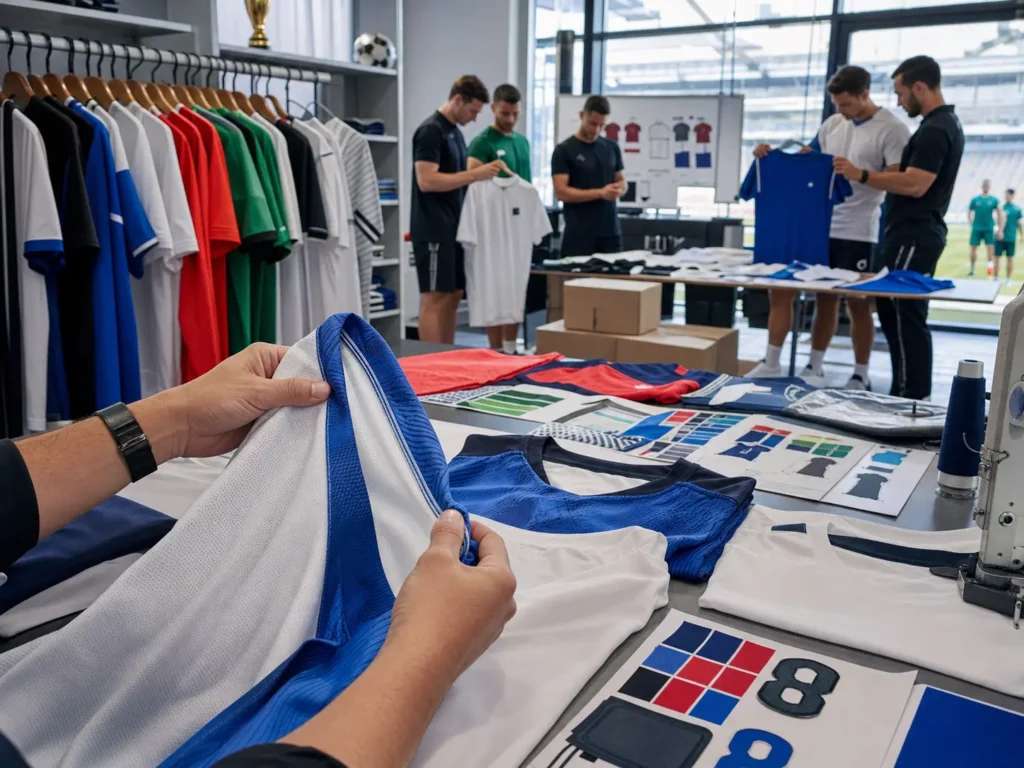
A Custom Football Jersey is made according to specific buyer requirements, including team colors, 로고 배치, 플레이어 이름, 숫자, 스폰서 마크, collar design, sleeve type, 직물 무게, label format, 포장, and size chart. Unlike stock jerseys, custom jerseys give teams, 소매점, and distributors stronger control over identity and market positioning.
Stock jerseys are faster and cheaper, but they limit originality. Semi-custom jerseys allow basic logo and number changes, but the garment body is usually fixed. Fully custom jerseys support stronger branding, but they require more careful sampling and approval. Premium custom jerseys may include special fabric, mesh zones, woven badges, private labels, custom packaging, and stricter inspection standards.
| 저지 종류 | 최고의 대상 | Branding Control | Typical Risk |
|---|---|---|---|
| Stock jersey | Urgent low-budget orders | 낮은 | Limited uniqueness and weaker differentiation |
| Semi-custom jersey | Small teams and quick events | 중간 | Restricted color and design options |
| Fully custom jersey | 클럽, 학교, 소매점, 유통업체 | 높은 | Needs accurate artwork and sample approval |
| Premium custom jersey | Private labels and serious team programs | 매우 높음 | Higher MOQ and stricter QC requirements |
How to Evaluate a Jersey Manufacturer Before Ordering
World Cup timing makes supplier selection more important because production pressure increases across fabric supply, 인쇄, 재봉, inspection, and logistics. A buyer should not choose only by the lowest quoted unit price. The real cost includes sample delays, color mistakes, wrong sizing, print peeling, missing labels, rejected cartons, and late shipment.
Before placing an order, buyers should check whether the supplier has sportswear production experience, stable communication, export support, and a clear product development process. Reviewing a supplier background such as a professional sportswear manufacturer profile helps buyers understand whether the company is positioned for long-term custom apparel supply rather than one-time low-price transactions.
A reliable supplier should be able to discuss fabric composition, GSM, 인쇄 방법, 크기 공차, artwork formats, sample timeline, bulk production schedule, and packing details. If a supplier cannot explain these points clearly, the buyer may face bigger problems after deposit payment. Cheap uncertainty is still uncertainty.
원단 선택: The Performance Base of a Football Jersey
Most football jerseys are made from polyester because it is lightweight, 속건성, printable, and suitable for sublimation. 하지만, “polyester” alone is not enough as a specification. Buyers should confirm fabric structure, GSM, 손 느낌, 통기성, 뻗기, 수축, color fastness, and moisture-management performance.
Polyester interlock is common for smooth printing and stable jersey bodies. Polyester mesh improves ventilation and is useful for training jerseys and warm climates. Polyester-spandex blends provide better stretch and fit, but they require more careful sizing control. Recycled polyester is increasingly important for brands and European buyers, but buyers should request documentation before making sustainability claims.
| 원단 종류 | Typical GSM | Main Advantage | 최고의 사용 | Buyer Risk |
|---|---|---|---|---|
| 폴리에스테르 인터록 | 140-180GSM | Smooth surface and stable printing | Team jerseys and fanwear | Can feel warm without ventilation zones |
| 폴리에스터 메쉬 | 130-170GSM | Better airflow | Training shirts and hot climates | Lower-grade mesh may snag easily |
| Polyester-spandex blend | 150-190GSM | Stretch and athletic fit | Premium matchwear | Higher cost and tighter fit tolerance |
| 재활용 폴리에스터 | 140-180GSM | Sustainability positioning | Brand collections and EU programs | Requires traceability documents |
Printing Method: Choose by Design, Quantity, and Durability
Sublimation printing is widely used for Custom Football Jersey orders because it supports full-color patterns, 이름, 숫자, 그라데이션, 스폰서 그래픽, and all-over designs on polyester. It is suitable for small team orders, wholesale programs, and private-label collections. Since the ink bonds with the polyester surface, sublimation usually offers better wash durability than surface-layer printing when properly produced.
Heat transfer works well for names, 숫자, 스폰서 마크, and small-batch personalization, but poor film quality or weak pressing control can cause peeling and cracking. Embroidery gives a premium badge effect, but it may add weight and reduce comfort if used too heavily. Screen printing can work for simple graphics and higher-volume orders, but it is less flexible for complex multi-color designs.
Buyers planning seasonal collections should also consider market direction. Insights on factory-direct custom football jersey trends show why rPET fabrics, sublimation graphics, 복고풍 목걸이, 오버사이즈 실루엣, and stronger team identity details are becoming more important for 2026/2027 sourcing. The design must look modern, but it must also survive washing, 스트레칭, 그리고 반복 주문.
| 장식 방법 | 최고의 대상 | Durability Level | MOQ Flexibility | Common Mistake |
|---|---|---|---|---|
| 승화 | Full-color polyester jerseys | 높은 | 좋은 | Using low-resolution artwork |
| Heat transfer | 이름, 숫자, 스폰서 로고 | 중간에서 높음 | Very good | Poor film or pressing temperature |
| 자수 | Badges and premium logos | 높은 | 중간 | Oversized embroidery on breathable areas |
| 스크린 인쇄 | Simple repeated graphics | 중간 | Better for bulk | Using it for complex gradient patterns |
Design Strategy: 신원, Readability, and Commercial Value
A jersey is not only a garment. It is a moving identity system. The colors must work on the field, in photos, in online listings, and in retail displays. The sponsor mark must remain readable. The player number must be visible. The logo must not disappear into a busy pattern. Strong design is not noise; it is controlled recognition.
Global football competitions often turn jerseys into symbols of community, 문화, and national pride. Buyers developing fanwear or tournament collections can learn from discussions about football jerseys and national identity, because the best-selling designs often connect performance apparel with belonging, 유산, and emotional identity.
아직, buyers must be careful with protected marks, official tournament names, 국가대표팀 로고, and copyrighted graphics. A safer strategy is to create original designs inspired by color stories, local culture, 기하학적 패턴, city energy, or club identity without copying protected assets. This protects both the buyer and the supplier.
Personalization: 이름, Numbers, Badges, and Exclusive Team Elements
Personalization increases perceived value. Player names, squad numbers, 소매 패치, inner neck prints, woven badges, sponsor panels, custom labels, and team-exclusive patterns all make a jersey feel more professional. For schools and clubs, personalization strengthens team unity. For retailers, it creates higher-margin collections and repeat buying opportunities.
하지만, personalization also increases production risk. Incorrect spelling, wrong number placement, inconsistent sponsor size, and mismatched badge positions can create claims after shipment. Buyers should provide clean artwork files, a name-and-number list, sponsor placement rules, and final approval documents before production begins.
For teams and brands that want more than a basic kit, guides on 맞춤형 축구 유니폼 트렌드 can help buyers decide which personalized details add value and which details may slow down production. Not every extra detail is worth the trouble. Sometimes the smartest design is the one the factory can repeat accurately.
미니멀리스트 vs 대담한 프린트: Which Direction Is Better?
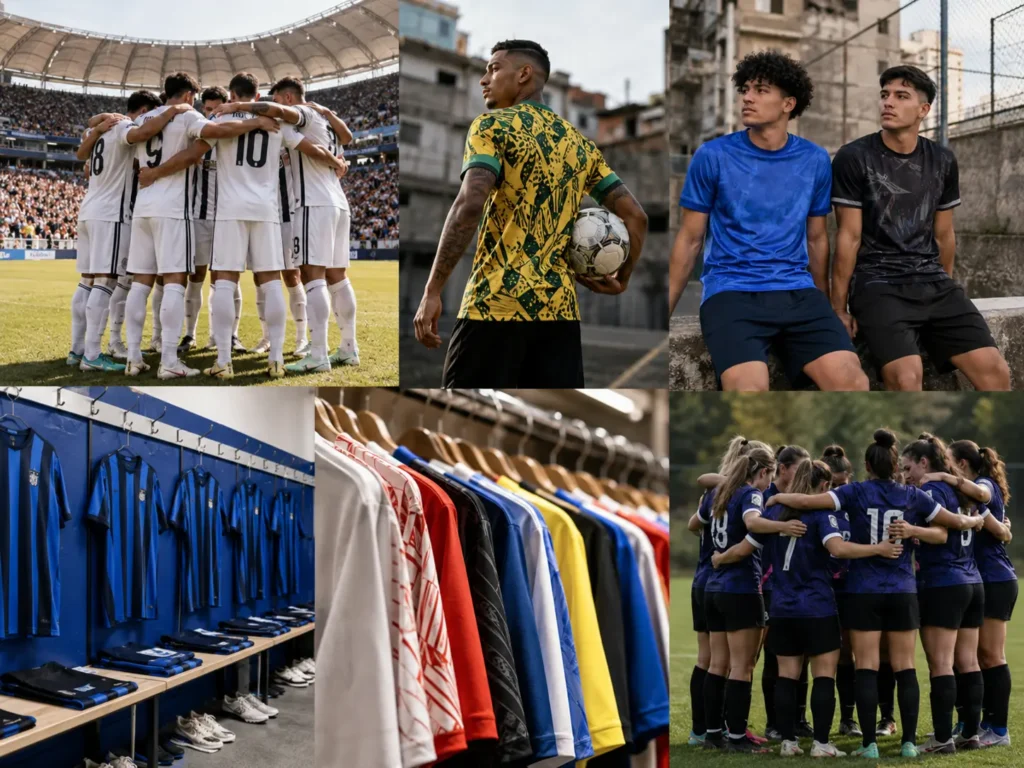
Minimalist jerseys are better when professionalism, sponsor clarity, long-term reorder stability, and broad market acceptance matter. They work well for academies, 학교, corporate tournaments, and clubs that need a clean identity. Bold printed jerseys are better when the goal is fan engagement, social media impact, limited-edition retail value, or streetwear styling.
A distributor may need both styles: clean jerseys for steady teamwear sales and bolder jerseys for seasonal campaigns. A retail brand may use bold graphics to stand out, while a club may use a hybrid approach with a clean base and subtle identity patterns. Buyers should choose based on sales channel, not personal taste alone.
Before locking artwork, buyers can compare 2026 soccer jersey design trends to understand how minimalist and bold styles affect fabric choice, print durability, sponsor readability, 및 재주문 계획. A jersey can be loud, but it still needs to do its job.
Sizing, 맞다, and Construction Details Buyers Must Control
Sizing is one of the most common causes of disputes in custom jersey sourcing. A medium size in one country may feel small in another. Youth sizes, women’s cuts, relaxed fanwear fits, and slim athletic fits should not share one generic chart. Buyers should approve actual measurements before bulk production.
Important measurement points include chest width, 몸길이, 어깨 넓이, 소매 길이, hem width, collar opening, and size tolerance. Many knitted sportswear orders use measurement tolerance around ±1–2 cm depending on the position, but the exact standard must be written into the order. If it is not written, it becomes negotiable later, usually at the worst possible time.
| Market Scenario | 권장 핏 | Main Size Risk | Buyer Recommendation |
|---|---|---|---|
| US retail fanwear | Regular or relaxed fit | Returns due to tight sizing | Use inch/cm chart and fit notes |
| Club matchwear | 운동 적합 | Restricted movement | Add stretch or mesh zones |
| School teams | Youth and adult range | Mixed body types | Approve full size set |
| Event merchandise | Unisex regular fit | Inventory imbalance | Order extra M, 엘, and XL |
MOQ, 견본 추출, and Lead-Time Planning
MOQ depends on fabric type, 인쇄 방법, customization level, 트림, 라벨, 그리고 포장. Sublimation jerseys using standard polyester often allow more flexible MOQ. Custom-dyed fabric, special trims, woven labels, retail packaging, and private-label programs usually increase MOQ and lead time.
A responsible sourcing process should include design confirmation, fabric selection, size chart approval, artwork checking, sample production, sample correction, pre-production approval, bulk production, inspection, 포장, and shipment. During World Cup-related demand, every correction may push the order closer to a missed delivery date.
| Production Stage | Normal Timeline | Peak-Season Timeline | Buyer Action |
|---|---|---|---|
| Artwork confirmation | 1–3 days | 3–5 days | Prepare vector files and Pantone colors |
| 샘플 제작 | 5–10 days | 8–15 days | Approve fabric and size first |
| Bulk production | 20–35 days | 30–50 days | Reserve capacity early |
| Inspection and packing | 2–5 days | 3–7 days | Use written QC checklist |
Buyers should send complete inquiry details: 삽화, quantity by size, 원단 선호도, target market, delivery date, label requirements, packaging format, and shipping destination. A structured 맞춤형 축구 유니폼 프로젝트 상담 helps the supplier evaluate cost, timing, and technical feasibility faster, especially when tournament demand is already rising.
품질 관리: What to Inspect Before Shipment
Quality control should be defined before production, not after problems appear. A clear QC checklist should include fabric GSM, 구성, color tolerance, print position, logo clarity, stitching quality, size measurements, loose threads, packaging accuracy, and carton marks.
Fabric inspection should check weight, 스트레칭 회복, 수축, 통기성, color fastness, and hand feel. Print inspection should check number alignment, sponsor logo clarity, edge sharpness, 세탁 저항, and color consistency. Sewing inspection should check collar symmetry, 어깨 솔기, 측면 솔기, sleeve matching, hem quality, and thread trimming.
| QC Item | Inspection Focus | Business Impact |
|---|---|---|
| 패브릭 GSM | Bulk fabric vs approved sample | Controls durability and perceived quality |
| Color accuracy | Pantone or approved sample match | Protects team and brand identity |
| Print placement | Logo, number, sponsor position | Prevents visual defects and claims |
| Size tolerance | 가슴, 길이, 소매, 어깨 | Reduces returns and complaints |
| Seam strength | 칼라, 어깨, 측면 솔기, 헛기침 | Prevents tearing during use |
| Packing accuracy | Size ratio, 라벨, carton marks | Avoids warehouse confusion |

규정 준수, Labeling, and Sustainability Considerations
International buyers should confirm textile labeling rules early. Depending on the destination market, jerseys may need fiber composition labels, country of origin, care instructions, 크기 라벨, importer details, barcode labels, and carton markings. For youth or children’s teamwear, trim safety and skin-contact requirements should be reviewed more carefully.
Sustainability claims also require documentation. 재활용 폴리에스터, PFAS-free finishes, low-impact dyeing, and eco-friendly packaging can support brand positioning, but unsupported claims can create legal and reputational problems. If the buyer wants to promote recycled fabric, certificates and traceability documents should be requested before marketing materials are created.
Global Style Signals Buyers Should Watch
Football jersey style is increasingly influenced by regional identity and lifestyle fashion. England often inspires classic heritage details. Brazil influences bold color energy. Argentina supports stripe-based identity. Japan and South Korea often push clean technical design, oversized streetwear silhouettes, and modern graphic systems. These signals matter because many jerseys are now worn off the pitch as lifestyle apparel.
For buyers planning international collections, research on the football jersey trend by country can help connect custom design choices with market taste. The goal is not to copy national team kits. The smarter strategy is to understand why certain colors, 패턴, fits, and cultural cues resonate with buyers.
This is especially useful for distributors and private-label brands selling across different markets. A design that performs well in one region may feel too plain, too loud, too tight, or too casual in another. Market fit matters as much as garment fit.
Common Mistakes When Sourcing Custom Football Jerseys
The first mistake is choosing the lowest unit price without checking the specification. A lower price may mean thinner fabric, weaker stitching, poor print film, inaccurate sizing, or cheaper packing. The second mistake is approving only a digital mockup. Digital artwork cannot prove fabric feel, size fit, 색상 정확도, print hand feel, or wash durability.
The third mistake is ordering too late. World Cup demand compresses production capacity, so late buyers often accept weaker supplier terms, pay more for freight, or skip proper sampling. The fourth mistake is ignoring size charts. Wrong sizing can destroy customer satisfaction even when fabric and printing are acceptable.
The fifth mistake is failing to document QC standards. If the order does not define fabric weight, color standard, print placement, 크기 공차, 포장, and inspection rules, the buyer may have little leverage when problems appear.
구매자 결정 논리: If This, Choose That
If you need fast event jerseys, choose sublimation printing, standard polyester fabric, simple labeling, and basic packaging. If you need retail-ready jerseys, choose stronger fabric, individual packaging, barcode labels, consistent size grading, and stricter inspection. If you need premium club jerseys, choose breathable panels, 강화된 스티치, improved fit, and badge details that match the club image.
If you need low MOQ testing, avoid custom-dyed fabrics and complicated trims. Use standard polyester and digital sublimation first. If you need long-term private-label supply, prioritize repeatability: stable fabric source, color consistency, size chart control, reorder records, and export documentation.
Smarter Jersey Sourcing Before the Next Demand Spike
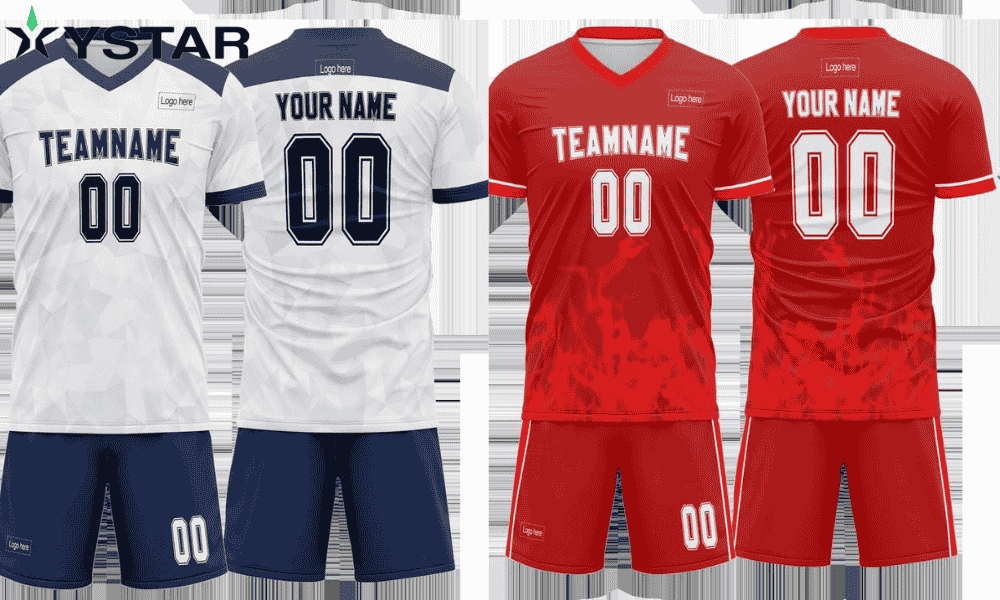
A Custom Football Jersey order should be managed like a technical apparel project, not a simple souvenir purchase. Buyers need to define the target market, use case, 구조, GSM, 맞다, 인쇄 방법, 로고 배치, 사이즈 차트, MOQ, 포장, compliance needs, and delivery deadline before requesting a final quotation.
The safest sourcing path is to approve physical samples, confirm written specifications, reserve production time early, and inspect before shipment. World Cup demand creates strong sales opportunities, but it also punishes unclear buying decisions. A professional buyer does not only ask for a cheap jersey; a professional buyer builds a repeatable supply plan.
FAQ About Custom Football Jersey Sourcing
1. What is the best fabric for a custom football jersey?
The best fabric for a custom football jersey is usually polyester interlock, polyester mesh, or a polyester-spandex blend, depending on the use case. Polyester interlock is stable for printing and suitable for teamwear and fanwear. Polyester mesh improves breathability for training and warm climates. Polyester-spandex blends are better for premium athletic fits but usually cost more and require better size control.
2. How long does custom football jersey production usually take?
Custom football jersey production usually takes about 25 에게 45 days after artwork, 구조, 사이즈 차트, and sample approval, but peak seasons can extend the timeline. World Cup-related demand, complex designs, private labels, custom packaging, and repeated sample corrections may increase lead time. Buyers should start earlier and approve physical samples before bulk production.
3. What is the best printing method for custom football jerseys?
Sublimation printing is often the best method for custom football jerseys made from polyester because it supports full-color designs, 이름, 숫자, 그라데이션, and sponsor graphics with strong wash durability. Heat transfer is useful for smaller logo or number applications, while embroidery is better for premium badges. The best method depends on design complexity, 수량, 예산, and end use.
4. What MOQ should buyers expect for custom football jerseys wholesale?
MOQ for custom football jerseys wholesale depends on fabric, 인쇄 방법, customization level, 트림, labeling, 그리고 포장. Sublimation jerseys using standard polyester fabric often allow more flexible MOQ, while custom-dyed fabrics, special trims, private-label packaging, and premium construction may require higher order quantities. Buyers should confirm MOQ by style, size ratio, and packaging requirement.
5. How can buyers avoid quality problems when sourcing custom football jerseys?
Buyers can avoid quality problems by confirming fabric GSM, 인쇄 방법, 사이즈 차트, 로고 배치, color standard, stitching requirements, packing method, and inspection criteria before production. A physical sample should be approved before bulk manufacturing. For World Cup or tournament-related orders, buyers should also lock production time early to avoid rushed sampling, delayed delivery, and inconsistent quality.
참고자료
- “Global Sports Apparel Market Analysis” — Research and Markets Analyst Team — Research and Markets — Market Research Report
- “Football Benchmark: The Business of Football” — KPMG Football Benchmark Team — KPMG — Sports Business Research
- “Textiles and Apparel Labeling Requirements” — Federal Trade Commission Staff — Federal Trade Commission — Consumer Product Guidance
- “OEKO-TEX Standard 100 Criteria” — OEKO-TEX Association Technical Team — OEKO-TEX — Textile Safety Standard
- “REACH Guidance on Substances in Articles” — European Chemicals Agency — ECHA — Chemical Compliance Guidance
- “PFAS in Textiles in Europe’s Circular Economy” — European Environment Agency — EEA — Environmental Textile Report
- “Standard Test Methods for Colorfastness to Laundering” — AATCC Committee — AATCC — Textile Testing Standard
- “Performance Apparel: Moisture Management and Comfort” — Textile Institute Contributors — The Textile Institute — Textile Engineering Reference
Ready Sourcing Insight Block for Custom Football Jersey Buyers
- Need fast delivery → choose standard fabric, 승화 인쇄, and simple packaging.
- Need premium teamwear → choose higher GSM fabric, breathable mesh zones, and reinforced stitching.
- Need retail sales → choose consistent sizing, private labels, individual packing, and QC reporting.
- Need sustainable positioning → request recycled polyester or chemical compliance documentation before making claims.
- Need long-term supply → choose a manufacturer that can repeat fabric, 맞다, 색상, 로고 배치, 그리고 포장.