빠른 요약
A Better Youth Football Jersey Starts Before the First Whistle
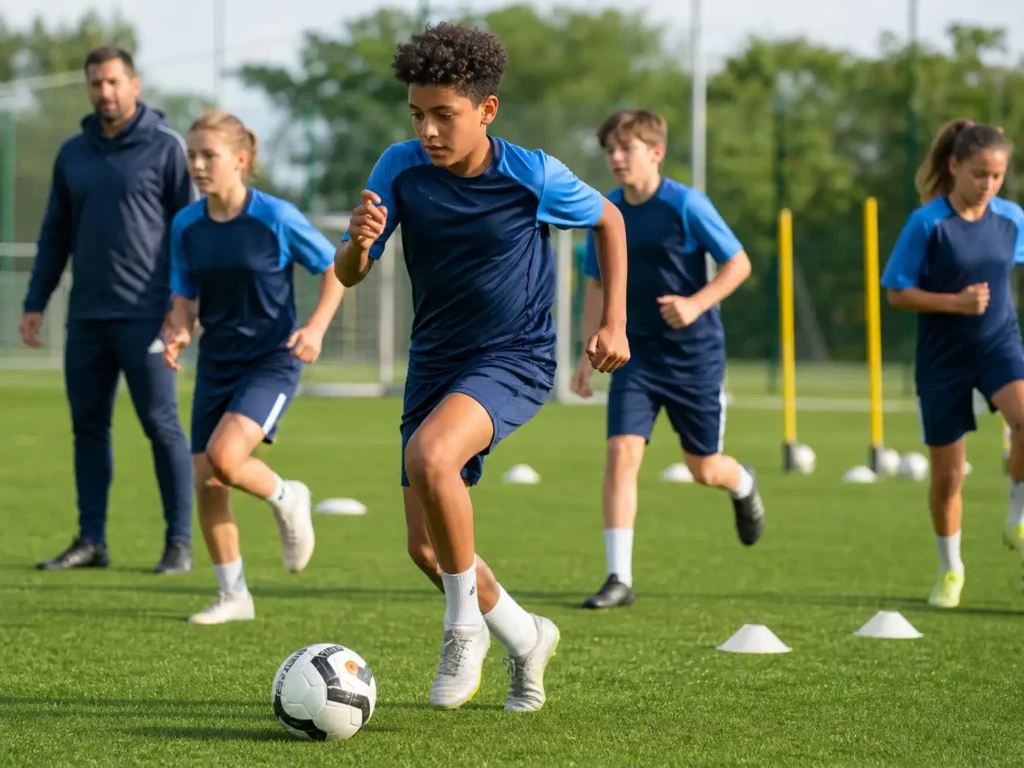
~에 4:30 p.m., the youth academy pitch starts to fill up. One player is pulling at his collar. Another keeps adjusting sleeves that feel too tight around the shoulders. A third player is already sweating heavily after only fifteen minutes of drills because the jersey fabric holds moisture against the skin. By the end of training, the coach notices something simple but important: when young players feel uncomfortable, they stop focusing on football.
That is why a youth 축구 저지 should never be treated as a smaller version of an adult shirt. Children have different skin sensitivity, body proportions, movement habits, heat regulation, and growth patterns. For academies, 학교, and clubs, the right jersey must protect comfort, support movement, survive frequent washing, and present a professional team identity.
For buyers sourcing academy uniforms, the decision is not only about color and logo placement. A good jersey helps young athletes train better. A poor jersey creates irritation, overheating, fit complaints, replacement cost, and brand inconsistency. Tiny fabric choices can create big parent complaints. That is the sportswear version of stepping on a LEGO barefoot.
Before choosing suppliers or ordering team kits, buyers should first understand how material, 사이징, 바느질, 인쇄, and compliance affect real academy use. Many clubs begin by reviewing complete 축구 유니폼 collections because coordinated shirts, 반바지, and socks help academies maintain a consistent identity across training, match days, and youth development programs.
Why Youth Football Jerseys Require Different Engineering
Children are not small adults. Their skin may react more easily to rough fabric, harsh dyes, heavy seams, and poor ventilation. Their bodies also grow quickly and unevenly. Two players in the same age group may have very different chest width, 어깨 경사, torso length, and sleeve comfort needs.
A youth 축구 저지 must therefore be designed with more than appearance in mind. It needs a softer hand feel, lighter fabric structure, 유연한 움직임 영역, reliable stitching, and size scaling that makes sense across age groups. If a jersey is too tight, it restricts shoulder movement. If it is too loose, it interferes with running and ball control. If the collar is too stiff, players keep pulling at it. If the fabric dries slowly, sweat becomes a distraction.
For academies, the problem is bigger than one player. A football academy may need jerseys for U6, U8, U10, U12, U14, U16, and U18 teams. The club needs stable sizing, consistent colors, repeat orders, and customization support. That is why working with an experienced football jersey manufacturer matters. A supplier with real teamwear experience understands youth sizing, custom production, 패브릭 성능, and repeat-order planning, not just product photos.
Skin-Friendly Fabrics: Hypoallergenic Standards for a Youth Football Jersey
Young athletes sweat, 뻗기, fall, sprint, slide, and repeat drills for long sessions. Their jersey touches the neck, 가슴, 뒤쪽에, 겨드랑이, and shoulders continuously. If the fabric is rough, 무거운, chemically unstable, or poorly finished, discomfort appears quickly.
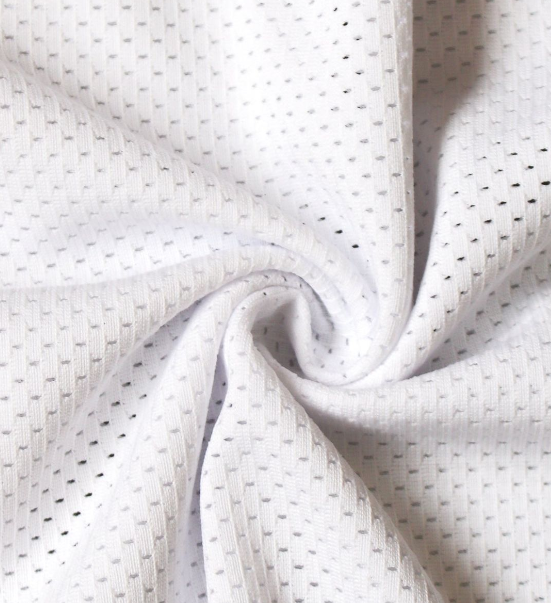
A skin-friendly youth football jersey should use soft, 통기성이 있는, moisture-managing fabric. Polyester remains one of the most common choices because it is lightweight, 튼튼한, 속건성, and suitable for sublimation printing. 하지만, not all polyester fabrics perform the same. Fabric weight, yarn quality, 니트 구조, finishing method, and moisture-wicking treatment all affect comfort.
For youth academies, the most practical fabric options often include polyester interlock, polyester mesh, 극세사 폴리에스테르, jacquard breathable fabric, 재활용 폴리에스터, and controlled polyester-spandex blends. Mesh panels can improve ventilation in hot-weather training. Interlock fabrics provide a smooth feel and better structure for regular teamwear. Spandex blends can improve stretch, but too much stretch may cause clinginess or shape instability.
A buyer should not simply ask, “Is it polyester?” That is like asking whether a car has wheels. Technically yes, but not very helpful. The better question is: what fabric weight, 통기성, 색 견뢰도, pilling resistance, and skin-contact safety can the supplier provide?
Fabric Performance Parameters for Youth Jerseys
| Fabric Parameter | Why It Matters for Youth Players | Buyer Evaluation Method | 실용적인 추천 |
|---|---|---|---|
| 직물 무게 | Affects heat comfort and movement | Check GSM range and sample feel | Lightweight fabrics are usually better for training |
| 수분 흡수 | Moves sweat away from skin | Ask for quick-dry or moisture data | Important for hot-weather academies |
| 공기 투과성 | Supports ventilation | Evaluate mesh zones or breathable knit | Useful for long training sessions |
| 색 견뢰도 | Prevents fading and dye transfer | Request washing and perspiration test data | Critical for school and club uniforms |
| Pilling Resistance | Keeps fabric looking newer | Check abrasion or pilling standards | Important for frequent washing |
| 스트레치 회복 | Helps jersey retain shape | Review fabric composition | Useful for active movement |
| 화학적 안전 | Reduces irritation risk | Request OEKO-TEX, REACH, or relevant documents | Essential for youth apparel buyers |
For children’s sportswear, chemical safety should never be ignored. Buyers may request documentation related to OEKO-TEX Standard 100, REACH compliance for the EU market, CPSIA considerations for children’s products in the United States, restricted azo dyes, low formaldehyde levels, and colorfastness to perspiration. Not every order requires every document, but serious buyers should know what applies to their market.
When academies are comparing different best soccer uniforms for performance and comfort, fabric softness, 수분관리, 스트레칭 회복, 세탁 내구성, and fit stability should be evaluated together. A jersey that looks professional but feels uncomfortable will not win with players, 코치, or parents.
Size-Scaling and Growth-Adaptive Fits in Youth Football Jersey Lines
Sizing is one of the biggest problems in youth football teamwear. Age-based sizing is convenient, but children do not grow according to neat product charts. A ten-year-old player may be tall and slim. Another may be shorter with broader shoulders. Some players need room for base layers in colder weather. Others need a slimmer fit for fast movement.
A youth football jersey line should not simply shrink adult patterns. Good youth sizing adjusts shoulder width, chest allowance, 소매 길이, collar opening, 몸길이, and hem shape. The goal is not oversized clothing. The goal is growth-adaptive fit: enough comfort and near-term growth allowance without making the jersey baggy or distracting.
For academies, size planning should include trial samples, measurement collection, size range forecasting, and spare stock planning. Coaches and team managers should avoid ordering only by age group. A simple measurement sheet can prevent many fit problems.

Youth Football Jersey Size Planning Table
| Age Group | Common Fit Concern | Jersey Design Priority | Buyer Recommendation |
|---|---|---|---|
| U6–U8 | Easy wearing and neck comfort | Soft collar, relaxed body | Avoid tight neck openings |
| U9–U11 | Running comfort and washing frequency | Lightweight durable fabric | Choose easy-care training fabric |
| U12–U14 | Fast growth variation | Wider size range | Order spare sizes |
| U15–U17 | Higher training intensity | Strong seams and better recovery | Use durable performance fabric |
| Goalkeepers | Wider movement range | Larger body and sleeve comfort | Consider separate sizing logic |
For buyers working across international markets, size expectations may also differ by region. European, Asian, and North American size preferences can vary, especially in body length and fit style. This is why a detailed 청소년 축구 유니폼 vs 성인용 컷 guide is useful when academies need to understand how youth patterns should differ from adult sizing.
German-speaking clubs, 유통업체, and sportswear buyers may also need localized sizing references. A translated youth football jersey sizing guide can support better communication with teams, 부모, and regional buyers when planning youth team orders.
Durability Standards for High-Frequency Youth Football Jersey Training
A match jersey may be worn once or twice per week. A training jersey may be worn several times per week, washed repeatedly, stretched during drills, rubbed against bags, exposed to grass, mud, sweat, and sunscreen, and sometimes used with the gentle care of a tiny tornado.
For youth academies, durability is not optional. If jerseys fade, 트위스트, shrink, pill, or lose logos after a few wash cycles, the academy faces higher replacement cost and weaker team image.
Durability should be evaluated through seam strength, colorfastness to washing, colorfastness to perspiration, pilling resistance, abrasion resistance, dimensional stability, print durability, and logo adhesion. These are not boring factory details. They decide whether a jersey still looks professional after a full season.
Durability Testing Table for Youth Football Jerseys
| 테스트 영역 | What It Measures | Why It Matters for Academies |
|---|---|---|
| 솔기 강도 | Resistance to tearing at stitched areas | Prevents damage during pulling and movement |
| Colorfastness to Washing | Color retention after repeated laundering | Keeps team colors consistent |
| Colorfastness to Perspiration | Dye stability under sweat exposure | Protects appearance and skin comfort |
| Pilling Resistance | Surface fuzzing after friction | Maintains professional look |
| Dimensional Stability | Shrinkage or twisting after washing | Keeps sizing accurate |
| 인쇄 내구성 | Logo and number resistance | Protects club identity |
| Abrasion Resistance | Wear from friction and contact | Important for training use |
Decoration method also matters. Sublimation printing is widely used for polyester football jerseys because the design becomes part of the fabric surface, making it suitable for full-color team graphics. Heat transfer is flexible for names and numbers, but quality depends on film, temperature, pressure, and washing behavior. Embroidery can look premium, but heavy embroidery may add weight or create roughness against the skin if used carelessly on youth jerseys.
For academies that want stronger visual identity, custom patterns and colors can make the kit more recognizable. A collection of soccer uniforms with unique custom designs can give buyers ideas for academy branding, 스폰서 배치, 플레이어 수, and color systems without sacrificing performance.
Material Comparison: Which Fabric Works Best?
Not every youth football jersey needs the same fabric. Hot-weather academies need ventilation. High-frequency training programs need wash durability. Competitive clubs may need lightweight performance fits. Schools may prioritize easy care and long service life.
Youth Football Jersey Fabric Comparison
| 원단 종류 | 편안 | 통기성 | 내구성 | Printing Compatibility | 최고의 사용 |
|---|---|---|---|---|---|
| Polyester Interlock | 좋은 | 중간 | 높은 | 훌륭한 | Standard academy jerseys |
| 폴리에스테르 메쉬 | 높은 | 높은 | Medium to High | 좋은 | Hot-weather training |
| Microfiber Polyester | 높은 | Medium to High | 중간 | 훌륭한 | Premium lightweight jerseys |
| 폴리에스테르-스판덱스 혼방 | 높은 | 중간 | 중간 | 좋은 | Performance-fit jerseys |
| 재활용 폴리에스테르 | 좋은 | 중간 | Medium to High | 좋은 | Eco-conscious teamwear |
If the academy trains in hot weather, choose a breathable football jersey with mesh or quick-dry fabric. If the team washes jerseys several times a week, choose durable polyester interlock with strong colorfastness. If the club needs full visual branding, sublimated custom youth football jerseys may be the best option. 지속가능성이 중요하다면, recycled polyester can support a more modern brand story, but buyers should still verify fabric quality.
The point is simple: do not choose fabric by trend alone. Choose by climate, training frequency, skin comfort, printing needs, and washing reality.
Real Academy Scenario: What Better Jersey Engineering Changes
Imagine a youth academy running summer training five days a week. The old jerseys feel heavy after sweat, logos begin peeling, and several players complain about neck rubbing. Parents ask why the uniforms look old halfway through the season. The academy replaces them with lightweight quick-dry jerseys using softer collars, 통기성 측면 패널, sublimated graphics, and youth-specific sizing.
The result is not magical, but it is measurable. Players report less discomfort. Coaches see fewer distractions during training. Parents notice a more professional appearance. The academy reduces emergency replacement orders. The team looks more unified in photos, 성냥, and recruitment events.
That is the business value of better teamwear. It protects both player comfort and academy reputation.
Common Mistakes When Buying Youth Football Jerseys
The first mistake is using adult jersey patterns for children. This often causes awkward shoulder fit, oversized body length, tight collars, or sleeves that do not match youth movement.
The second mistake is choosing fabric only by price. Low-cost fabric may feel rough, fade faster, retain sweat, or lose shape after washing. The cheaper jersey can become more expensive when replacements start early.
The third mistake is ignoring skin-contact safety. For youth apparel, buyers should pay attention to dye stability, restricted substances, and fabric certifications where applicable.
The fourth mistake is ordering without size samples. Bulk production without a size trial can create wide fit problems across the academy.
The fifth mistake is choosing the wrong logo method. Poor heat transfer can peel. Heavy embroidery can irritate skin. Low-quality printing can fade. The decoration method should match the fabric and use scenario.
Procurement Mistake and Consequence Table
| 실수 | Immediate Problem | Long-Term Consequence | Better Decision |
|---|---|---|---|
| Adult fit scaled down | Poor comfort | Player distraction | Use youth-specific patterns |
| Cheapest fabric only | Rough hand feel | Parent complaints | Test fabric before bulk order |
| No chemical documentation | Safety uncertainty | Market and trust risk | Request relevant test reports |
| No size trial | Wrong team fit | Replacement cost | Approve size samples |
| Weak printing method | Logo peeling | Brand image damage | Match printing to fabric and washing |
Industry Trends in Youth Football Jersey Design
Youth football apparel is moving toward lighter, safer, more customized, and more sustainable products. Parents and academies are paying more attention to skin comfort. Clubs want stronger visual identity. Distributors want faster customization and reliable repeat orders.
Several trends stand out.
첫 번째, breathable and quick-dry construction is becoming standard for serious academies. Young players train in different climates, and overheating can reduce comfort and focus.
두번째, youth-specific patterns are becoming more important. The market is moving away from simply shrinking adult jerseys.
제삼, custom academy branding is growing. Clubs want unique colors, 로고, 플레이어 이름, 스폰서 배치, and training collections.
네번째, recycled polyester is gaining attention among schools and clubs that want a sustainability message.
다섯, digital sublimation printing supports flexible design and smaller custom batches, making it easier for academies to refresh kits by season.
구매자를 위한, the best trend is not the flashiest design. The best trend is the one that improves player comfort, reduces complaints, and supports long-term ordering. Fancy is nice. Functional fancy is better.
Regulatory and Safety Considerations for Youth Football Jerseys
Youth sportswear may need to meet different requirements depending on the target market. Buyers should consider restricted substances, azo dyes, formaldehyde limits, heavy metals in dyes or prints, textile labeling, 케어 라벨, country-of-origin labeling, and children’s product regulations.
For the EU market, REACH compliance is important for chemical safety. For the U.S. 시장, children’s apparel may involve CPSIA considerations depending on product category and distribution channel. OEKO-TEX 표준 100 can help demonstrate skin-contact safety for textile products. Textile care labeling and fiber content labeling may also be required in many markets.
This is especially important for importers, 소매점, 학교, and club distributors. A small local academy may focus only on comfort and design, but a B2B buyer selling across regions must think about documentation. Compliance problems are not exciting, but neither are customs delays, complaints, or rejected shipments.
How to Choose a Football Jersey Manufacturer for Youth Academies
믿을 수 있는 football jersey factory should support youth-specific patterns, fabric selection, 승화 인쇄, size chart development, 샘플 승인, 품질 검사, 포장, 그리고 반복 주문. The supplier should understand that a youth academy needs more than a good-looking shirt.
대량 주문을 하기 전에, buyers should ask:
What fabric options are available for youth players?
Can you provide skin-contact safety documentation?
Can you develop youth-specific size charts?
Do you support sublimation printing?
Can we approve pre-production samples?
What is the MOQ for academy orders?
Can you support repeat orders?
How do you test colorfastness and seam strength?
강한 OEM football jersey factory should also help buyers avoid common production mistakes, such as wrong sizing, weak collar construction, poor logo placement, and inconsistent colors between batches.
For clubs or distributors preparing a bulk order, early communication is the safest move. Buyers can discuss age groups, design files, size data, fabric requirements, training frequency, and delivery schedules through a football jersey supplier contact page before confirming production details.
Final Buyer Decision Guide
| Buyer Situation | Recommended Jersey Choice | Why It Works |
|---|---|---|
| Hot-weather academy training | Lightweight mesh football jersey | 더 나은 환기 |
| Weekly high-frequency training | Durable polyester interlock jersey | Strong washing resistance |
| Sensitive skin concerns | Certified skin-friendly fabric | Lower irritation risk |
| Full team branding | Sublimated custom football jersey | Durable graphics |
| Growing youth players | Growth-adaptive size range | Better season-long fit |
| Eco-conscious school team | Recycled polyester jersey | Strong sustainability story |
| Wholesale distribution | Standardized popular sizes and colors | Easier repeat selling |
A Smarter Jersey Protects Players and the Academy Brand
A youth 축구 저지 should protect comfort, 움직임, 신원, and long-term value. The best jersey is not simply the brightest design or the lowest quote. It is the one that helps young players train comfortably, keeps its shape after repeated washing, supports safe skin contact, and gives the academy a professional image across every session.
For academies, 유통업체, and sportswear buyers, the smartest next step is to prepare age groups, body measurements, climate conditions, training frequency, logo requirements, 인증 요구, fabric preferences, and reorder plans before production. A qualified manufacturer can then recommend the right material, 맞다, 인쇄 방법, and size strategy.
Buy cheap without testing, and the jersey may become a weekly complaint machine. Choose properly, and the jersey becomes part of the academy’s training system — quiet, reliable, 편안한, and ready for every drill.
자주 묻는 질문
1. What fabric is best for a youth Football Jersey?
The best fabric for a youth Football Jersey is usually lightweight polyester with breathable or moisture-wicking performance. Polyester interlock works well for standard academy jerseys because it offers durability, smooth hand feel, and strong printing compatibility. Polyester mesh is better for hot-weather training because it improves ventilation. Buyers should also check softness, 색 견뢰도, pilling resistance, and chemical safety documentation before placing bulk orders for children’s teamwear.
2. How should a youth football jersey fit?
A youth football jersey should fit comfortably around the shoulders, 가슴, 칼라, 소매, and body length without restricting running, passing, 스트레칭, or shooting movements. It should not simply be a smaller adult jersey. Good youth sizing includes moderate growth allowance, soft collar openings, flexible sleeve design, and enough shoulder room for active movement. Academies should use measurement-based sizing and approve samples before bulk production.
3. Are polyester football jerseys safe for children?
Polyester football jerseys can be safe for children when the fabric, dyes, prints, and finishing processes meet relevant skin-contact and chemical safety expectations. Buyers should request documents such as OEKO-TEX Standard 100, REACH-related compliance, CPSIA-related information for the U.S. 시장, and colorfastness test data where applicable. The key is not only the fiber type, but also the quality of dyeing, 인쇄, 마무리 손질, and supplier control.
4. What is the most durable printing method for youth football jerseys?
Sublimation printing is often a durable choice for polyester youth football jerseys because the design becomes part of the fabric surface and is less likely to peel compared with poor-quality heat transfer. Heat transfer can work well for names and numbers if high-quality films and proper pressing conditions are used. Embroidery can look premium, but it may add weight or roughness if overused on children’s jerseys, so buyers should match the printing method to comfort and washing needs.
5. How do buyers choose a football jersey manufacturer for youth academies?
Buyers should choose a football jersey manufacturer by checking youth-specific pattern capability, fabric options, sample quality, 사이즈 차트 지원, customization methods, chemical safety documentation, colorfastness control, 솔기 강도, 포장, 리드타임, 지원을 재정렬하고. A good supplier should understand academy training frequency, player age groups, logo requirements, and long-term teamwear planning. The safest approach is to test samples and confirm sizing before bulk production.
참고자료
- “Children’s Product Certificate Requirements” — U.S. Consumer Product Safety Commission, CPSC
- “OEKO-TEX Standard 100: Testing for Harmful Substances” — OEKO-TEX Association
- “REACH Regulation and Textile Chemical Safety” — European Chemicals Agency, ECHA
- "직물 - 색상 견뢰도 테스트" - 국제 표준화 기구, ISO
- “ASTM D5034 Standard Test Method for Breaking Strength and Elongation of Textile Fabrics” — ASTM International
- “Moisture Management in Performance Sportswear” — Textile Research Journal Editorial Research Review
- “Youth Athletic Development and Heat Stress Considerations” — American College of Sports Medicine
- “Sportswear Materials and Comfort Performance” — The Textile Institute Professional Publications
How to Choose a Youth Football Jersey with Less Risk
가장 중요한 것: A youth Football Jersey should be evaluated as a performance garment, not only as a team identity product. Buyers should review fabric softness, 통기성, 수분 흡수 성능, chemical safety, youth-specific sizing, 솔기 강도, print durability, 세탁 저항, and reorder stability before confirming a bulk order.
How buyers should decide: If the academy trains in hot weather, choose breathable mesh or quick-dry polyester. If the jersey will be washed several times per week, choose durable polyester interlock with strong colorfastness. If the team needs full visual branding, sublimation printing is usually a practical choice. If players have sensitive skin concerns, request skin-contact safety documentation before production.
실수는 왜 일어나는가: Many jersey problems come from treating youth uniforms as smaller adult kits. Poor shoulder scaling, tight collars, rough seams, weak fabric recovery, and unstable printing can create discomfort and replacement cost. Buyers who skip samples, size trials, 세탁 테스트, and documentation may face parent complaints, wrong fit, 희미해지는 색, and early jersey damage.
옵션 로직: Choose lightweight mesh jerseys for hot-weather training, durable interlock jerseys for high-frequency academy use, sublimated custom jerseys for full team branding, recycled polyester jerseys for sustainability-focused clubs, and growth-adaptive size ranges for academies managing multiple age groups.
Final consideration: Before placing a youth football jersey order, buyers should prepare age groups, size data, climate conditions, training frequency, fabric requirements, logo files, player number needs, certification expectations, and reorder plans. A professional supplier can then recommend the right jersey structure, reduce sourcing risk, and support a smoother academy uniform program.