Comfort can determine whether a football jersey feels like a reliable part of a player’s kit or a distraction throughout a match. When training intensity rises, a shirt that traps moisture, rubs against the skin, or restricts shoulder movement can become uncomfortable within minutes. 클럽 및 소매업체용, these problems can also lead to complaints, exchanges, inconsistent team appearance, and avoidable replacement orders.
최고 축구 유니폼 balance breathability, 수분관리, 맞다, construction quality, 그리고 내구성. Choosing the right option requires more than checking a size label or selecting the lightest fabric available. Buyers should consider the intended activity, 기후, frequency of washing, customization requirements, and the needs of the people who will wear the garments.
This practical guide explains how to evaluate comfortable football jerseys for training and competition, compare common materials, interpret technical specifications, test samples, and select a dependable supplier. It is designed for individual players, 코치, football clubs, 학교, sports retailers, and wholesale buyers who want to make informed decisions based on observable performance rather than marketing claims.
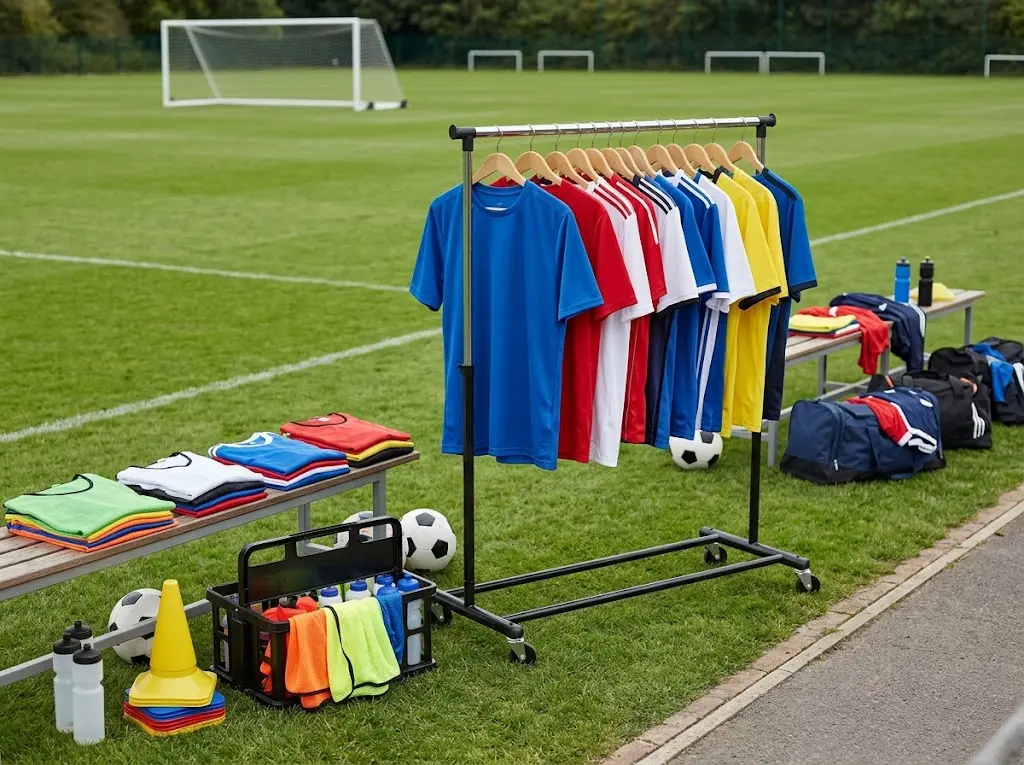
What Makes Football Jerseys Comfortable During Training and Matches?
Comfort is the result of several interacting factors. A breathable fabric cannot compensate for a restrictive cut, and a well-fitting shirt may still feel uncomfortable if its seams rub against the skin. Buyers should therefore evaluate the complete garment rather than judging a jersey by one feature.
Breathability and Airflow
Breathability describes how air moves through a fabric structure. Yarn type, knitting pattern, fabric density, finishing treatments, and garment construction can all influence airflow. Open-knit panels may support ventilation in high-sweat areas, but their actual performance depends on the material and construction.
During a summer training session, 예를 들어, a player may notice that the back of a shirt feels warmer than its sleeves. A jersey designed with different knit structures across these areas may provide a more appropriate balance than a uniform fabric used everywhere. Buyers should ask for test results when comparing products rather than assuming that visible mesh automatically means superior performance.
Moisture Management and Drying Time
Moisture management describes how a garment handles perspiration. Wicking concerns the movement of liquid moisture away from the skin, while drying depends on evaporation and surrounding conditions. These are related but different properties.
A fabric can spread moisture across a larger surface without drying especially quickly in humid weather. Air circulation, temperature, 습기, 직물 두께, and the amount of sweat produced all affect the result. For players who train frequently, a practical evaluation should consider how the jersey feels during activity and how quickly it becomes comfortable again after washing.
맞다, 뻗기, and Freedom of Movement
A football jersey should allow players to sprint, raise their arms, rotate their shoulders, 도약, and change direction without excessive pulling. A shirt that is too tight may create pressure around the chest and underarms. One that is too loose can shift during movement or interfere with layering.
The right fit depends on the wearer, intended use, and garment design. A match jersey may use a closer athletic cut, while a training shirt may allow more room for movement and layering. Neither option is automatically more comfortable for every player.
솔기, 라벨, and Skin Friction
솔기, neck labels, printed decorations, and poorly finished edges can create friction during repeated movement. Check the inside of the garment, especially around the neckline, shoulder joints, 겨드랑이, and side seams. These details can become more noticeable after a player sweats or wears the shirt for an extended session.
Which Fabric Is Best for Comfortable Football Jerseys?
There is no single fabric that is ideal for every football environment. Polyester is widely used in performance sportswear because it can be engineered into lightweight, durable knitted structures. 하지만, the fiber name alone does not establish breathability, 연성, 수분관리, or drying speed. Construction and finishing matter just as much.
Polyester for Everyday Teamwear
Polyester jerseys are commonly selected for training and matches because they can combine low garment weight, useful abrasion resistance, color retention, and relatively straightforward care. Different yarns and knit patterns can create distinct textures and airflow characteristics.
For teams that train several times each week, practical considerations include how the fabric feels when damp, whether the garment retains its shape, and whether the color and decoration remain acceptable after repeated washing. Buyers should request the actual fiber composition and performance documentation instead of relying on broad claims such as “professional-grade fabric.”
Mesh Panels and Engineered Knit Structures
Mesh can be incorporated into selected zones to support ventilation. Its usefulness depends on placement, 개방 상태, garment fit, and the conditions in which the jersey is worn. Large openings may improve airflow but can also affect opacity, snag resistance, and the appearance of the garment.
For a team training in hot, humid weather, targeted ventilation may be worth testing. For a jersey used in cooler conditions, a more uniform knit may be appropriate. Buyers should evaluate the complete shirt under realistic conditions rather than treating one material feature as a guarantee of comfort.
Recycled Polyester and Material Transparency
Recycled polyester can support a sourcing strategy that prioritizes recycled inputs, provided the material claims are documented. 하지만, recycled content does not automatically mean that a jersey is more breathable, 더 부드러운, or more durable than a comparable garment made from other polyester inputs.
Retailers and procurement teams should distinguish material-origin claims from performance claims. Ask suppliers to identify the percentage of recycled content, the scope of any certification, and the documentation that supports the statement. Evaluate comfort and durability separately through product specifications and testing.
Fabric Comparison for Training, Matches, and Casual Wear
The following comparison is a practical selection framework, not a universal performance ranking. Results vary with yarn, knit construction, 마무리 손질, garment pattern, and test conditions.
| Material or Construction | Potential Advantages | Limitations to Check | Suitable Applications |
|---|---|---|---|
| Lightweight polyester knit | Low garment weight, 쉬운 관리, and versatile construction | Airflow and moisture handling vary by knit and finish | Training jerseys and match shirts |
| Polyester mesh panels | Targeted ventilation in selected areas | Opacity, snagging, and panel placement require assessment | High-activity training and warm-weather kits |
| Recycled polyester knit | Can support documented recycled-material sourcing | Recycled content alone does not prove better comfort | Teamwear and retail collections with material goals |
| Cotton jersey fabric | Familiar, soft hand feel in casual use | May retain moisture and feel heavier when wet | Casual supporter apparel and off-field use |
Teams purchasing coordinated apparel should also consider the whole kit rather than the shirt alone. A jersey may need to match shorts, 양말, 트레이닝 탑, and substitute garments in color, 사이징, and decoration. Reviewing a complete range of 축구 유니폼 can help buyers compare how individual garments work together and identify requirements before approving a team order.
Football Jersey Fabric Specifications Buyers Should Check
Technical specifications make it easier to compare samples objectively. They also help prevent a common procurement mistake: selecting a garment based on appearance while overlooking measurable differences in fabric weight, 구성, 공기 흐름, color retention, and dimensional stability.
직물 무게, Thickness, and Air Permeability
Fabric mass is commonly expressed in grams per square metre (g/m²), also known as GSM. It helps describe the weight of the material, but it is not a direct measurement of comfort. Two fabrics with similar GSM values can behave differently because of their yarns, knit structures, finishes, and thickness.
Air permeability can be assessed using a defined laboratory method, such as ASTM D737. A useful test report should identify the method, test conditions, specimen details, and results. Values should only be compared when the methods and conditions are sufficiently consistent.
수분 관리, 건조, and Colorfastness
When evaluating 통기성 축구 유니폼, buyers should distinguish between air permeability, liquid moisture movement, and drying performance. Each describes a different aspect of fabric behavior. A supplier’s general statement that a jersey is “quick-drying” is less useful than a documented test with a clearly identified method.
Colorfastness is also important for teams using dark colors, bright colors, contrasting panels, or printed numbers. ISO 105-C06 specifies methods for assessing textile color resistance to domestic and commercial laundering. The test result should be interpreted according to the applicable method and acceptance criteria, not as an unsupported guarantee of unlimited wash durability.
How to Read a Technical Specification Sheet
A useful specification sheet should identify fiber composition, fabric mass, 건설, 색상, 사용 가능한 크기, 장식 방법, care instructions, and relevant test results. If a supplier offers a special performance claim, ask what was measured, how it was measured, and whether the report applies to the exact fabric being ordered.
| 매개변수 | Typical Unit or Method | 중요한 이유 | Buyer Verification |
|---|---|---|---|
| Fabric mass | g/m² (GSM) | Helps compare material weight | Specification sheet and, where needed, test report |
| Fiber composition | Percentage by fiber type | Identifies material content and supports labeling | Supplier declaration or laboratory report |
| Air permeability | Method-specific airflow units | Helps assess airflow through the fabric | Report identifying the test method and conditions |
| 수분관리 | Method-specific measurements | Assesses liquid movement and related properties | Relevant performance test results |
| 치수 안정성 | Percentage change after washing | Helps assess shape and size retention | Wash-test report and stated procedure |
| 색 견뢰도 | Standardized grade or rating | Helps assess color change and staining | Applicable laundering or rubbing test results |
There is no universal GSM value, air-permeability result, or drying-time threshold that guarantees a comfortable football jersey in every climate. A defensible specification should connect each number to a test method and an actual use case. Buyers should avoid comparing figures from different test methods as if they were interchangeable.

How Should Football Jerseys Fit for Maximum Comfort?
Fit affects movement, 통풍, 모습, and the way a jersey interacts with the body during activity. A size label is only a starting point because sizing can vary across manufacturers, product ranges, and intended fits. Teams should check garment measurements and test representative sizes before committing to a bulk order.
Slim Fit, Regular Fit, and Relaxed Fit
A slim-fit jersey sits closer to the body and may reduce excess fabric movement. It can be suitable for players who prefer a close athletic silhouette, provided it does not restrict the shoulders, 가슴, or underarms. A regular fit offers a more balanced amount of room, while a relaxed fit may suit casual supporters, recreational players, or people who prefer additional space.
The correct choice should be based on movement and comfort, not appearance alone. During a fitting session, players should raise their arms, rotate their shoulders, sprint briefly, and perform football-specific movements. A jersey that looks good while standing may feel restrictive when the wearer reaches or changes direction.
How to Measure Chest, 어깨, and Jersey Length
Use a consistent measuring process. Measure the chest around its fullest point without pulling the tape too tightly, and compare the result with the supplier’s size chart. Check shoulder width and body length where garment measurements are available. For an existing jersey that fits well, measuring the garment flat can provide an additional reference, but the supplier should clarify whether listed dimensions are body measurements or finished-garment measurements.
For a more systematic process, follow a reliable football jersey size guide and compare the measurements with the exact product range being considered. Do not assume that a medium from one supplier will fit the same way as a medium from another.
남성, 여성용, and Youth Football Jersey Fit
남성, 여성용, and youth garments may use different proportions, grading rules, and size ranges. A unisex jersey can work for some wearers, but it should not be assumed to fit every body shape equally well. Teams should collect measurements consistently and provide clear guidance for players and parents.
청소년 팀의 경우, allow for appropriate movement and the expected duration of use, but do not order excessively oversized garments simply to anticipate growth. Too much extra fabric can interfere with comfort and presentation. For women’s teams, offer size guidance based on actual garment dimensions rather than relying on a direct conversion from men’s sizing.
Common Signs of a Poorly Fitting Jersey
- The neckline or shoulder seams pull when the arms are raised.
- The chest or underarm area feels restrictive during movement.
- The fabric clings uncomfortably after perspiration builds up.
- The hem repeatedly rides up during running or kicking.
- Excess fabric shifts, 트위스트, or catches during training.
- Seams or labels rub against the skin during repeated movement.
Match-Day Jerseys vs. Training Jerseys: What Should You Choose?
Training jerseys and match jerseys may look similar, but their priorities can differ. Training garments are often used more frequently and washed more often. Match jerseys may require stricter control over team colors, player identification, 스폰서 배치, and competition-specific requirements.
Training Jerseys for Frequent Use
For regular practice, prioritize comfortable movement, manageable moisture, straightforward care, and construction that withstands repeated use. Teams may benefit from standardized colors and consistent sizing so replacement garments can be ordered without creating a visibly mismatched kit.
A practical test is to wear a sample through a representative training session and then wash it according to the intended care instructions. Inspect the garment after drying for seam changes, print damage, 뒤틀림, color transfer, or an unexpected change in fit. A single wear test cannot establish long-term durability, but it can reveal obvious design problems before a larger order.
Match Jerseys for Identification and Competition
Match jerseys should support unrestricted movement while making players easy to identify. The garment must also comply with the rules of the relevant competition, which may specify shirt colors, 숫자, goalkeeper distinctions, and other equipment requirements. Clubs should verify the current rules that apply to their league rather than assuming all competitions use identical requirements.
Can One Jersey Work for Both Training and Matches?
One jersey can serve both purposes when its construction, 모습, and maintenance requirements meet the team’s needs. This approach may simplify inventory, but frequent training use can increase wear on a garment intended for formal competition. Teams should consider training frequency, washing routines, replacement availability, and the importance of maintaining a consistent match appearance.
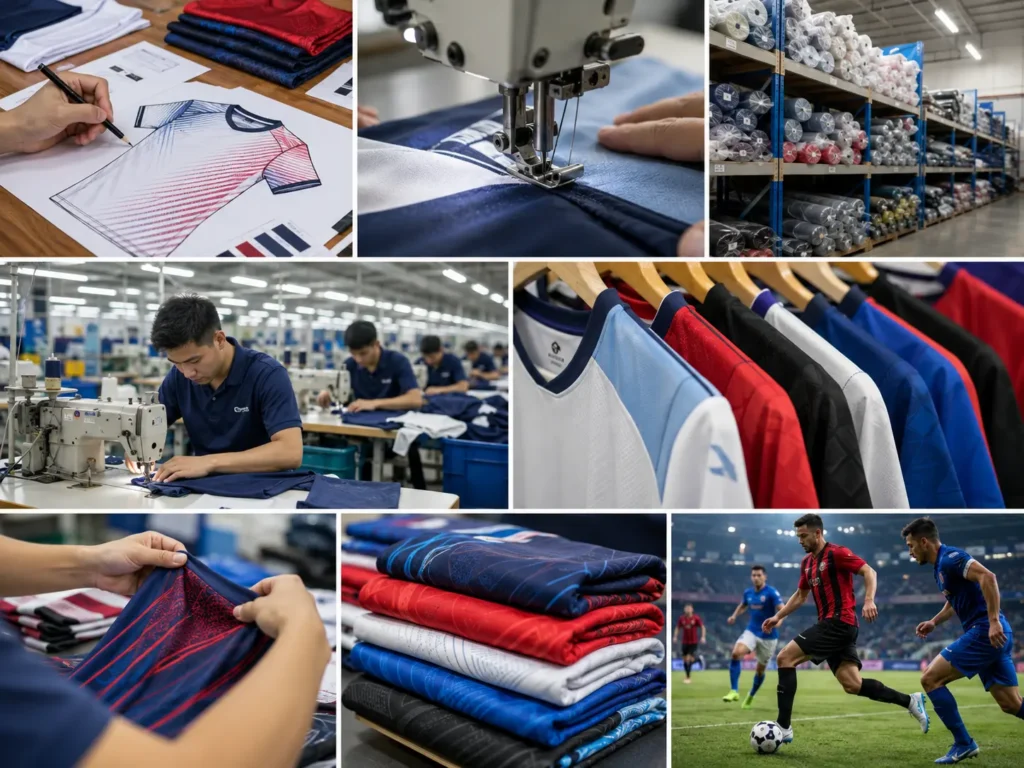
How to Choose Football Jerseys for Different Weather Conditions
Comfort depends partly on the environment. The same garment may feel suitable during a cool evening session but uncomfortable during an intense afternoon workout. Consider temperature, 습기, 바람, training intensity, and whether the activity takes place indoors or outdoors.
Hot and Humid Conditions
In hot, humid weather, look for a fabric construction that supports airflow and moisture movement, with a fit that does not create unnecessary contact pressure. Ventilation panels may help in selected areas, but actual results should be checked in a sample. A quick-drying claim should be supported by evidence if it is a deciding factor in a large purchase.
Color and opacity also matter. Dark and light garments can differ in how they absorb solar radiation, but the total effect depends on fabric construction, environmental conditions, and other garment properties. Avoid choosing a jersey based on color alone.
Cool Weather and Layering
When conditions are cool, players may wear a base layer beneath the jersey. The outer garment should allow enough room for the intended layers without restricting shoulder movement. A football jersey is not necessarily designed to provide insulation, so teams playing in cold weather may need a separate training top or weather-appropriate outer layer.
Indoor Training and Artificial Turf
Indoor spaces may have limited airflow, increasing the importance of evaluating how a jersey feels during sustained activity. Artificial-turf sessions may involve frequent contact with the ground and equipment, making snag resistance, seam durability, and ease of cleaning useful considerations. Test the garment in the environment where it will actually be used whenever possible.
Football Jersey Quality: Stitching, 인쇄, and Durability
Comfort must last beyond the first wear. Poor seam construction, uncomfortable labels, damaged prints, and distorted fabric can reduce the usefulness of an otherwise attractive jersey. 클럽 및 소매업체용, quality evaluation should cover both the textile and the finished garment.
Seam Construction and Stress Points
Inspect the shoulder seams, underarm joins, 측면 솔기, neckline, and any areas where panels meet. Stitch selection should match the fabric, seam location, expected movement, and required strength. No single stitching method is automatically best for every football jersey; the appropriate choice depends on the garment design and production requirements.
For a more technical comparison, review the principles behind stitching methods for high-tensile football jerseys. The useful takeaway is to ask how the seam performs under expected loads, whether it remains comfortable against the skin, and how it behaves after repeated wear and washing.
승화, Heat Transfer, and Other Decoration Methods
Decoration methods can affect the look, feel, and maintenance of a jersey. Sublimation is commonly used for suitable polyester materials and can integrate designs into the fabric rather than leaving a thick surface layer. Heat-transfer applications and embroidered elements may be appropriate for other design requirements, but their weight, 유연성, edges, and placement should be assessed.
Before approving production, inspect the decorated sample from both sides. Check whether names and numbers remain legible, whether edges lift, whether the decoration creates a stiff patch, and whether its care instructions are compatible with the team’s washing routine.
How Repeated Washing Affects Comfort
Repeated washing can reveal problems that are not obvious in a new garment. Depending on the fabric and finishing, issues may include color change, print deterioration, 수축, seam distortion, or a change in surface feel. ISO 105-C06 provides standardized laundering procedures for assessing textile colorfastness, while dimensional stability and decoration durability may require separate evaluations.
Follow the garment’s care label and avoid assuming that all polyester jerseys can be washed identically. Excessive heat, unsuitable chemicals, and aggressive drying can damage some materials or decorations. Teams should establish a consistent care routine and share it with players before the season begins.
How to Test Football Jerseys Before Placing a Team Order
Sample testing is one of the most practical ways to reduce procurement risk. A product photograph cannot show how a jersey moves, feels when damp, or fits different body shapes. Before placing a large order, define the intended use and evaluate a representative sample under realistic conditions.
Conduct a Structured Wear Test
Ask several representative wearers to try the jersey, ideally including different sizes and body shapes. Have them perform a short sequence of football-specific actions: 조깅, sprinting, raising the arms, rotating the torso, kicking, and changing direction. Record where the fabric pulls, where seams rub, and whether the hem or neckline shifts.
Evaluate Sweat, 마찰, 그리고 움직임
After training, ask wearers to report whether the garment feels sticky, 무거운, restrictive, or irritating. Record the environmental conditions and activity duration so results can be interpreted fairly. A small wearer panel provides useful practical feedback but should not be presented as a controlled scientific study or a universal comfort score.
Check Size Consistency and Production Quality
팀 주문의 경우, compare measurements across the requested size range and confirm tolerances with the supplier. Review color consistency, logo position, number alignment, 솔기 품질, 라벨, 그리고 포장. If the team expects future reorders, ask how the supplier manages specifications and color references across production batches.
| Evaluation Area | 확인해야 할 사항 | Evidence or Action |
|---|---|---|
| Fit and mobility | Shoulder movement, 가슴의 편안함, hem stability | Wear test with representative users |
| Moisture comfort | Cling, damp feel, drying experience | Training trial and relevant test reports |
| 건설 | 솔기, 라벨, panel joins, 마무리 손질 | Inside and outside sample inspection |
| Decoration | Print edges, number clarity, surface feel | Sample inspection and care-cycle testing |
| Consistency | Size measurements, 그림 물감, placement | Documented specification and quality checks |
What Should Clubs and Retailers Look for in a Football Jersey Manufacturer?
For bulk buyers, supplier selection involves more than finding an attractive sample. The manufacturer should be able to explain material choices, 사용자 정의 옵션, quality-control procedures, size availability, and the process for resolving specification differences. Clear communication before production can prevent problems that are difficult to correct after delivery.
Fabric Sourcing and Production Transparency
Ask for fiber composition, available fabric constructions, care instructions, and relevant test reports. If the product is promoted as moisture-wicking, 속건성, 재활용, or colorfast, ask what evidence supports the claim. Make sure the documentation refers to the actual material and finished product being supplied.
맞춤화, Size Range, and Reorder Capability
Clubs may need names, 숫자, 배지, 스폰서 마크, multiple colors, and a broad range of adult and youth sizes. Retailers may need consistent specifications across several batches. Discuss how designs are approved, how sizing is checked, and how replacement garments or future orders can match the original order.
What to Ask a Football Jersey Factory Before Ordering Wholesale
- Which fabric compositions and knit structures are available?
- Can the supplier provide samples and a written specification?
- What customization methods are available for names, 숫자, 및 로고?
- How are size measurements and production tolerances controlled?
- What quality checks are performed before shipment?
- Which labeling, care, and compliance documents can be supplied?
- How are color references and product specifications maintained for reorders?
When assessing a potential supplier, review its business background, communication process, product range, and ability to explain manufacturing decisions. A supplier’s own company information can help buyers understand its operating focus, but claims about production capability should still be confirmed through samples, 선적 서류 비치, and clear order specifications. Buyers who want to understand a supplier’s background can review its company profile and product focus as one part of their due-diligence process.
Why the Lowest Specification May Not Deliver the Best Value
A jersey with an appealing appearance may still create extra work if sizing is inconsistent, printing deteriorates, or the fabric is uncomfortable during use. Buyers should compare the complete specification and expected service life, not just the initial sample or one headline feature. 클럽의 경우, dependable replacement availability and consistent team appearance may be as important as the garment’s first-wear feel.
Safety, Labeling, and Compliance Considerations
Requirements vary by market, product type, and intended use. A supplier selling into the United States may need to address applicable textile fiber identification and care-labeling rules. Other markets can impose different textile labeling, chemical restrictions, 선적 서류 비치, and product-safety obligations. Buyers should verify the requirements that apply to their destination market instead of assuming one label format works everywhere.
Fiber Composition and Care Labels
In the United States, the Federal Trade Commission administers textile fiber identification requirements and care-labeling rules for covered products. Buyers should verify the applicable obligations for fiber content, responsible business identification, country-of-origin information, and care instructions. The precise requirements depend on the product and relevant legal provisions.
Restricted Chemicals and Supplier Documentation
Depending on the destination market and product specification, buyers may need evidence addressing applicable chemical restrictions, dyes, finishes, or other substances. Request documentation relevant to the actual product and market. Avoid treating a generic certificate as proof of compliance with every possible requirement.
Competition Rules for Colors and Numbers
Teams should check the current rules of their governing body or competition organizer. Requirements may cover player identification, shirt numbering, color conflicts, goalkeeper attire, and permitted markings. These sporting rules are separate from textile labeling and product-safety regulations, so both areas should be reviewed when relevant.
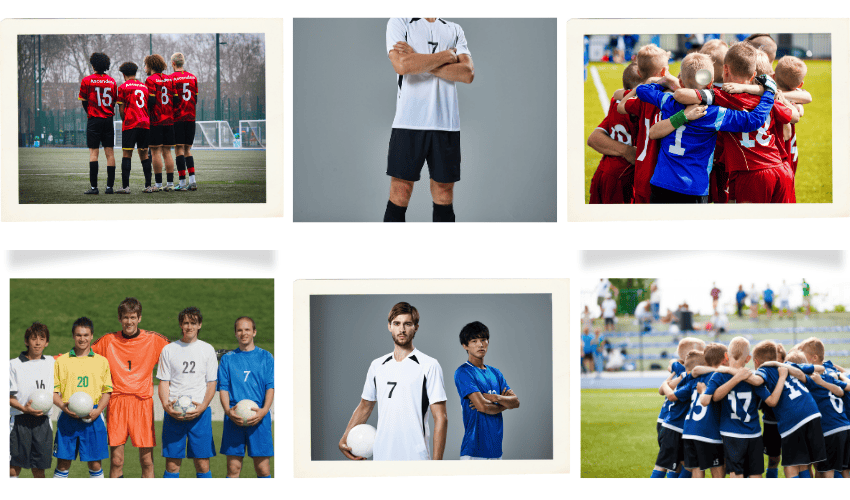
Football Jersey Trends: 편안, 맞춤화, and Responsible Materials
Several product-development directions are relevant to buyers. More inclusive sizing can help teams accommodate different body shapes. Targeted ventilation and varied knit structures can help manufacturers balance comfort with durability. Digital design workflows can also make it easier to review colors, 번호 매기기, and customization before production.
Material sourcing is another consideration. Recycled fibers may support a documented material strategy, but procurement teams should evaluate the evidence behind environmental claims and assess garment performance separately. A responsible purchase decision considers material transparency, 내구성, care requirements, and the practical likelihood that the garment will remain useful throughout its intended service life.
구매자를 위한, the important question is not whether a jersey follows a trend. It is whether its design, 재료, 사이징, and production process meet the needs of the people who will wear it and the organization that will maintain or resupply it.
Frequently Asked Questions About Comfortable Football Jerseys
1. What fabric is best for football jerseys?
Polyester is a common choice for football jerseys because it can be engineered into lightweight, durable knitted fabrics suitable for repeated activity and washing. 하지만, fiber content alone does not guarantee comfort. Buyers should compare knit construction, 공기 흐름, moisture-management evidence, garment fit, and care requirements. A sample wear test is useful when a team needs to choose between several fabric options.
2. How do you choose football jerseys for hot weather?
Look for a construction that supports airflow and moisture movement, with a fit that allows unrestricted movement without excessive fabric contact. Mesh panels may be helpful in selected areas, but their effectiveness depends on placement and construction. Consider humidity as well as temperature, and ask for relevant test data if quick drying or air permeability is a key purchasing requirement.
3. Should football jerseys fit tightly or loosely?
A football jersey should fit securely enough to remain in place while allowing the wearer to sprint, raise the arms, rotate the shoulders, and kick comfortably. Slim, 정기적인, and relaxed fits can all be appropriate depending on personal preference and intended use. Check garment measurements and test movement instead of relying on the size label alone.
4. What should teams check before ordering football jerseys in bulk?
Teams should confirm the fabric specification, 크기 범위, customization method, seam construction, color consistency, labeling, care instructions, and production tolerances. Request a sample and test it under realistic conditions before approving the full order. Buyers should also confirm quality-control procedures, delivery expectations, and how the supplier will handle replacements or future reorders.
5. How can football jerseys remain comfortable after repeated washing?
Follow the garment’s care label, use a suitable washing procedure, and avoid excessive heat or harsh treatments that may damage fabric or decoration. Before placing a large order, check whether the supplier can provide relevant colorfastness and dimensional-stability results. For frequently used teamwear, washing a sample according to the intended routine can reveal problems with print adhesion, 형태 유지, and surface feel.
참고자료
- ASTM 인터내셔널. ASTM D737-18(2023): Standard Test Method for Air Permeability of Textile Fabrics. ASTM 인터내셔널.
- 국제표준화기구. ISO 105-C06:2010: Textiles — Tests for Colour Fastness — Part C06: Colour Fastness to Domestic and Commercial Laundering. ISO.
- Federal Trade Commission. Textile Products Identification Act. United States Federal Trade Commission.
- Federal Trade Commission. Care Labeling of Textile Wearing Apparel and Certain Piece Goods, 16 CFR Part 423. United States Federal Trade Commission.
- 국제축구협회 이사회. 게임의 법칙: 플레이어’ Equipment. IFAB.
- 국제표준화기구. ISO 3758: Textiles — Care Labelling Code Using Symbols. ISO.
- European Parliament and Council of the European Union. Regulation (EU) 아니요 1007/2011 on Textile Fibre Names and Related Labelling and Marking of the Fibre Composition of Textile Products. European Union.
- 국제표준화기구. ISO 139: Textiles — Standard Atmospheres for Conditioning and Testing. ISO.
Final Checklist: Choose Football Jerseys with Confidence
Comfortable football jerseys are the result of matching materials, 맞다, 건설, and maintenance requirements to the intended use. For individual players, the priority is unrestricted movement and a comfortable feel throughout activity. 클럽의 경우, 학교, 및 소매업체, the decision also involves consistent sizing, documented specifications, 내구성, 맞춤화, and supplier reliability.
- Match the fabric construction to the climate and activity.
- Check fit through movement, not just while standing.
- Review seams, 라벨, 인쇄, and washing instructions.
- Ask for test methods and documentation behind performance claims.
- Test representative samples before confirming a bulk order.
- Verify applicable labeling and competition requirements.
- Agree on specifications, tolerances, and reorder procedures with the supplier.
A thoughtful selection process reduces avoidable purchasing risks and helps players focus on training and competition instead of adjusting an uncomfortable shirt. If you are evaluating customized teamwear, prepare your target sizes, preferred fabric, usage conditions, decoration requirements, and expected order quantity before requesting a specification or sample. This creates a clearer basis for comparing options and choosing a product that suits your team’s actual needs.