Why Color Matching Matters More Than Most Teams Think
A youth academy arrives at a weekend tournament with a navy home kit and a dark purple away kit. Both sets looked stylish in the digital mockup. The club logo was sharp, the sponsor looked clean, and the players loved the modern gradient design. Then the first match begins under cloudy light, and everything changes.
From the sideline, players become difficult to separate. The referee struggles to identify quick tackles. Coaches shout instructions, but several players cannot instantly recognize teammates in fast movement. The problem is not the quality of the jersey. The problem is poor visual differentiation.
그렇기 때문에 축구 유니폼 세트 must be designed for real match conditions, not only product photos. A good soccer kit should look professional, but it must also work under sunlight, artificial lighting, 비, sweat, distance, 속도, and video recording. If the home and away kits are too close in tone, the entire team looks less organized before the game even develops.
Football’s Laws of the Game require teams to wear colors that distinguish them from each other and from match officials; goalkeepers must also be distinguishable from other players and officials. That makes kit color contrast more than a style preference. It is part of match-day functionality.
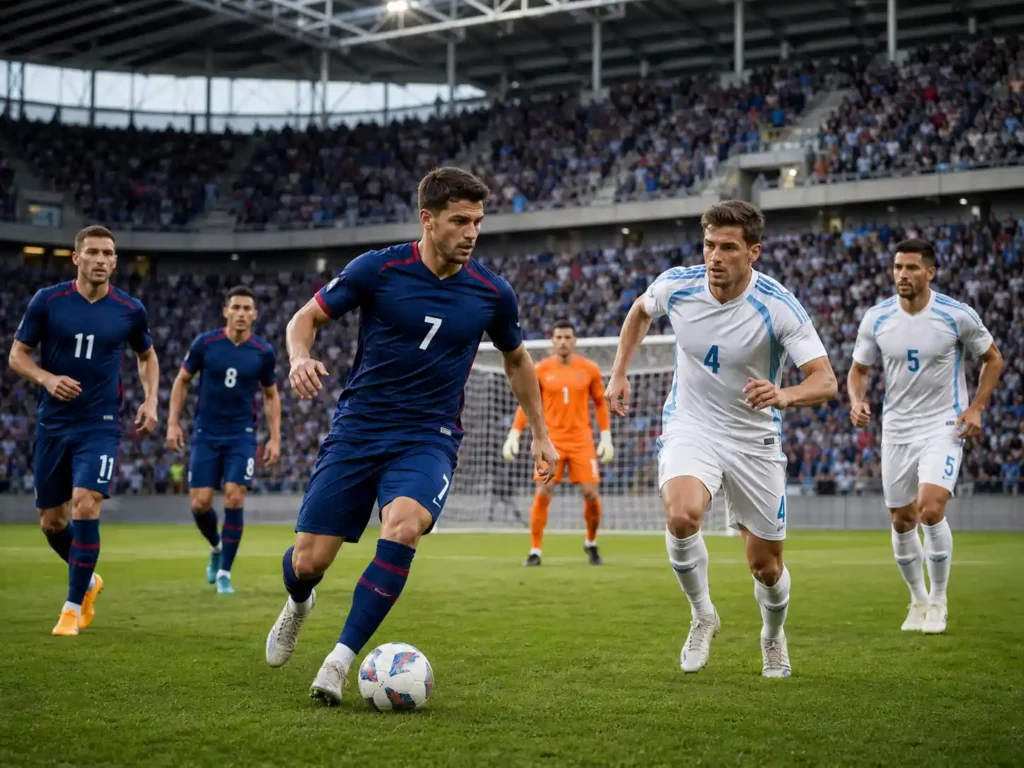
The Core Design Rule: Recognition Comes Before Decoration
The first rule of color matching is simple: a soccer uniform must be recognizable in motion. A jersey can look beautiful on a screen but fail on the pitch. Fast movement reduces detail. Distance reduces pattern clarity. Similar dark tones merge together. Small sponsor colors disappear. Complex gradients may look fashionable but make the number zone harder to read.
For clubs and schools preparing for major events, sourcing should begin with purpose, not only appearance. A useful planning reference is football jersey sourcing because kit buying is not just about picking colors. It includes fabric, 사이징, production method, color consistency, 로고 배치, match regulations, 포장, and delivery planning.
The best home and away systems usually follow one of three structures. The home kit carries the club’s strongest identity. The away kit provides clear contrast. The goalkeeper kit stays separate from both teams and the officials. That sounds basic, but many teams forget the third part until the referee points it out on match day. By then, the design mistake has already become a logistics problem.
홈 대. Away Soccer Jerseys: What Should Be Different?
A home kit should express identity. It normally uses the club’s main color, school color, historic stripe, or brand style. It can be bold, 감정적인, and recognizable. The away kit has a different job. It should reduce color clashes and work against common opponent kits.
If the home kit is navy, 검은색, dark green, or burgundy, the away kit should usually move toward white, 밝은 회색, sky blue, 노란색, cream, or another clear light color. If the home kit is white or pale, the away kit should move toward a stronger dark or saturated tone. UEFA equipment regulations also emphasize clear contrast between first-choice and second-choice player attire; if one kit is predominantly dark, the other should generally be predominantly light.
| Home Kit Base Color | Safer Away Kit Direction | Risky Away Kit Choice |
|---|---|---|
| Navy | 하얀색, sky blue, silver, 노란색 | 검은색, 어두운 보라색, 로얄 블루 |
| 빨간색 | 하얀색, cream, 밝은 회색 | Maroon, 주황색, dark pink |
| 녹색 | 하얀색, light gold, pale grey | Dark teal, 검은색, forest green |
| 검은색 | 하얀색, silver, bright yellow | Navy, charcoal, 어두운 갈색 |
| Royal Blue | 하얀색, 주황색, 밝은 회색 | Navy, purple, dark teal |
| 노란색 | Navy, 검은색, 로얄 블루 | 하얀색, pale cream, neon lime |
| 하얀색 | 검은색, 해군, 빨간색, 녹색 | Pale grey, cream, light yellow |
For buyers ordering custom soccer jersey sets, the safest method is to review home and away designs side by side before production. Do not approve them separately. A home shirt may look good. An away shirt may also look good. But if the two kits do not create enough contrast together, the full uniform system fails.
Number Visibility: The Detail That Can Make or Break a Kit
A jersey number is not decoration. It is a recognition tool. Referees use it for fouls and substitutions. Coaches use it for tactical instructions. Tournament organizers use it for registration and match records. Parents and fans use it to follow players. If the number is hard to read, the kit creates confusion.
UEFA equipment rules require player numbers to be clearly legible and contrast with the shirt background; its regulations also include formal color-contrast measurement procedures.
| Jersey Base Color | Recommended Number Color | Avoid |
|---|---|---|
| 검은색 | 하얀색, silver, bright yellow | Navy, dark grey |
| 하얀색 | 검은색, 해군, 빨간색 | Pale grey, cream |
| 빨간색 | 하얀색, 노란색, black outline | Maroon, 주황색 |
| Navy | 하얀색, light blue, 노란색 | 검은색, purple |
| 녹색 | 하얀색, gold, black outline | Dark teal, forest green |
| 노란색 | 검은색, 해군, dark green | 하얀색, pale grey |
| Light Blue | Navy, 검은색, dark red | 하얀색, silver |
The back number zone should stay cleaner than the rest of the shirt. If the kit uses stripes, gradient, 위장, abstract graphics, or geometric panels, add a solid number panel or use strong outline contrast. A kit can be creative on the front, but the back must remain readable. Fancy design is nice; unreadable numbers are just expensive confusion in polyester form.
Fabric and Breathability Affect Color Performance
Color is not only a graphic decision. Fabric structure affects how color appears after production. A smooth polyester interlock fabric may show sharper sublimation colors. A breathable mesh fabric may soften the visual output because of its open structure. A jacquard texture may create a premium feel but can slightly change how light reflects from the surface.
For hot climates, 여름 토너먼트, and high-intensity matches, breathability must be considered together with color matching. Dark home kits may look strong, but they can feel hotter under direct sun. Light away kits can help visual contrast while also feeling more comfortable in warm conditions. Buyers comparing fabric performance can use soccer jersey breathability test guidance to understand how airflow, moisture transfer, and fabric structure influence match comfort.
| 원단 종류 | 일반적인 GSM 범위 | 최고의 사용 | Color Performance |
|---|---|---|---|
| Polyester Interlock | 140-160GSM | Standard match jerseys | Smooth and clear color output |
| 폴리에스테르 메쉬 | 130-150GSM | Hot-weather training and match kits | Better airflow, slightly softer print effect |
| Polyester Jacquard | 145-170GSM | Premium club jerseys | Textured surface, professional appearance |
| 폴리에스테르-스판덱스 혼방 | 160-190GSM | Fitted performance kits | Stretch comfort, good body movement |
| 재활용 폴리에스테르 | 140-170GSM | Eco-focused club kits | Depends on yarn and dye stability |
Sports textile research has repeatedly connected thermal comfort with fiber type, fabric structure, 수분 수송, 공기 투과성, and drying behavior. 축구유니폼의 경우, this means buyers should not treat color and fabric separately. A visually perfect kit that traps heat, dries slowly, or feels heavy during play will still disappoint athletes.
Sizing Also Changes the Visual Result
Even the best color design can fail if the fit is wrong. A jersey that is too tight may distort side panels, shoulder graphics, or sponsor placement. A jersey that is too loose may make numbers wrinkle and reduce readability. Shorts that are too long or too wide may weaken the full kit silhouette.
Before approving a bulk order, buyers should confirm three critical dimensions: 가슴 너비, 몸길이, 그리고 어깨넓이. For clubs and academies ordering across age groups, size grading is especially important. A useful starting point is the soccer jersey size chart because fit affects both comfort and appearance.
| 적합 계수 | Visual Impact | 무시할 경우 구매자의 위험 |
|---|---|---|
| 가슴 폭 | Affects front logo and player comfort | Tight fit distorts graphics |
| 몸길이 | Controls overall proportion | Too short looks unprofessional |
| 어깨 너비 | Affects sleeve and panel alignment | Poor fit limits movement |
| 소매 길이 | Affects arm comfort and style | Too long may feel heavy |
| Shorts Length | Affects full-kit balance | Bad silhouette in team photos |
| Sock Color | Helps lower-body recognition | Weak contrast during play |
청소년 팀의 경우, do not simply scale adult jerseys down. Children’s body proportions differ, and sizing errors become obvious during movement. For adult clubs, confirm whether the order needs regular fit, slim fit, or performance fit. This one detail can prevent a lot of “Why does this look different from the mockup?” complaints.

Custom Design Helps Clubs Build Identity
A well-designed kit does more than separate home and away colors. It builds emotional identity. Schools want colors that represent tradition. Clubs want patterns that fans recognize. Academies want professional-looking uniforms that help players feel part of a serious program. Sponsors want visibility. Coaches want order. Players want pride.
그렇기 때문에 클럽과 학교를 위한 맞춤형 축구 유니폼 are not just about printing names on shirts. They help teams control identity, improve consistency, support event branding, and create a stronger match-day image.
아직, customization needs discipline. Too many colors can weaken recognition. Too many patterns can reduce number clarity. Too much sponsor detail can make the jersey look crowded. A smart design system usually uses one dominant home color, one clear away contrast color, one accent color, and one highly readable number color. That is enough. If the design needs five main colors to look interesting, the problem may be the design, not the color palette.
How to Choose a Reliable Soccer Jersey Manufacturer
For B2B buyers, color matching is also a manufacturing issue. The same Pantone color can look slightly different on different fabrics, printing machines, or production batches. Sublimation color may appear brighter on screen than on fabric. Logos may shift if artwork is not properly prepared. This is why supplier capability matters.
전문가 soccer jersey manufacturer should support buyers with sample development, size grading, fabric recommendations, print testing, color confirmation, bulk production, and packaging control. 클럽의 경우, 학교, 유통업체, and tournament organizers, this reduces the risk of receiving uniforms that look different from the approved design.
| Supplier Capability | 중요한 이유 |
|---|---|
| Fabric Sample Support | Confirms real color output |
| Sublimation Proofing | Reduces digital-to-fabric color mismatch |
| Size Range Planning | Supports youth and adult teams |
| Logo Placement Control | Protects team and sponsor identity |
| Bulk Color Consistency | Prevents shade variation across orders |
| Quality Inspection | Reduces defects before shipping |
| Packaging Support | Helps team distribution |
| Fast Communication | Reduces production delays |
A weak supplier may still produce a decent-looking sample, but bulk production is the real test. Teams should always confirm sample approval, 사이즈 차트, logo file quality, color reference, 리드타임, and packaging method before placing a full order.
Performance and Comfort Should Shape Color Decisions
A jersey color may look great, but if the fabric is heavy, hot, or poorly ventilated, players will feel the problem quickly. Soccer is a high-movement sport involving sprinting, 선회, 땀을 흘리는, contact, and repeated acceleration. The fabric should support moisture movement, 공기 흐름, 그리고 편안함.
For clubs comparing comfort options, best soccer uniforms for performance and comfort can help connect design decisions with real match requirements. In practical terms, hot-weather teams may prefer lighter colors and breathable mesh panels. Cold-weather teams may care more about layering compatibility. Youth teams may need durable fabrics that survive frequent washing. Competitive clubs may prioritize lightweight performance cuts.
| Match Condition | Better Color/Fabric Direction | 이유 |
|---|---|---|
| Hot Outdoor Matches | Light away kit, breathable mesh | Reduces heat stress perception |
| Evening Matches | High-contrast numbers and accents | Improves visibility under lights |
| Rainy Conditions | Strong color contrast, durable print | Prevents dull visual appearance |
| Youth Tournaments | Simple high-contrast designs | Easier player recognition |
| Competitive Clubs | Lightweight polyester, clean number zone | Supports speed and clarity |
| School Teams | Durable fabric, strong identity colors | Handles frequent use |
Do not design only for the team photo. Design for the 80th minute, when players are sweating, the light is changing, and the referee needs to identify a number immediately.
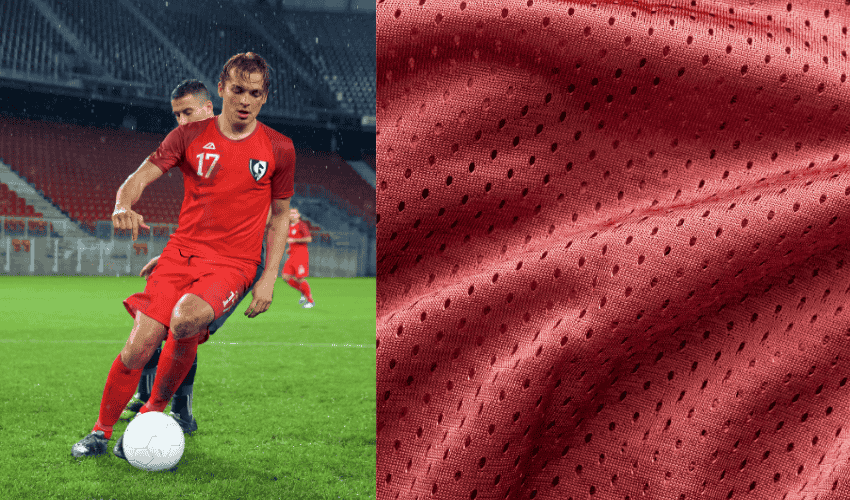
Recommended Fabrics for Soccer Jersey Sets
Fabric choice should match climate, playing level, 예산, 인쇄 방법, and team expectations. Polyester remains the most common choice because it is lightweight, printable, and suitable for performance sportswear. Mesh structures improve ventilation. Jacquard fabrics add texture. Spandex blends improve stretch. Recycled polyester supports sustainability positioning.
A helpful reference for buyers is 축구유니폼 추천 원단 because the fabric affects not only comfort but also print clarity, color brightness, 내구성, and bulk production stability.
| Fabric Option | 최고의 대상 | Buyer Advantage | Possible Limitation |
|---|---|---|---|
| Polyester Interlock | Standard match kits | Smooth print, stable structure | Less airflow than mesh |
| 폴리에스테르 메쉬 | Hot-weather teams | 더 나은 환기 | Color may appear softer |
| 자카드 폴리에스테르 | Premium club kits | Textured, professional appearance | Slightly higher production complexity |
| 폴리에스테르-스판덱스 | Performance fit jerseys | Better stretch and mobility | Needs careful size control |
| 재활용 폴리에스테르 | Eco-focused programs | Sustainability appeal | Must confirm color and hand feel |
| Bird-Eye Mesh | Training and match use | Breathable and durable | Pattern may reduce fine graphic sharpness |
The best fabric is not always the most expensive one. If a school needs durable uniforms for repeated washing, practical polyester may be better than a delicate premium option. If a club needs elite match kits, lightweight breathable fabric with stable sublimation performance becomes more important.
Common Mistakes and Consequences
The first mistake is designing home and away kits too similarly. This can lead to match-day clashes, emergency bibs, referee objections, or last-minute kit changes.
The second mistake is ignoring number contrast. If the back number disappears into a stripe, gradient, or dark background, the jersey fails one of its main functions.
The third mistake is choosing colors from screen mockups only. Digital color is not fabric color. Buyers should request physical samples or printed proof.
The fourth mistake is forgetting the goalkeeper kit. The goalkeeper must stand apart from both teams and officials, so it should not simply reuse the away color.
The fifth mistake is treating shorts and socks as afterthoughts. A shirt may contrast well, but the full silhouette may still look too close to the opponent’s set.
Smart Buying Checklist Before Production
| Checklist Item | 중요한 이유 |
|---|---|
| Home and away contrast confirmed | Prevents match-day confusion |
| Number visibility tested | Helps referees, 코치, and spectators |
| Shirt, 반바지, and socks reviewed together | Ensures full-kit differentiation |
| Goalkeeper colors selected separately | Avoids rule and visibility issues |
| Fabric sample approved | Confirms real color and hand feel |
| Size chart confirmed | Reduces fit complaints |
| Printing method selected | Affects durability and comfort |
| Logo file checked | Protects brand clarity |
| Bulk proof approved | Reduces production mistakes |
| Packaging plan confirmed | Helps club distribution |
For teams ready to discuss designs, samples, or bulk orders, the practical next step is to contact a soccer jersey supplier with the team logo, preferred colors, 크기 범위, 수량, 배송 일정, and any league requirements. A good supplier should help test the design logic before production, not just print whatever is sent.
최종 권고사항: Build Kits for Real Matches, Not Just Mockups
좋은 축구 유니폼 세트 should look sharp, but they must also work on the field. The best designs balance identity, contrast, number readability, 패브릭의 편안함, 크기 정확도, and production reliability. Home kits should communicate team identity. Away kits should solve color clash problems. Goalkeeper kits should stand clearly apart.
클럽의 경우, 학교, 아카데미, 도매업자, and tournament buyers, the smarter approach is simple: design the full system before approving the first sample. Check home vs. away contrast. Confirm number visibility. Test the fabric. Review sizing. Plan goalkeeper colors. Approve the real production proof before mass manufacturing.
A beautiful jersey gets attention. A well-designed jersey set prevents confusion, improves professionalism, and helps players perform with confidence. That is the real value of smart color matching.
자주 묻는 질문
1. How do you choose colors for home and away Soccer Jersey Sets?
To choose colors for home and away Soccer Jersey Sets, start with the team’s primary identity color for the home kit, then select a clearly contrasting away color. If the home kit is dark, the away kit should usually be light. If the home kit uses stripes, 그라데이션, or bold patterns, the away kit should be cleaner and easier to identify. Buyers should also check number contrast, 반바지, 양말, goalkeeper colors, and real fabric output before confirming bulk production.
2. Why do soccer teams need different home and away jerseys?
Soccer teams need different home and away jerseys to reduce color clashes during matches. Clear visual separation helps players recognize teammates, referees identify fouls and substitutions, coaches give instructions, and spectators follow the game. A home kit usually represents team identity, while an away kit provides practical contrast against opponents. Without proper differentiation, teams may face match-day confusion, referee concerns, or the need to use temporary bibs.
3. What color numbers are best for soccer jerseys?
The best number color depends on the jersey base color, but the main rule is strong contrast. Dark jerseys usually need white, silver, 노란색, or another light number color. Light jerseys usually need black, 해군, 빨간색, or another dark number color. Patterned jerseys should use a clean number zone or strong outline to improve readability. Buyers should test number visibility from distance, under different lighting, and on real fabric before approving production.
4. What fabric is best for custom soccer jersey sets?
Polyester-based performance fabric is commonly used for custom soccer jersey sets because it is lightweight, printable, 속건성, and suitable for sublimation printing. Polyester interlock provides smooth color output, mesh fabric improves breathability, jacquard polyester adds texture, and polyester-spandex blends improve stretch. The best fabric depends on climate, playing level, 취향에 맞게, 인쇄 방법, and budget. Buyers should request fabric samples before confirming bulk orders.
5. What should buyers check before ordering bulk Soccer Jersey Sets?
Before ordering bulk Soccer Jersey Sets, buyers should confirm home and away color contrast, number visibility, full kit design, goalkeeper colors, 직물 유형, 사이즈 차트, 로고 배치, 인쇄 방법, 샘플 승인, production lead time, 포장, 및 배송 일정. They should avoid approving designs based only on digital mockups because screen colors may differ from fabric output. A physical proof or pre-production sample helps reduce mistakes before mass manufacturing.
참고자료
- “게임의 법칙 2025/26: 법 4 – The Players’ Equipment,” The International Football Association Board, IFAB Laws of the Game.
- “Law 4 – The Players’ Equipment,” The Football Association, The FA Laws and Rules.
- “UEFA Equipment Regulations: Colour Choices and Combinations,” UEFA, UEFA Technical Regulations.
- “UEFA Equipment Regulations: Numbers,” UEFA, UEFA Technical Regulations.
- “UEFA Equipment Regulations: Measurement of Colour Contrast,” UEFA, UEFA Technical Regulations.
- “Finding Neymar: The Role of Colour in the Detection and Discrimination of Football Players,” L. Burnell, PeerJ / National Library of Medicine.
- “Thermoregulatory Comfort Properties of Sports Jersey Fabric: A Review,” S. ㅏ. Suhaimi, Journal of Mechanical Engineering.
- “Factors Affecting the Sweat-Drying Performance of Active Sportswear,” S. 나스린, Textiles Journal.
Semantic Closure Content Block: Soccer Jersey Sets Color Matching and Buyer Decision Logic
What makes color matching important for Soccer Jersey Sets? Color matching affects more than visual style. It influences player recognition, referee decisions, number readability, 팀 정체성, camera visibility, and match-day professionalism. A soccer jersey set must be easy to distinguish during real movement, not only attractive in a digital mockup.
Why should home and away soccer jerseys be clearly different? Home kits usually represent the club’s main identity, while away kits should reduce color clash risk. If the home kit is dark, the away kit should usually be light. If the home kit is patterned, the away kit should be cleaner. This helps players, referees, 코치, and spectators identify teams quickly during play.
How should buyers choose the right color system? Buyers should choose one dominant home color, one clearly contrasting away color, one readable number color, and one separate goalkeeper color. The full set should be reviewed together, including shirt, 반바지, 양말, 로고, 스폰서 그래픽, and number zones. A kit that looks good separately may still fail when compared with the away set or opponent colors.
What risks should buyers avoid before bulk production? Buyers should avoid approving designs based only on digital mockups, using low-contrast numbers, choosing home and away kits that are too similar, ignoring fabric color output, forgetting goalkeeper colors, and overlooking size accuracy. These mistakes may cause match-day confusion, player complaints, poor brand presentation, and unnecessary remake costs.
What is the best recommendation for clubs, 학교, and distributors? The safest approach is to design Soccer Jersey Sets around real match use. Use strong contrast between home and away kits, keep the number zone clean, select breathable fabric for performance, confirm sizing before production, and request physical proof before mass manufacturing. This reduces risk and improves both appearance and function.
Final buyer insight: Soccer jersey color matching should be treated as a performance and identity decision, not only a design preference. Buyers who evaluate visibility, 구조, 사이징, 인쇄, and production support will receive uniforms that look professional, perform better on the field, and represent the team more clearly.