Camisetas de fútbol personalizadas: Build a Better Teamwear Buying Strategy
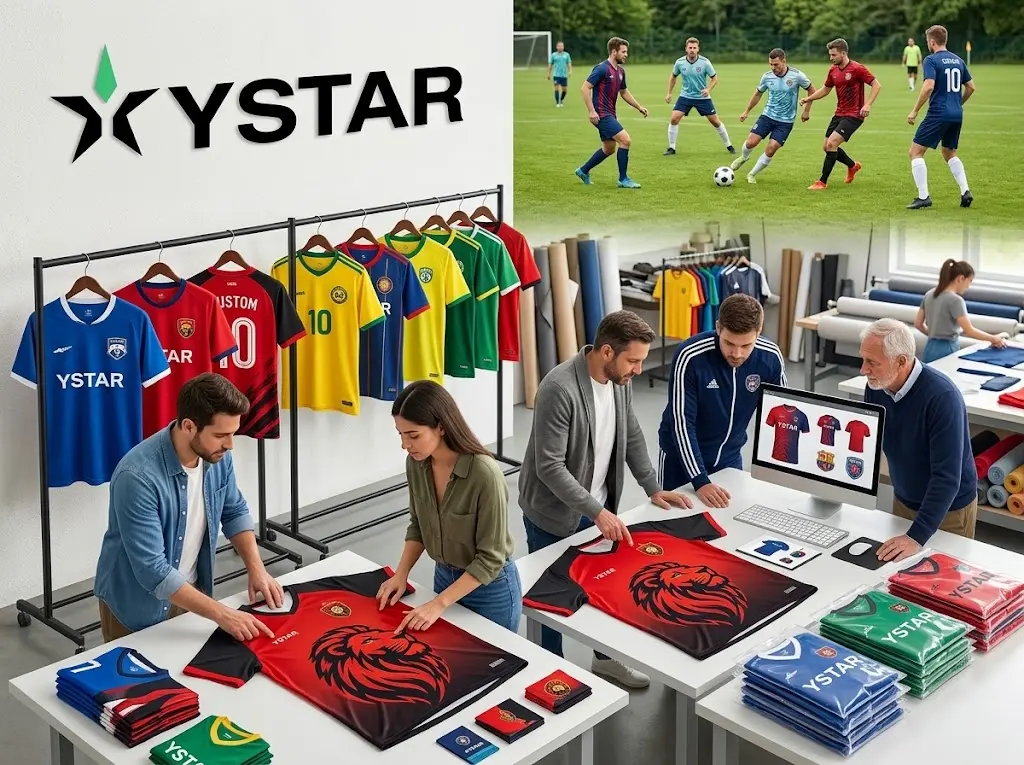
Ordering Camisetas de fútbol personalizadas is more than choosing a colour and printing a team name. para clubes de futbol, escuelas, academias, sports retailers, mayoristas, and private-label brands, the right buying decision must balance fabric performance, adaptar, design accuracy, production consistency, delivery schedules, and total landed cost. A jersey that looks impressive in a digital mockup may still disappoint if the fabric feels uncomfortable, the sizing varies between batches, or the printed numbers deteriorate after repeated washing.
Quick Summary for Football Jersey Buyers
The purchasing process also differs by business model. A local club may prioritise player comfort and reliable replacement orders, while a distributor needs repeatable sizing, competitive wholesale economics, packaging consistency, and dependable fulfilment. Businesses planning to sell complete kits can compare available custom soccer uniforms and football teamwear as part of a broader product assortment.
This guide explains how to select materials, compare decoration technologies, assess suppliers, and reduce the commercial risks associated with bulk jersey orders. The objective is to help buyers create a clear specification before requesting quotations, so that supplier proposals can be compared on equivalent terms rather than price alone.
1. Who Should Buy Custom Football Jerseys?
Football clubs, escuelas, y academias
Organised teams usually require consistent colours, nombres de jugadores, squad numbers, and dependable sizing across multiple age groups. Clubs may also need home, away, goalkeeper, capacitación, and warm-up apparel. Establishing a standard specification makes replacement orders easier because the club can refer to approved fabric, measurements, colores, and decoration details instead of starting from scratch every season.
Wholesalers, distributors, and sporting-goods retailers
Wholesale buyers have different priorities. They need products that can be reordered, packaged efficiently, and sold across multiple customer segments. The commercial value of wholesale custom football jerseys depends on more than the factory quotation: freight, duties, inspection, defective units, inventory risk, and customer service can all influence the final margin.
Private-label brands and tournament organisers
Private-label businesses may need custom neck labels, branded packaging, exclusive artwork, and a repeatable product range. Tournament organisers often need a fixed delivery date, accurate team allocation, and a clear process for collecting names and numbers. In both cases, written artwork approval and a confirmed production schedule are essential.
Before approaching suppliers, define whether the order is for one team, a multi-team programme, a retail collection, or a recurring wholesale range. That decision affects the appropriate fabric, método de decoración, size distribution, packaging requirements, y cantidad del pedido.
2. How to Choose the Right Football Jersey Fabric
Fabric selection affects comfort, flujo de aire, apariencia, drying behaviour, durabilidad, and production cost. Polyester is commonly used in performance football shirts because it can provide a lightweight construction, dries relatively quickly under suitable conditions, and works well with dye-sublimation printing. Sin embargo, fibre content alone does not establish garment quality. Knit structure, yarn characteristics, refinamiento, garment pattern, and manufacturing control also matter.
Understand the main fabric constructions
- Polyester interlock: A balanced knitted structure that can provide a smooth surface and a consistent appearance. It is worth evaluating for team jerseys and retail collections where print clarity and everyday wear matter.
- Micro-mesh and open-mesh knits: These constructions can support airflow through their structure. Buyers should inspect transparency, snagging, surface stability, and comfort before choosing a more open knit.
- Bird’s-eye or textured performance knits: These may offer a distinctive surface and useful air movement, depending on the specific construction. The name alone does not guarantee a particular performance level.
- Poliéster reciclado: This may suit brands with material-sourcing objectives. Buyers should request documentation that supports any recycled-content claim and confirm whether the fabric is compatible with the chosen decoration process.
Technical fabric comparison
The following values are indicative purchasing categories, not universal industry specifications. Fabric weight should be confirmed on the actual sample because a higher GSM does not automatically mean better performance.
| Fabric direction | Indicative GSM range | Potential application | What buyers should check |
|---|---|---|---|
| Lightweight polyester performance knit | Approximately 100–140 g/m² | Training shirts and lightweight team jerseys | Opacidad, snagging, cubrir, and seam stability |
| Midweight polyester knit | Approximately 140–180 g/m² | General teamwear and retail jerseys | Comodidad, print clarity, dimensional stability, and hand feel |
| Structured or heavier performance knit | Approximately 180–220 g/m² | Selected training, estilo de vida, or heavier jersey styles | Weight during activity, flexibilidad, and intended climate |
Importante: The ranges above are practical examples for initial sourcing discussions, not verified performance benchmarks or mandatory specifications. Actual fabric weight, fibre composition, and performance should be established from the supplier’s current technical sheet and approved sample.
Where moisture management is important, request evidence rather than relying only on marketing descriptions such as “quick-dry” or “breathable.” The American Association of Textile Chemists and Colorists publishes methods for assessing liquid moisture management, wicking, drying behaviour, and other textile properties. A buyer can ask which test method is relevant to the intended use and whether a test report is available for the proposed material.
3. Which Custom Football Jersey Printing Method Is Best?
Printing determines how the design appears, how it feels against the skin, how production is organised, and how well the finished garment meets the buyer’s requirements. The best method depends on fabric compatibility, artwork complexity, cantidad, presupuesto, and expected use.
Dye sublimation for all-over designs
Sublimated football jerseys are commonly produced using polyester-compatible dye-sublimation processes. The design is transferred into the polymer-based material under controlled heat and pressure, allowing colours, gradientes, patrones, and sponsor graphics to be incorporated without creating the same type of raised film associated with many surface-applied transfers.
Sublimation is particularly worth considering for complex artwork and coordinated team collections. It is not suitable for every fibre or garment construction, and colour results depend on the fabric, ink system, process settings, and production control. A physical sample is the most practical way to evaluate the final appearance.
Heat transfer for names, números, and selected graphics
Heat-transfer decoration can be useful when player names or numbers must be added to existing garments or when individual personalisation is required. Buyers should specify the transfer material, application instructions, colocación, and expected washing conditions. Poor adhesion, edge lifting, agrietamiento, or unwanted stiffness can become costly after jerseys reach the customer.
Screen printing and embroidery
Screen printing may suit certain repeat graphics and simpler artwork, subject to fabric and ink compatibility. Embroidery can create a textured crest or brand mark, but its weight, backing, stitch density, and placement should be evaluated on lightweight performance garments. A large embroidered area may be less comfortable or flexible than a suitable printed alternative.
| Método | Best-fit scenario | Main advantage | Risk to verify |
|---|---|---|---|
| Dye sublimation | Polyester jerseys with complex or all-over designs | Broad design flexibility and a low-profile finish | Fabric compatibility, colour reproduction, and process consistency |
| Transferencia de calor | Personalised names, números, and selected logos | Flexible individual decoration | Adhesion, agrietamiento, peeling, y durabilidad al lavado |
| Impresión de pantalla | Suitable repeat graphics and simpler designs | Established production option for compatible artwork | Ink compatibility, surface feel, and artwork limitations |
| Bordado | Selected crests and brand details | texturizado, raised appearance | Peso, backing, flexibilidad, and skin comfort |
Do not choose a printing method based only on the lowest quoted price. Request a sample showing the actual fabric, colores, cresta, sponsor artwork, and player number. If the order includes multiple garment colours or fabric constructions, confirm whether the approval sample represents each relevant production variation.
4. Diseño, Adaptar, Sizing, and Personalisation
A successful jersey design combines visual identity with practical wearability. Team colours, colocación de la cresta, logotipos de patrocinadores, nombres de jugadores, and numbers should be defined before production. For match use, buyers should also review the applicable competition rules rather than assuming that every design element is permitted.
Create a complete design specification
- Define home, away, goalkeeper, and training designs where required.
- Provide approved artwork files and clear colour references.
- Confirm the size, location, and scale of each crest, sponsor mark, nombre, and number.
- Provide a final roster with spelling, number assignments, and garment sizes.
- Specify youth, adulto, De las mujeres, de los hombres, or unisex fit requirements as applicable.
- Approve a digital mockup and, when the risk or order value justifies it, a physical sample.
Size labels are not a substitute for garment measurements. Ask the supplier for a measurement chart that defines points such as chest width, longitud del cuerpo, and sleeve length. Confirm whether each measurement refers to the garment laid flat or the body, and clarify the permitted measurement tolerance.
For teams with a broad range of body sizes, consider a size-set sample or fit review before bulk production. A spreadsheet containing player names, números, tallas, and design variations can reduce transcription errors. The roster should have one designated approver, and changes after artwork approval should be documented so that late amendments do not become hidden production risks.
Businesses planning a long-term apparel programme should also evaluate the supplier’s broader capabilities, communication process, and approach to repeat orders. Reviewing the supplier’s company background and manufacturing approach can help buyers prepare more specific questions about production responsibilities, personalización, and quality management.
5. How Custom Football Jerseys Are Manufactured
Understanding the production sequence helps buyers identify where errors can occur and where approval is necessary. Although factory workflows vary, a typical custom jersey order moves through specification, artwork confirmation, sampling, material preparation, decoration, cutting, de coser, inspection, and packing.
From buyer brief to approved sample
The buyer supplies the design brief, garment specifications, desglose del tamaño, cantidad de pedido, delivery destination, and required delivery date. The supplier checks whether the proposed fabric, método de impresión, obra de arte, and construction can meet the brief. Any uncertainty about fabric availability, special colours, etiquetas, or individual personalisation should be resolved before production is scheduled.
Material preparation, decoration, and assembly
Production may involve fabric inspection, printing or other decoration, pattern cutting, de coser, attachment of labels, and finishing. For sublimation workflows, artwork placement and fabric preparation are particularly important. For transfers or embroidery, the decoration must be checked for alignment, adhesion or stitch quality, y comodidad.
Inspection, packing, and dispatch
Finished jerseys should be checked against the approved specification. Inspection may include measurements, colour appearance, print placement, costuras, garment identity, and roster accuracy. Packing lists should match the carton contents, particularly when multiple teams, tallas, or destinations are included.
For buyers comparing suppliers, the key question is not simply whether a factory can manufacture a sample. It is whether the supplier can reproduce the approved sample consistently across the complete order and explain how nonconforming products will be handled.

6. Wholesale Pricing, Minimum Order Quantity, and Lead Times
The cost of Camisetas de fútbol personalizadas depends on the product specification and commercial terms. Fabric type, construccion de prendas de vestir, artwork complexity, método de decoración, number of colourways, personalisation, etiquetas, embalaje, order volume, and shipping requirements can all influence the quotation.
Compare total landed cost, not only unit price
A low factory price may not represent the lowest total cost if the buyer later pays for extra decoration, separate packing, expedited freight, customs duties, rework, or replacement garments. Ask each supplier to quote the same specification and clearly separate the product price from sampling, tooling or setup charges where applicable, freight, insurance, and other agreed costs.
| Cost factor | What can change the cost | Buyer action |
|---|---|---|
| Fabric and construction | Material specification, estructura de punto, panels, and finishing | Request the exact fabric specification and sample |
| Artwork and decoration | Design complexity, proceso de impresion, and individual details | Submit final artwork and confirm every decoration location |
| Ordene la cantidad | Batch size, colourways, size distribution, and setup requirements | Request quantity breaks and clarify the MOQ for each variation |
| Packaging and labels | Individual bags, hangtags, custom labels, and retail packaging | Specify packaging before the quotation is finalised |
| Logistics and risk | Destination, transport mode, duties, inspection, and delivery urgency | Compare the same delivery terms and estimate landed cost |
There is no universal minimum order quantity or production lead time for every football jersey factory. Requirements depend on the supplier, fabric availability, customisation level, production capacity, and whether the order uses stock materials or specially developed components. Request separate estimates for sampling, bulk production, inspection, and transit, and confirm the point from which each period begins.
Seasonal demand and major international tournaments can complicate sourcing schedules. Buyers planning tournament-related inventory can use a dedicated World Cup effect and custom football jersey sourcing guide to assess demand planning, sourcing timing, and the risks of waiting until demand is already high.
7. Control de calidad, Pruebas, and Common Buying Mistakes
Quality problems can affect both customer satisfaction and wholesale profitability. The most common purchasing risks include inconsistent sizing, inaccurate colours, incorrect player details, weak seams, poor print adhesion, fabric defects, and discrepancies between the approved sample and bulk production.
Build quality checks into the purchase order
- Tela: Verify fibre composition, fabric weight where specified, surface defects, and consistency with the approved sample.
- Measurements: Check agreed garment points against the approved size chart and tolerance.
- Decoration: Confirm artwork, alignment, colour appearance, adhesion or stitch quality, and spelling.
- Construcción: Inspect seams, hems, puntadas, loose threads, and garment symmetry.
- Wash performance: Agree on relevant tests for colour change, tinción, dimensional change, and decoration durability.
- Order accuracy: Reconcile sizes, nombres, números, quantities, etiquetas, and carton contents.
International and industry testing methods can help turn subjective expectations into measurable acceptance criteria. Por ejemplo, ISO 105-C06 addresses colour fastness to domestic and commercial laundering, while AATCC methods cover properties such as colour fastness to perspiration, crocking, and dimensional change. The appropriate method and acceptance level depend on the material, intended use, buyer specification, and applicable market requirements.
Do not assume that a supplier’s statement that a jersey is “wash-resistant” proves compliance with a particular test. Preguntar qué método se utilizó, which material or finished garment was tested, what the result was, and whether the tested sample matches the proposed production materials.
Another frequent mistake is approving a sample but failing to record its specification. Keep the final artwork, tabla de tallas, fabric details, approved sample reference, packaging requirements, and defect-handling agreement together in the purchase order. This gives both parties a shared basis for inspection and repeat orders.
8. Football Kit Rules, Textile Labelling, and Intellectual Property
Custom teamwear must be evaluated against the rules and requirements that apply to its intended use and destination market. A design suitable for recreational training may need adjustment before it is used in a regulated competition or sold through a particular retail channel.
Competition equipment and visual distinction
Ley IFAB 4 requires the two teams to wear colours that distinguish them from each other and match officials. Goalkeepers must also wear colours distinguishable from the other players and match officials. Competition organisers may impose additional requirements for shirt numbers, sponsor marks, team identifiers, or other design details. Buyers should verify the current rules of their actual competition instead of relying on a general design guide.
Textile labels and care instructions
For products sold in the European Union, textile labelling rules generally require clear identification of fibre composition for covered textile products. The applicable requirements should be reviewed for the product category, sales channel, and target countries. en los estados unidos, relevant Federal Trade Commission rules address textile apparel labelling and care instructions. Importers and private-label brands should confirm their responsibilities before approving labels and packaging.
Logos, sponsor artwork, and trademarks
Team crests, logotipos de patrocinadores, tournament marks, and brand artwork may be protected by intellectual property rights. Buyers should obtain permission to use third-party artwork and ensure that the production supplier receives the approved files. A supplier’s willingness to print a logo does not establish that the buyer has the right to use it.
These checks are particularly important for wholesale and private-label orders because a labelling or intellectual property problem may affect an entire batch rather than a single garment. Build compliance review into the design approval stage, not after bulk production has started.
9. How to Choose a Reliable Custom Football Jersey Manufacturer
La derecha custom football jersey manufacturer should be able to explain its material options, production workflow, controles de calidad, customisation capabilities, and order requirements clearly. A professional-looking website or a low initial quotation is not enough to demonstrate that a supplier can fulfil the complete order.
Questions to ask before placing an order
- Can the supplier provide a fabric specification and a physical sample?
- Which printing and decoration methods are available for the proposed material?
- How are artwork approval, roster changes, and size revisions controlled?
- What is the minimum order quantity for each style, color, and customisation option?
- Can the supplier support repeat orders using the approved specification?
- Which inspection steps and test reports can be provided?
- How are defects, shortages, incorrect personalisation, and late deliveries handled?
- What are the payment terms, production milestones, shipping terms, and responsibilities?
For a private-label programme, also confirm whether the supplier can manage branded labels, embalaje, and product documentation. Ask which services are handled in-house and which are outsourced. This distinction can affect communication speed, production coordination, and responsibility when a problem occurs.
Before finalising a supplier, prepare a written request for quotation containing the same garment specification, size distribution, obra de arte, embalaje, cantidad, delivery location, and delivery deadline for every bidder. Compare quotations line by line and evaluate the sample against the intended retail or team-use standard.
For buyers ready to discuss a specification, the next step is to send the garment brief, obra de arte, quantity estimate, target market, and required delivery date through the supplier’s custom teamwear enquiry and contact channel. A detailed enquiry makes it easier to assess feasibility, clarify assumptions, and receive a quotation that reflects the actual requirements.
10. Trends Shaping Custom Football Jerseys for 2026–2027
El mercado de custom football jerseys for teams continues to create opportunities for personalisation, distinctive visual identities, and more specialised product ranges. Buyers are increasingly interested in designs that work across matchday, capacitación, supporter merchandise, and retail collections. Sin embargo, a trend should be assessed according to customer demand and commercial suitability rather than adopted simply because it is fashionable.
Personalisation and more distinctive design
Nombres, números, custom graphics, gradientes, geometric patterns, and coordinated home-and-away collections can help teams and retailers differentiate their products. The commercial challenge is to balance design variety with production complexity. Every additional colourway, artwork revision, or personalised detail may increase approval work and the risk of errors.
Material transparency and responsible sourcing
Some buyers are exploring recycled fibres and more transparent material sourcing. Claims about recycled content or environmental benefits should be supported by appropriate documentation. A responsible purchasing process should examine the specific material, evidence, and supply-chain records rather than treating a general sustainability statement as proof of performance.
Digital artwork and repeatable production
Digital mockups, standardised artwork files, electronic roster sheets, and recorded approval versions can reduce avoidable communication errors. These tools are most useful when they are connected to a disciplined workflow: one final artwork version, one approved size specification, a controlled roster, and a documented sign-off before bulk production.
For a forward-looking sourcing review, buyers may also compare the factory-direct custom football jersey trends for 2026–2027 teams against their own customer requirements, expected order volumes, and sourcing capabilities. Trend relevance should be validated through actual buyer feedback and sample evaluation rather than assumed market-wide demand.
11. Final Checklist Before Ordering Custom Football Jerseys
Before approving a bulk order, confirm that the key commercial and technical details are documented. This checklist can be used by clubs, mayoristas, distributors, and private-label brands.
- Product type, intended use, composición de la tela, and construction are confirmed.
- Printing method, artwork files, colores, crests, sponsor marks, and number placements are approved.
- The size chart, measurement points, tolerances, and quantity breakdown are documented.
- Player names, números, spelling, and garment assignments have been checked.
- The sample and bulk production specifications are clearly linked.
- Quality checks, test requirements, and defect-handling terms are agreed.
- Minimum order quantity, unit price, extra charges, payment terms, and shipping terms are clear.
- Producción, inspection, transit, and delivery milestones leave sufficient contingency time.
- Applicable competition rules, textile labelling, care information, and intellectual property permissions have been reviewed.
- The supplier has confirmed the final specification and order schedule in writing.
para un club, the best purchase is a jersey that fits the squad, performs as expected, and can be reordered consistently. For a wholesaler, it is a product with manageable sourcing risk, repeatable quality, and a cost structure that supports the intended sales channel. The most reliable way to achieve either outcome is to define the specification first, approve the sample, and evaluate suppliers on measurable requirements rather than price alone.
12. Frequently Asked Questions About Custom Football Jerseys
1. What fabric is best for custom football jerseys?
Polyester performance knits are a common starting point because they can offer lightweight construction, practical drying behaviour, and compatibility with dye-sublimation printing. Sin embargo, the best fabric depends on climate, intended activity, garment fit, estructura de punto, y presupuesto. Buyers should compare physical samples, confirm fibre composition and fabric weight, and request relevant moisture-management or colour-fastness test information when these properties are important.
2. How much do custom football jerseys cost?
The price depends on order quantity, especificación de la tela, construccion de prendas de vestir, método de impresión, artwork complexity, names and numbers, etiquetas, embalaje, and delivery terms. Rather than comparing unit prices in isolation, buyers should request quotations based on the same specification and calculate the total landed cost, including agreed freight, duties, inspection, and other applicable expenses. A supplier can provide a more meaningful quotation once the quantity and design requirements are defined.
3. What is the minimum order quantity for custom football jerseys?
There is no single minimum order quantity that applies to every manufacturer. Some suppliers may support smaller orders using available materials or standardised production options, while custom fabrics, special colours, etiquetas, and complex designs may require larger commitments. Ask whether the minimum applies to the entire order, each design, each colourway, or each size variation, and confirm whether sample and setup charges are separate.
4. How long does it take to manufacture custom football jerseys?
Production time depends on sample approval, fabric availability, artwork complexity, order volume, personalisation, factory workload, inspection, and shipping arrangements. A realistic schedule should separate sample development, buyer approval, bulk manufacturing, inspeccion de calidad, and transit. Confirm when the production clock begins, what happens if artwork or roster details change, and how much contingency time is available before a tournament or retail launch.
5. How can wholesalers choose a reliable football jersey manufacturer?
Wholesalers should evaluate sample quality, material documentation, durabilidad de la decoración, sizing consistency, production capacity, comunicación, and repeat-order controls. They should also compare minimum order quantities, full quotation terms, opciones de embalaje, and the supplier’s process for handling defects or delays. A written request for quotation and an approved sample provide a stronger basis for supplier selection than a low price or an unverified quality claim.
Referencias
- “The Players’ Equipment, Law 4.” International Football Association Board (IFAB). Reglas del juego 2025/26.
- “Textile Label.” Your Europe, European Commission. Business product rules and compliance guidance.
- “Care Labeling of Textile Wearing Apparel and Certain Piece Goods.” United States Federal Trade Commission. 16 Parte CFR 423.
- “ISO 105-C06: Textiles — Tests for Colour Fastness — Part C06: Colour Fastness to Domestic and Commercial Laundering.” International Organization for Standardization.
- “Standard Test Methods and Procedures.” American Association of Textile Chemists and Colorists (AATCC). Textile testing methods catalogue.
- “Test Method for Colorfastness to Perspiration.” American Association of Textile Chemists and Colorists (AATCC). AATCC TM15.
- “Test Method for Colorfastness to Crocking: Crockmeter.” American Association of Textile Chemists and Colorists (AATCC). AATCC TM8.
- “Test Method for Dimensional Changes of Fabrics After Home Laundering.” American Association of Textile Chemists and Colorists (AATCC). AATCC TM135.
Camisetas de fútbol personalizadas: Buying Insights and Decision Framework
How should buyers approach a custom jersey order?
Start with the intended use, target customer, cantidad, especificación de la tela, diseño, and delivery date. Translate these requirements into a written request for quotation, then evaluate samples and confirm the production plan before committing to bulk manufacturing.
Why do fabric, decoration, and sizing need to be assessed together?
These decisions affect one another. A printing method must suit the fabric, the garment pattern must support the intended fit, and the final design must remain practical for the way the jersey will be worn and maintained. Selecting each component independently can lead to a garment that looks correct but fails to meet the buyer’s performance or comfort expectations.
What product direction should buyers consider?
Typical product directions include lightweight match jerseys, breathable training tops, personalised team uniforms, goalkeeper shirts, and coordinated retail or supporter collections. Each direction has a different balance of design complexity, comodidad, construcción, decoration, y costo. Buyers should use the following matrix as a preliminary selection aid rather than a substitute for sample testing.
Material fit by product direction
Leyenda: ●●● = Primaria; ●●○ = Opción fuerte; ●○○ = Depende del flujo de trabajo; — = Generalmente no es la primera opción.
This is a qualitative fit guide based on common material and production considerations, datos no estadísticos, measured market share, or a claim about guaranteed performance.
| Product direction | Lightweight polyester knit | Mesh or textured knit | Dye sublimation | Transferencia de calor | Bordado |
|---|---|---|---|---|---|
| Matchday football jerseys | ●●● | ●●○ | ●●● | ●●○ | ●○○ |
| Training tops | ●●● | ●●● | ●●○ | ●●○ | — |
| Complex all-over custom designs | ●●○ | ●○○ | ●●● | ●○○ | — |
| Individual names and numbers | ●●○ | ●○○ | ●●○ | ●●● | — |
| Selected crest or lifestyle details | ●○○ | ●○○ | ●●○ | ●●○ | ●●○ |
Actual suitability depends on the exact fabric, decoration materials, obra de arte, construcción, and intended use. Por ejemplo, open mesh may improve airflow but require closer review of transparency and print results. Embroidery may suit a selected crest but may be less appropriate for a large design on a lightweight performance shirt. Confirm the proposed combination through a physical sample.
Which options should be compared before bulk ordering?
Compare the complete garment specification, método de decoración, tabla de tallas, quality criteria, minimum order quantity, embalaje, and delivery terms. Request like-for-like quotations so that the apparent unit-price difference does not hide changes in fabric, print coverage, etiquetas, or shipping responsibilities.
What risks deserve the most attention?
The main risks are unapproved artwork changes, incorrect player data, inconsistent measurements, unsupported performance claims, insufficient testing, unclear delivery terms, and missing rights to use logos. A documented approval process and written defect-handling terms help reduce these risks before they affect a complete batch.
What is the recommended next step?
Prepare a concise purchasing brief containing the target market, product direction, obra de arte, desglose del tamaño, cantidad, preferred material, packaging requirements, and delivery deadline. Ask the supplier to confirm feasibility, sample arrangements, quotation assumptions, quality controls, and the production schedule. This approach helps clubs and wholesalers make a more informed decision while leaving room to refine the specification before bulk commitment.
Practical takeaway: The strongest custom football jersey sourcing decision is not necessarily the cheapest quotation or the most elaborate design. It is the specification that fits the team’s or customer’s needs, can be manufactured consistently, meets applicable rules, and supports a realistic total cost and delivery plan.